
LED video walls are now one of the most powerful visual tools used in advertising, events, retail, offices, and public spaces. You see them in shopping malls, airports, control rooms, showrooms, stadiums, and even inside modern offices. They grab attention instantly because they are bright, clear, and dynamic.
Many people ask simple questions about LED video walls. What are they? How do they work? Are they better than LCD screens? Where should they be used? This guide explains LED video walls in very easy and natural English. It is written to answer real questions people usually search for, without using hard or technical words.
What Is an LED Video Wall?
An LED video wall is a large display made by joining many small LED panels together. These panels work as one big screen. Each panel has thousands of tiny LED lights that produce images, videos, and text.
Unlike traditional screens, LED video walls do not need a backlight. Each LED produces its own light. This makes the screen brighter and more visible, even in strong sunlight.
LED video walls can be small or very large. They can cover an entire wall or be shaped to fit special designs.
How LED Video Walls Work
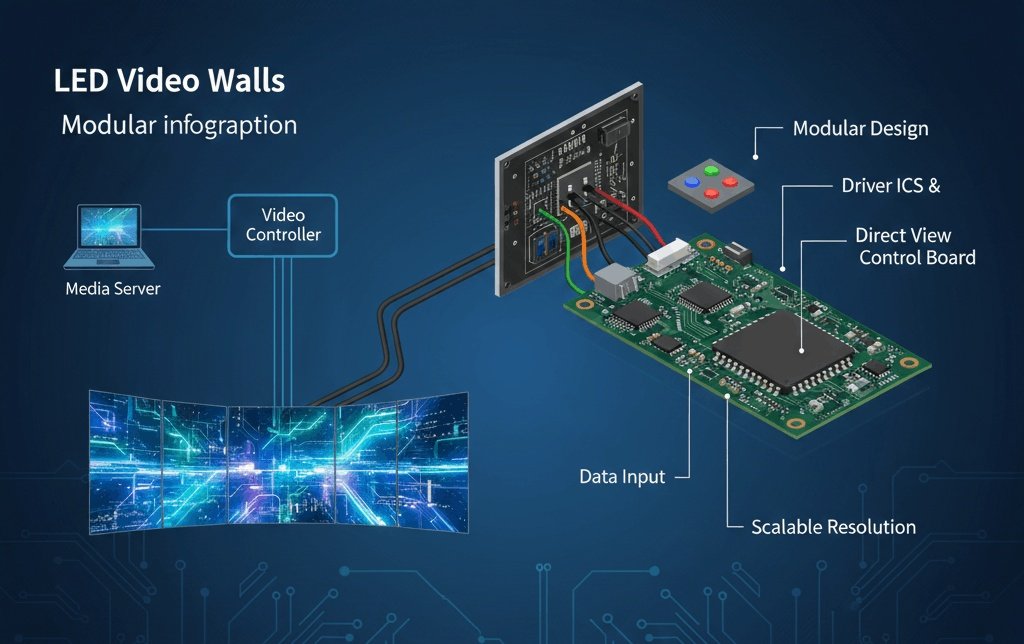
LED video walls work by combining many LED modules into a single display system. Each module contains red, green, and blue LEDs. These three colors mix to create full-color images.
A control system sends signals to every LED so they light up correctly. When all panels work together, they show smooth videos and sharp images.
Because the panels connect seamlessly, viewers see one large screen instead of separate pieces.
Why LED Video Walls Are So Popular
LED video walls have become popular because they solve many problems found in traditional displays.
Here are some key reasons:
- Very bright and clear display
- Works well indoors and outdoors
- Long life and strong durability
- Flexible size and shape options
- Low maintenance over time
These benefits make LED video walls suitable for many industries.
Indoor LED Video Walls
Indoor LED video walls are commonly used in shopping malls, offices, control rooms, hotels, and exhibition halls.
They usually have smaller pixel pitch, which means better image quality at close viewing distances. Text and images look sharp and smooth.
Indoor LED walls are often used for:
- Brand promotion
- Presentations and meetings
- Digital art and visuals
- Information displays
They create a modern and professional environment.
Outdoor LED Video Walls
Outdoor LED video walls are designed to handle sunlight, rain, dust, and heat.
They are brighter than indoor screens so content remains visible during the day. They also use weather-resistant materials and strong frames.
Outdoor LED video walls are used for:
- Billboards and advertising
- Stadium screens
- Public announcements
- Events and concerts
These displays attract attention from far distances.
Pixel Pitch Explained in Simple Words
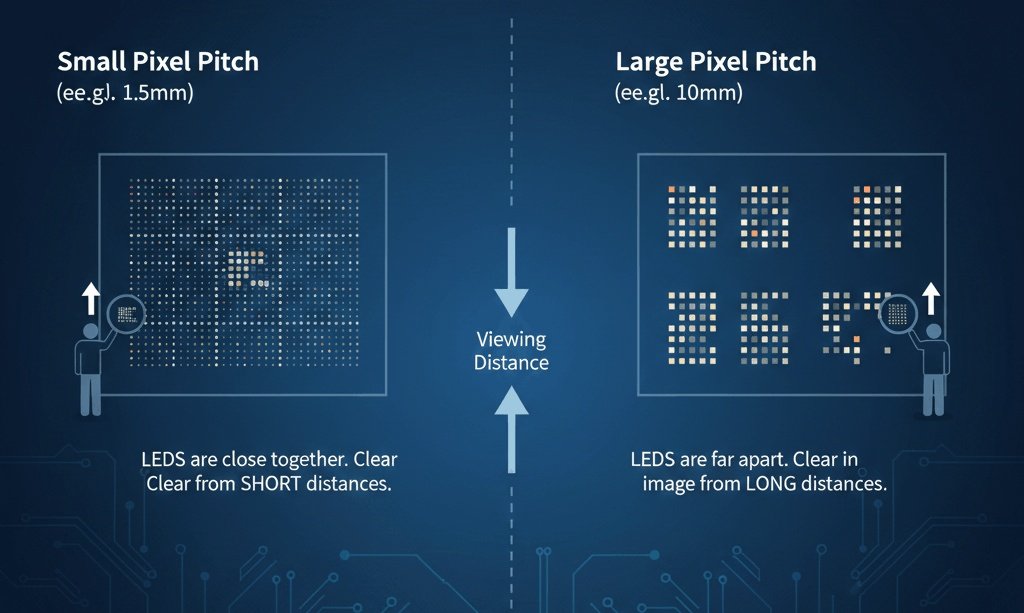
Pixel pitch is the distance between LED pixels. Smaller pixel pitch means more pixels in the same space.
- Small pixel pitch = better image quality
- Large pixel pitch = better for long viewing distance
Indoor video walls usually use small pixel pitch. Outdoor video walls use larger pixel pitch because people watch them from far away.
Choosing the right pixel pitch is very important for best results.
LED Video Walls vs Traditional Screens
Many people compare LED video walls with traditional displays.
LED video walls are brighter, larger, and more flexible. They do not have borders like regular screens. This creates a smooth viewing experience.
They are also more durable and suitable for long working hours.
LED Video Walls vs LCD Screens
LCD screens are commonly used in offices and homes. They work well for small displays.
However, when many LCD screens are joined together, thick borders appear between screens. This breaks the image.
LED video walls do not have this problem. They look seamless and more professional than an LCD Digital Screen Display wall.
For large displays, LED video walls are usually the better choice.
Flexible LED Video Walls
Technology has improved a lot, and now flexible LED panels are available.
A flexible led screen display can bend and curve. This allows designers to create round, wave-shaped, or custom displays.
Flexible LED video walls are used in:
- Creative retail stores
- Museums and galleries
- Stage designs
- Modern architecture
They offer unique visual experiences.
LED Video Walls for Advertising
Advertising is one of the biggest uses of LED video walls.
They can show moving content, videos, and animations. This makes ads more engaging than static posters.
Brands use LED video walls to:
- Promote products
- Display offers
- Share brand stories
Moving visuals attract more attention and improve brand recall.
LED Video Walls in Retail Spaces
Retail stores use LED video walls to create immersive shopping experiences.
They display product videos, promotions, and lifestyle visuals. This helps customers understand products better.
LED video walls also make stores look modern and premium.
Corporate and Office Use
Many offices use LED video walls in lobbies, meeting rooms, and conference halls.
They are used for presentations, video calls, dashboards, and company messages.
Compared to projectors, LED walls offer better brightness and clarity.
LED Video Walls for Events and Stages
Events and concerts depend heavily on visual impact.
LED video walls are used as stage backdrops, side screens, and live feed displays.
They support high refresh rates, which keeps videos smooth during live shows.
Control Rooms and Command Centers
Control rooms need clear and reliable displays.
LED video walls show data, maps, live feeds, and dashboards all in one place.
They can work 24/7 without losing quality, making them ideal for security and monitoring.
Installation of LED Video Walls
Installation requires proper planning.
The wall structure must be strong. Power supply, ventilation, and cable management must be done carefully.
Professional installation ensures long life and good performance.
Content Management and Software
LED video walls use special software to control content.
You can schedule videos, images, and live feeds easily. Content can be updated remotely.
This makes management simple and flexible.
Energy Use and Efficiency
LED technology is energy efficient.
LED video walls use less power compared to older display technologies. Brightness can be adjusted to save energy.
This helps reduce long-term operating costs.
Maintenance and Lifespan
LED video walls require minimal maintenance.
Individual panels can be replaced if needed. This saves time and cost.
With proper care, LED video walls can last many years.
Cost of LED Video Walls
The cost depends on:
- Screen size
- Pixel pitch
- Indoor or outdoor use
- Installation requirements
While initial cost may be higher than simple displays, long-term value is strong.
Common Questions People Ask
Many people ask if LED video walls are safe, reliable, and easy to use.
The answer is yes. Modern systems are stable, user-friendly, and designed for continuous use.
Design Tips for Better Results
Use clear visuals and readable text.
Avoid overcrowding content. Simple designs look better on large screens.
Good content makes the display more effective.
Future of LED Video Walls
LED video wall technology continues to improve.
Better resolution, flexible designs, and smart control systems are shaping the future.
LED video walls will remain a key part of digital communication.
Final Points
LED video walls are powerful, flexible, and modern display solutions. They offer strong brightness, clear visuals, and long-lasting performance.
They work better than traditional screens and large LCD Digital Screen Display setups, especially for big and seamless visuals.
With advanced options like flexible led screen display, LED video walls are shaping the future of advertising, events, and digital spaces.
By choosing the right type, size, and setup, businesses can create stunning visual experiences that attract attention and deliver real results.