
Outdoor LED screens are now everywhere, from stadiums and malls to streets and public spaces. They are used for advertising, information, and entertainment. While these screens look simple from the outside, installing them comes with many challenges that can affect their performance, lifespan, and safety.
People often ask questions like:
- What problems can occur during outdoor LED screen installation?
- How do weather and environment affect LED screens?
- What tools and planning are required?
- How can risks be minimized during installation?
This guide explains outdoor LED screen installation challenges in easy English, sharing real-world insights, so anyone can understand and plan properly.
What Is an Outdoor LED Screen?
An Outdoor Led Screen Display is an electronic display designed to show high-brightness content in outdoor environments. These screens are built to handle:
- Sunlight
- Rain and moisture
- Dust and debris
- Temperature changes
- Wind pressure
Outdoor LED screens are widely used for:
- Stadium advertising
- Roadside billboards
- Event promotions
- Building façade displays
In Dubai and many cities, businesses also use DS DIGITAL Poster stand setups for portable outdoor advertising.
Planning the Installation
The first challenge is planning. Many failures happen when planning is ignored. Good planning involves:
- Location Analysis
- Evaluate the site for visibility, sun exposure, and safety.
- Ensure the structure can support the screen weight.
- Weather Consideration
- Outdoor screens face extreme sunlight, heat, and rain.
- Decide on waterproofing, ventilation, and protective enclosures.
- Power Supply Planning
- Large screens require stable and high-capacity power supplies.
- Backup power may be needed in areas with unstable electricity.
- Network and Data Connections
- Content must be delivered reliably.
- Outdoor screens often need internet or wired network connections.
- Regulatory Approvals
- City permits and safety approvals are often required.
- Overlooking this can delay installation.
Common Challenges During Installation
1. Structural Support Issues
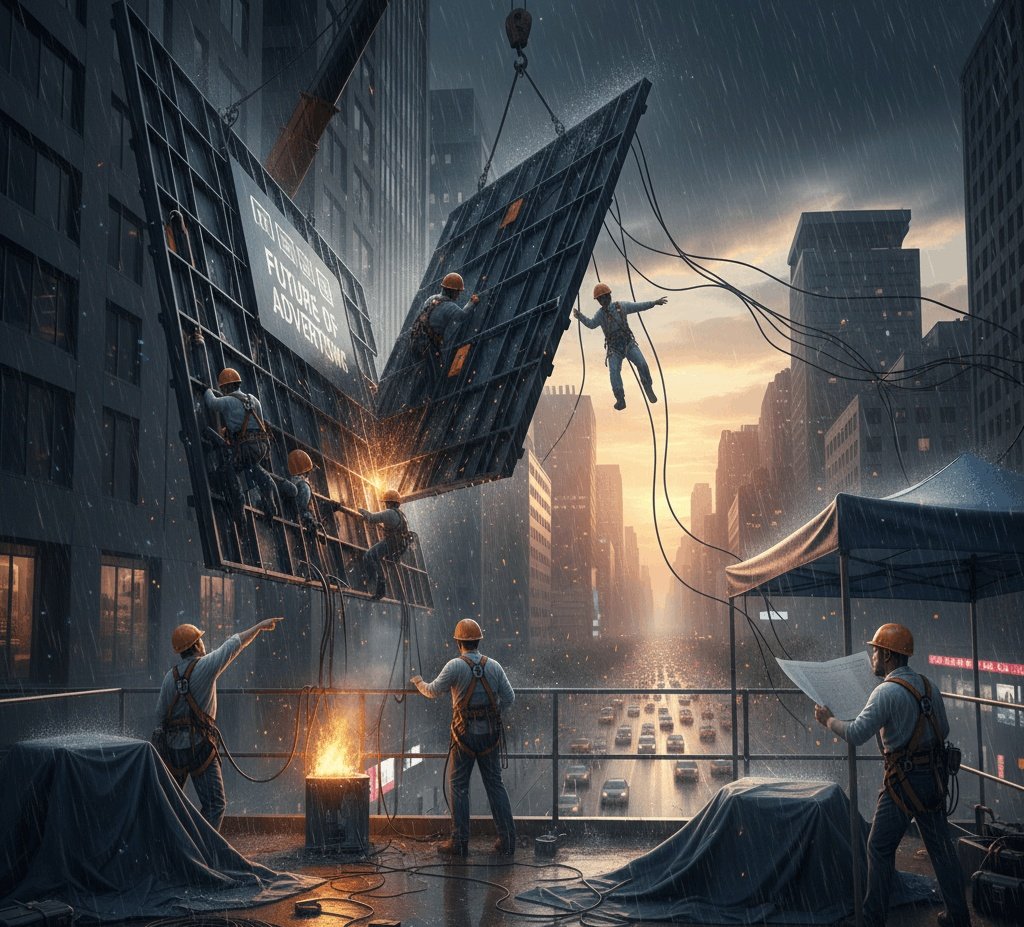
Outdoor LED screens are heavy, especially larger models. Challenges include:
- Weak building structures
- Improperly designed mounting brackets
- Wind load calculations ignored
Solution:
- Use professional engineers to assess the structure
- Install proper brackets and reinforcements
- Consider wind resistance ratings for large screens
2. Weather-Related Problems
Outdoor screens face weather challenges every day:
- Rain can damage electronics if not waterproof
- Dust and sand can enter the panels
- Sunlight can cause glare or fade the display
- Temperature extremes can reduce lifespan
Solution:
- Use IP65 or higher rated screens
- Install protective enclosures and sunshades
- Use high-brightness LED modules to counter sunlight
3. Power Supply and Voltage Drop
Many installation failures happen due to incorrect power supply:
- Long cable runs can cause voltage drop
- Insufficient wattage can make screens dim or flicker
- Overloading power supplies can damage LEDs
Solution:
- Calculate total wattage + 20–30% margin
- Use proper voltage (usually 12V or 24V systems)
- Consider multiple power supplies for large displays
4. Cable Management
Outdoor LED screens need multiple power and data cables. Challenges include:
- Tangled or messy cables
- Exposure to sun, rain, or rodents
- Hard-to-access cables for maintenance
Solution:
- Use cable channels, conduits, or protective tubing
- Plan access points for easy maintenance
- Label cables for troubleshooting
5. Alignment and Display Calibration
For large screens, proper alignment is crucial:
- Misaligned panels cause uneven display
- Color or brightness differences create visible lines
- Poor calibration affects viewing experience
Solution:
- Align panels carefully during installation
- Calibrate brightness and color settings
- Test content across the full screen
6. Installation in Public Spaces
Installing in busy areas introduces extra challenges:
- Safety for pedestrians and workers
- Temporary road closures or restricted access
- Permits and public regulations
Solution:
- Use professional teams experienced with outdoor installations
- Ensure barriers and safety signs are in place
- Schedule installation during low-traffic periods
7. Transport and Handling
Outdoor LED modules are sensitive:
- Dropping or mishandling panels can cause permanent damage
- Transporting large panels requires proper lifting and protection
Solution:
- Use padded crates and secure transport
- Train staff in safe handling
- Use forklifts or lifts for large modules
8. Maintenance and Accessibility
Outdoor screens require regular maintenance:
- Cleaning dust, dirt, and bird droppings
- Checking power supply and wiring
- Replacing faulty modules
Challenges:
- Screens mounted at heights or in hard-to-reach places
- Maintenance teams need safety equipment
Solution:
- Design installation with maintenance access in mind
- Provide ladders, lifts, or service platforms
- Keep spare modules and tools nearby
Real-World Installation Examples
Example 1: Outdoor Billboard LED Display
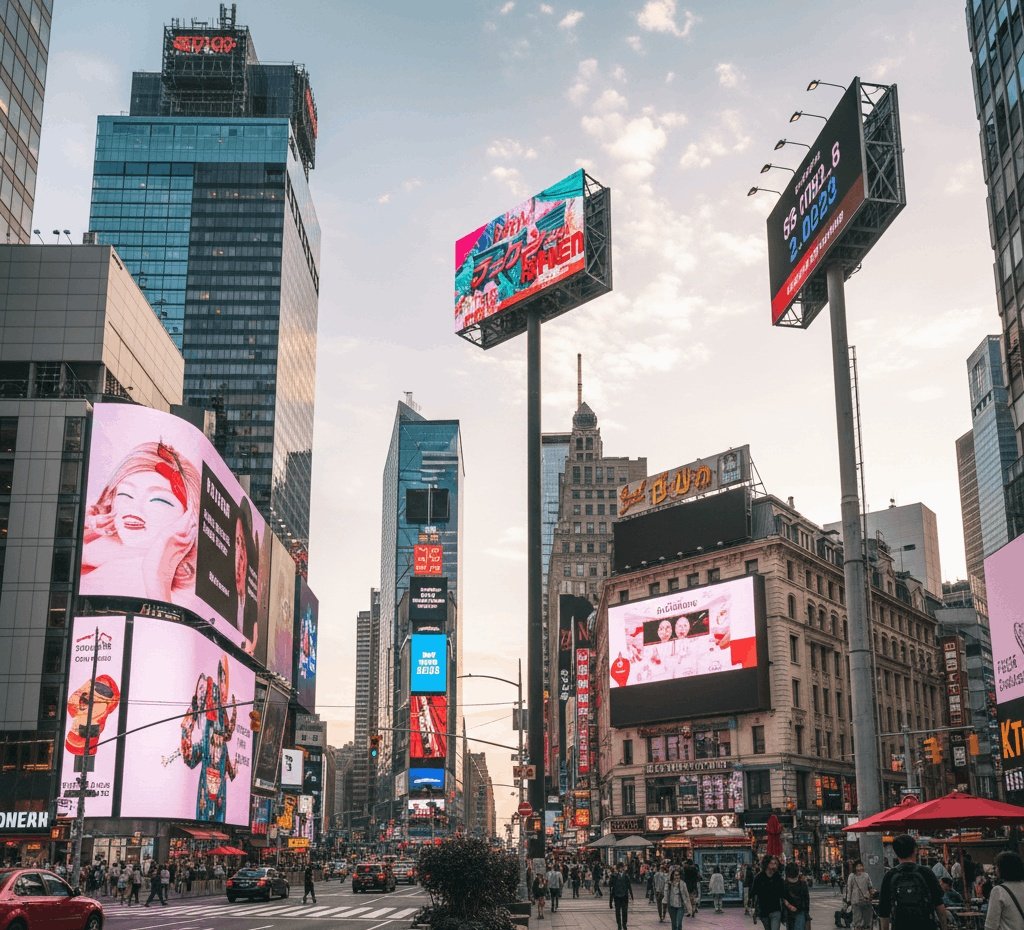
We installed a large Outdoor Led Screen Display on a building façade. Challenges:
- Strong wind required reinforced brackets
- Rain required IP67 modules and waterproof wiring
- Alignment needed precise calibration for full HD content
Outcome:
- Screen worked reliably for months
- Visibility remained excellent in direct sunlight
Example 2: Temporary Event Installation
For a festival, DS DIGITAL Poster stand units were used:
- Lightweight and portable
- Double-sided screens increased visibility from all directions
- Power was supplied via portable generators
Outcome:
- Quick setup and teardown
- Stable operation despite crowd movement and temporary conditions
Safety Challenges
Outdoor LED installation involves heavy equipment and electricity:
- Risk of electric shock
- Risk of screens falling if brackets fail
- Risks for maintenance workers at height
Solution:
- Always turn off power before work
- Use certified brackets and mounting hardware
- Provide harnesses and safety equipment for working at height
Cost Challenges
Outdoor installations are often more expensive than indoor:
- Stronger screens
- Waterproofing and weatherproof enclosures
- Professional installation teams
- Permits and insurance
Solution:
- Plan budget ahead
- Consider ROI from advertising and visibility
- Compare different suppliers and products
Environmental and Technical Challenges
- Sun glare reduces readability
- Temperature extremes affect electronics
- Outdoor screens need high-brightness LED modules
- Network connectivity can be unstable
Solution:
- High-brightness outdoor LED modules
- Cooling systems or ventilation
- Backup network and power supply
- Testing content in sunlight before final setup
Best Practices to Overcome Challenges
- Plan Before You Install – Survey the site, check structure and environment.
- Use Quality Equipment – High-grade modules, IP65+ rating, stable power supply.
- Hire Professional Teams – Experienced installers reduce errors and risks.
- Test Everything – Check brightness, color, connectivity, and safety before leaving site.
- Design for Maintenance – Allow easy access for cleaning, repairs, and calibration.
- Safety First – Use harnesses, gloves, and barriers when working at height or in public spaces.