
Printing is a core part of many businesses, whether it’s for marketing materials, product packaging, or corporate documents. Choosing the right printing technology can save costs, improve quality, and increase efficiency. Two of the most popular options in modern printing are digital printing machines and offset printing machines. Each has its strengths and weaknesses, and understanding the differences is essential before investing.
In this guide, we’ll explore the features, benefits, and limitations of both printing methods. We’ll also discuss factors like cost, speed, quality, and best use cases. By the end, you’ll know which printing solution fits your business needs.
What Are Digital Printing Machines?
Digital printing machines are modern printers that create images and text directly from digital files like PDFs or design software. Unlike traditional printing, digital printers don’t require printing plates. The printing process happens immediately after sending the file to the machine.
Digital printing machines use various technologies, such as inkjet and laser, to apply ink or toner directly onto the paper, card, or other substrates. This method is highly flexible and ideal for businesses that require small to medium print runs or frequent changes in content.
Key Features of Digital Printing Machines
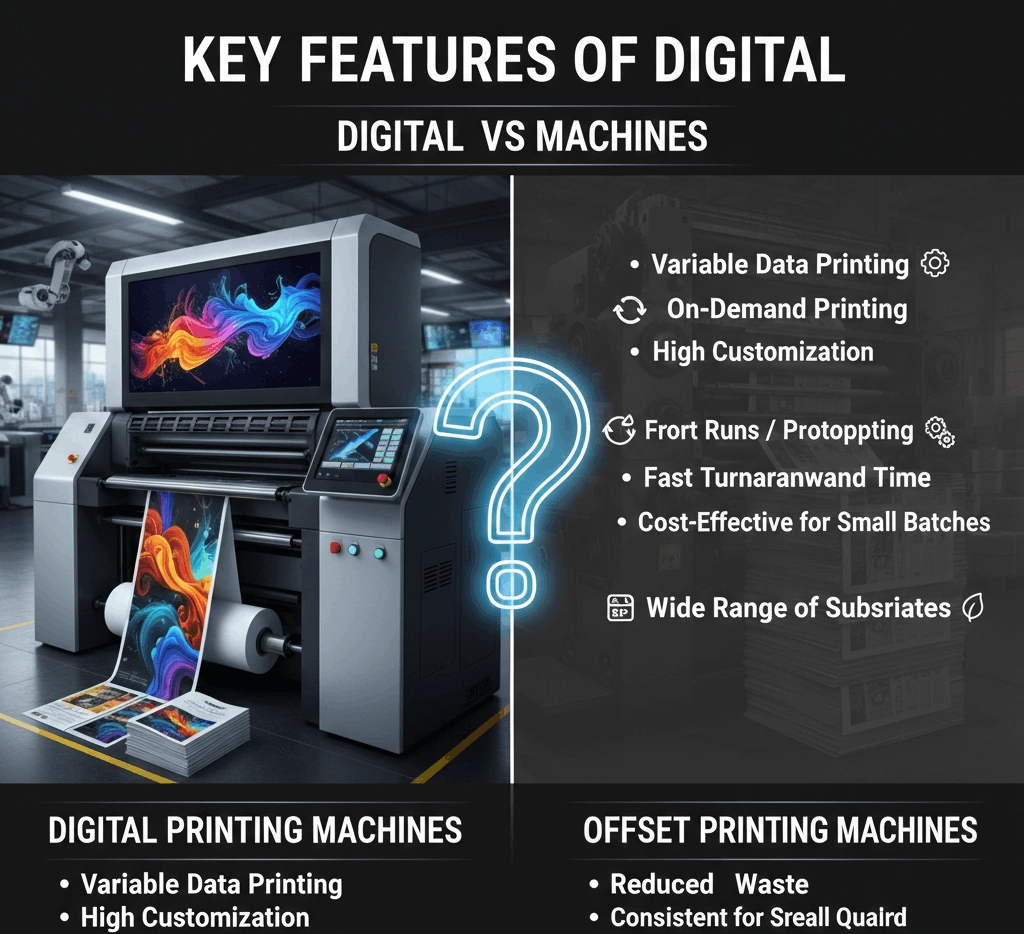
Digital printing machines come with several advantages that make them popular in many industries:
- Quick Setup: Since there’s no need for printing plates, setup is fast. You can print as soon as the design is ready.
- Variable Data Printing: Each printed piece can have different content, like personalized names, addresses, or codes.
- Lower Initial Costs: Ideal for short runs because there’s no plate creation cost.
- On-Demand Printing: You can print only the quantity you need, reducing storage costs.
- High-Quality Color: Digital machines can produce vibrant, consistent colors.
Digital printing machines are commonly used for business cards, brochures, flyers, posters, and small packaging orders. They are excellent for projects that require customization or fast turnaround.
What Are Offset Printing Machines?
Offset printing machines are traditional printing presses that use plates to transfer ink onto a rubber blanket and then onto the paper or other material. The plates contain the image or text to be printed. This method has been used for over a century and is known for producing high-quality prints in large quantities.
Offset printing is often used for books, magazines, newspapers, packaging, and other projects that require consistent color and sharpness over many copies.
Key Features of Offset Printing Machines
Offset printing machines also have unique advantages:
- High Print Quality: The quality is sharp, precise, and consistent across large volumes.
- Cost-Effective for Large Runs: The more you print, the lower the cost per unit.
- Wide Material Compatibility: Offset presses can print on various paper types, cardboard, and specialty substrates.
- Color Consistency: Perfect for projects that need exact color reproduction.
- Durable Results: Prints are often more resistant to smudging and fading.
Offset printing is ideal for large print jobs where quality and uniformity are crucial. It is also suitable when printing on thick paper or specialty materials.
Differences Between Digital and Offset Printing Machines
Understanding the differences can help businesses decide which machine to use:
1. Setup and Preparation
Digital printing requires minimal setup. Once the file is ready, printing begins. Offset printing needs plate creation, alignment, and press calibration, which takes longer and requires skilled operators.
2. Cost Per Print
Digital printing is cost-effective for small batches but becomes expensive for large runs due to ink costs. Offset printing has higher initial setup costs but is much cheaper per unit when printing large volumes.
3. Turnaround Time
Digital printing is fast and suitable for same-day or next-day printing. Offset printing takes more time due to plate preparation but is efficient for mass production once the press is running.
4. Print Quality
Both methods produce high-quality results. Digital printing offers excellent color vibrancy and flexibility for variable data. Offset printing delivers superior detail, especially on textured or coated papers, and is ideal for precise color matching.
5. Volume Capacity
Digital printing is ideal for low to medium volumes. Offset printing excels in high-volume runs, making it cost-efficient for bulk printing projects.
6. Material Compatibility
Digital printers handle standard paper and some specialty materials, but may struggle with very thick or textured stocks. Offset presses can print on a wide range of materials, including cardboard, labels, and unique substrates.
7. Customization
Digital printing allows easy customization and personalization. Offset printing is less flexible in this regard since each change requires new plates.
Pros and Cons of Digital Printing Machines
Pros
- Fast setup and printing
- Cost-effective for small runs
- Variable data printing
- On-demand printing reduces storage
- High-quality vibrant colors
Cons
- Higher cost per unit for large runs
- Limited material compatibility
- May not match exact color standards for some projects
Pros and Cons of Offset Printing Machines
Pros
- Extremely high print quality
- Very cost-effective for large quantities
- Can print on various materials
- Color consistency and durability
Cons
- High setup cost
- Longer turnaround time
- Less flexible for personalization or frequent design changes
Choosing the Right Printing Technology
The choice between digital and offset printing depends on several factors:
- Print Volume: Digital is best for small batches; offset is ideal for large runs.
- Budget: Digital printing saves on setup but may cost more for bulk. Offset requires upfront investment but lowers unit cost for large volumes.
- Turnaround Time: Digital printing is quicker; offset takes longer to prepare but can run continuously.
- Customization Needs: If personalization is needed, digital printing is superior.
- Material Needs: If printing on unique or heavy stock, offset printing may be the better choice.
- Quality Requirements: Both produce excellent quality, but offset excels in consistency and precision.
Applications of Digital Printing Machines
Digital printing machines are widely used in businesses that require:
- Personalized business cards and invitations
- Short-run brochures and flyers
- Custom packaging for small batches
- Posters and banners for events
- Labels with variable data like serial numbers or barcodes
Digital printing is also excellent for print-on-demand services, where companies only print what they need when they need it.
Applications of Offset Printing Machines
Offset printing machines are commonly used for:
- Large-scale brochures and catalogs
- Magazines and newspapers
- Books and manuals
- Product packaging for bulk production
- Corporate stationery in large quantities
Offset printing is chosen when high-volume consistency and precise color matching are required.
Maintenance and Longevity
Digital printing machines require regular cleaning, software updates, and occasional replacement of ink cartridges or toner. They are generally easier to maintain for small offices or printing services.
Offset printing machines need more maintenance, including plate handling, ink management, and mechanical servicing. Skilled operators are often required to keep presses running smoothly. However, they are very durable and can handle high workloads for years.
Cost Comparison
Digital printing machines have lower initial costs, making them accessible for small businesses or offices. Ink or toner costs can be higher per unit, especially for large volumes.
Offset printing machines require a higher initial investment in plates, presses, and setup. But when printing hundreds or thousands of copies, the cost per print becomes much lower than digital, making it ideal for large-scale projects.
Environmental Considerations
Digital printing generates less waste since you only print what you need. Offset printing may result in extra material waste during setup and plate creation. Some offset presses use eco-friendly inks and papers to reduce environmental impact. Businesses can consider sustainability when choosing a printing method.
Finding a Reliable Printing Machines Supplier
When investing in printing technology, it’s important to work with a reputable Printing Machines Supplier. A good supplier can provide:
- Guidance on the right machine for your business
- Installation and training
- Ongoing maintenance and support
- Spare parts and consumables
Partnering with the right supplier ensures your investment in printing technology is protected and operates efficiently for years.
Future Trends in Printing Technology
Printing technology continues to evolve. Digital printing is becoming faster, more versatile, and capable of handling thicker materials. Offset presses are integrating automation, better color management, and hybrid systems that combine digital and offset benefits. Businesses that stay updated on trends can benefit from improved efficiency and quality.