Events and exhibitions are all about creating memorable experiences. Whether it is a trade show, corporate conference, product launch, or large exhibition, the goal is always the same, capture attention, communicate information clearly, and engage visitors. One of the most powerful tools that event organizers now rely on is digital signage.
Digital signage has transformed how information is displayed at events. Instead of static banners and printed posters, organizers can use dynamic screens that display videos, animations, schedules, live updates, and brand messaging in real time.
In this guide, we will explore digital signage for events and exhibitions in depth, including its benefits, types, design strategies, technology, best practices, and how it enhances visitor engagement.
What Is Digital Signage for Events & Exhibitions?
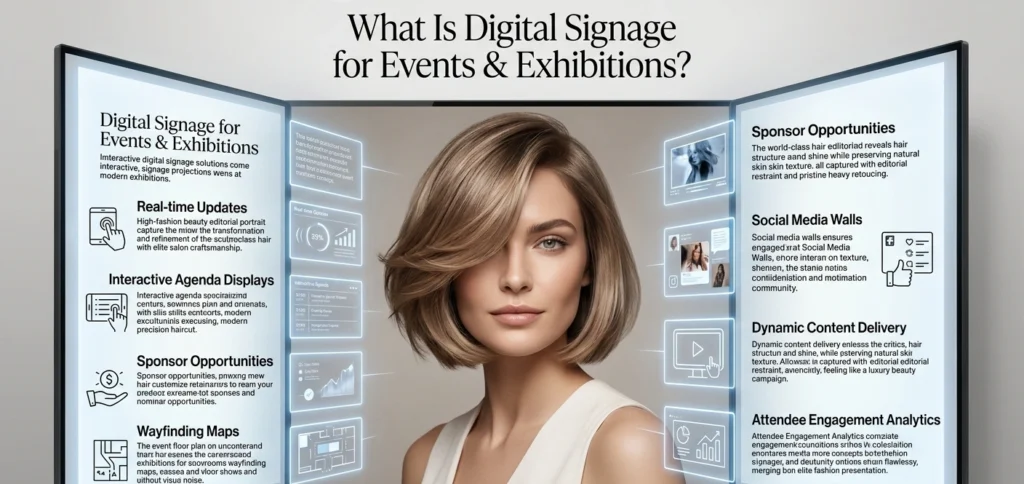
Digital signage refers to digital displays used to present multimedia content such as videos, images, text, and animations. These displays are strategically placed around event venues, exhibition halls, conference rooms, and entrances to deliver information and marketing messages.
Unlike traditional signage, digital displays are dynamic, flexible, and interactive. Event organizers can update content instantly, schedule different messages throughout the day, and create visually engaging experiences.
Digital signage is commonly used for:
- Event welcome screens
- Exhibition booth displays
- Directional wayfinding
- Live social media feeds
- Sponsor advertisements
- Product demonstrations
- Event schedules and announcements
Because the content is digital, it can be customized quickly without printing costs or installation delays.
Why Digital Signage Is Essential for Events
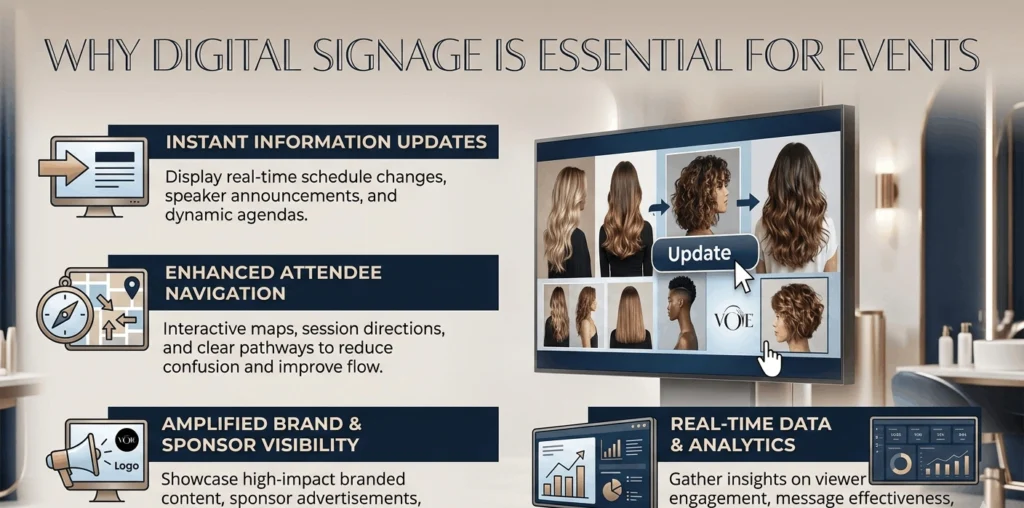
Events and exhibitions are highly competitive environments. Hundreds of booths, brands, and presentations compete for visitor attention. Digital signage helps businesses stand out in crowded venues.
Captures Visitor Attention
Moving visuals naturally attract the human eye. Bright displays, animations, and videos draw attention much faster than printed graphics.
Communicates Information Quickly
Large digital screens make it easy to display key information such as schedules, booth locations, and announcements.
Creates a Professional Brand Image
High-quality digital displays reflect innovation and professionalism, making brands appear modern and technologically advanced.
Provides Real-Time Updates
Event information can change quickly. Digital signage allows organizers to update messages instantly across all screens.
Enhances Visitor Engagement
Interactive digital displays encourage visitors to interact with content, explore products, and spend more time at booths.
Types of Digital Signage Used at Events
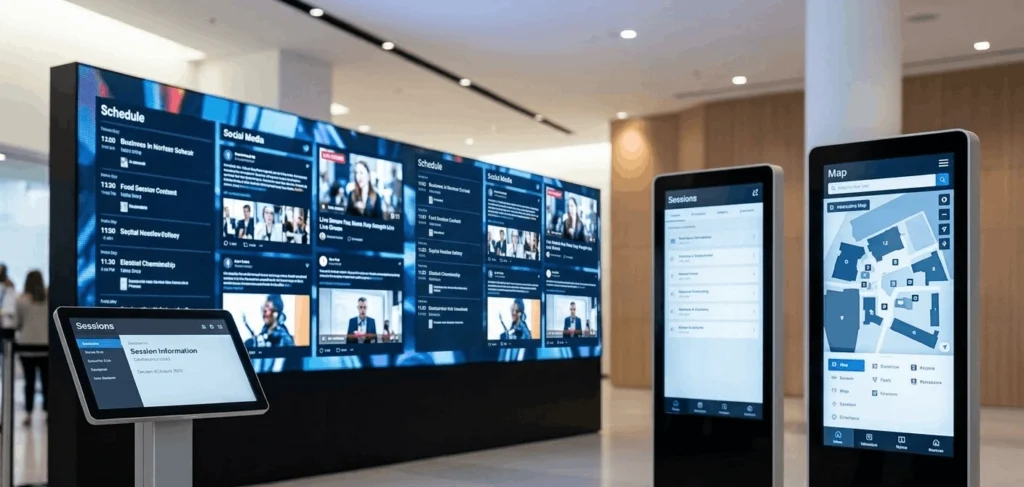
Different events require different types of displays. Choosing the right digital signage solution depends on venue size, audience size, and the type of content being presented.
LED Video Walls
LED video walls are one of the most popular digital signage solutions for large exhibitions. These large displays deliver high brightness and visibility even in well-lit exhibition halls.
They are commonly used for:
- Main stage presentations
- Product launches
- Brand showcases
- Exhibition backdrops
Many event organizers use Led Screens for events to create massive visual displays that attract large audiences and create immersive experiences.
Digital Totems and Kiosks
Digital kiosks are vertical displays placed in high traffic areas such as entrances, registration zones, and corridors.
They are perfect for:
- Event registration information
- Interactive maps
- Event schedules
- Sponsor promotions
Interactive kiosks allow visitors to navigate event information independently.
Interactive Touch Screens
Touch screen displays are widely used in exhibition booths where brands want visitors to interact with their products or services.
Visitors can:
- Browse product catalogs
- Watch demo videos
- Explore company information
- Register for newsletters
Interactive experiences significantly increase engagement and lead generation.
Digital Wayfinding Displays
Large events can be difficult to navigate. Digital wayfinding screens help visitors locate booths, conference rooms, restrooms, and other important areas.
These screens often include interactive maps or simple directional instructions.
Hanging Displays
Hanging LED displays are installed above booths or stages. They are visible from long distances and help visitors locate brands quickly within large exhibition halls.
Key Benefits of Digital Signage for Exhibitions
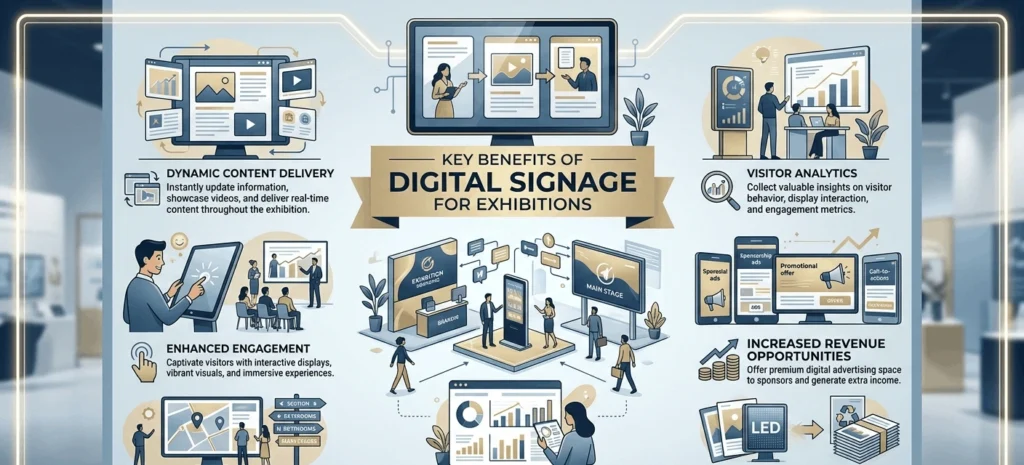
Digital signage offers numerous advantages for event organizers, exhibitors, and visitors.
Increased Brand Visibility
Large digital displays help brands stand out in crowded exhibition environments. Moving visuals naturally draw attention and increase booth traffic.
Flexible Content Management
Digital signage allows event organizers to schedule and change content throughout the event. For example, morning sessions, keynote presentations, and evening networking events can all be promoted using the same display.
Cost Efficiency Over Time
Although digital signage requires an initial investment, it reduces the need for printed materials. Content updates are digital, eliminating printing and installation costs.
Improved Visitor Experience
Clear information, easy navigation, and engaging visuals enhance the overall experience for attendees.
Sponsor Advertising Opportunities
Digital signage provides valuable advertising space for sponsors. Event organizers can display sponsor logos, videos, and advertisements across multiple screens.
Digital Signage Content Ideas for Events

Successful digital signage relies heavily on the quality of content displayed. Event organizers should plan content carefully to maximize impact.
Event Welcome Messages
Large screens at entrances can greet visitors with welcome messages, event branding, and key highlights.
Event Schedules
Schedules help attendees keep track of sessions, workshops, and presentations throughout the event.
Speaker Introductions
Digital signage can display speaker profiles, session topics, and presentation times.
Live Social Media Feeds
Displaying real-time social media posts encourages attendees to share their experiences using event hashtags.
Product Demonstrations
Exhibitors often use digital displays to showcase product features, benefits, and use cases.
Countdown Timers
Countdown displays create excitement before keynote speeches, product launches, or live demonstrations.
Design Tips for Effective Event Digital Signage
The design of digital signage content plays a crucial role in its effectiveness.
Keep Messages Short
Event attendees usually walk past screens quickly. Messages should be clear and concise.
Use High Contrast Colors
Bright and contrasting colors improve readability from a distance.
Use Large Fonts
Text should be large enough to be read from several meters away.
Include Motion Carefully
Animations attract attention but should not be distracting or overwhelming.
Maintain Brand Consistency
Colors, fonts, and visuals should match the brand identity of the event or exhibitor.
Placement Strategy for Digital Signage
Where you place digital displays can determine how effective they are.
Entrance Areas
Large welcome displays create strong first impressions.
Registration Zones
Screens can display check-in instructions and event schedules.
Hallways and Corridors
Directional signage helps visitors navigate the venue.
Exhibition Booths
Exhibitors can use screens to present products and promotional videos.
Main Stage Areas
Large LED walls enhance presentations and audience engagement.
Technology Behind Digital Signage
Modern digital signage relies on a combination of hardware and software technologies.
Display Hardware
Includes LED screens, LCD displays, kiosks, and video walls.
Media Players
Media players control the content displayed on screens.
Content Management Systems (CMS)
CMS platforms allow event organizers to manage and update content remotely.
Connectivity
Wi-Fi or wired networks connect multiple displays across event venues.
Digital Signage for Different Types of Events
Digital signage can be adapted for various event formats.
Trade Shows
Used to showcase products, attract visitors, and deliver promotional content.
Corporate Conferences
Displays schedules, speaker information, and announcements.
Product Launch Events
Creates dramatic visual presentations and immersive brand storytelling.
Music and Entertainment Events
Large LED displays enhance stage performances and audience experience.
Exhibitions and Expos
Helps visitors navigate the venue and discover exhibitors.
Measuring the Impact of Digital Signage
Event organizers can measure the effectiveness of digital signage using several methods.
Visitor Engagement
Track how long visitors interact with digital displays.
Booth Traffic
Compare visitor traffic before and after installing digital signage.
Social Media Interaction
Monitor event hashtags and posts displayed on digital screens.
Lead Generation
Interactive screens can capture visitor data and generate leads.
Future Trends in Event Digital Signage
Technology continues to evolve, bringing new possibilities to event environments.
Artificial Intelligence
AI can personalize content based on audience demographics or behavior.
Augmented Reality Integration
AR experiences can combine digital signage with immersive visual effects.
Gesture-Based Interaction
Visitors may soon interact with screens without touching them.
Data Driven Content
Real-time analytics will allow content to change automatically based on audience engagement.
Best Practices for Event Organizers
To maximize the benefits of digital signage, event planners should follow these best practices.
Plan digital signage during the early stages of event design rather than adding it at the last minute.
Create a clear content strategy that aligns with event goals.
Test all digital displays before the event begins to avoid technical issues.
Ensure displays are placed at optimal viewing angles.
Use high-quality visuals and professional design.