Understanding LED power consumption is crucial for homeowners, designers, and businesses that want to optimize lighting, save energy, and reduce electricity bills. LEDs (Light Emitting Diodes) are widely promoted as energy-efficient alternatives to traditional lighting, but many people struggle with questions like:
- “How much electricity do LED lights actually use?”
- “Why do some LEDs consume more power than others?”
- “Can I calculate my energy costs accurately?”
This guide explains LED power consumption in detail, addresses common pain points, and provides practical advice for selecting, installing, and maintaining LED systems. By the end, you will fully understand how LED energy usage works and how to make the most cost-effective decisions.
What Is LED Power Consumption?
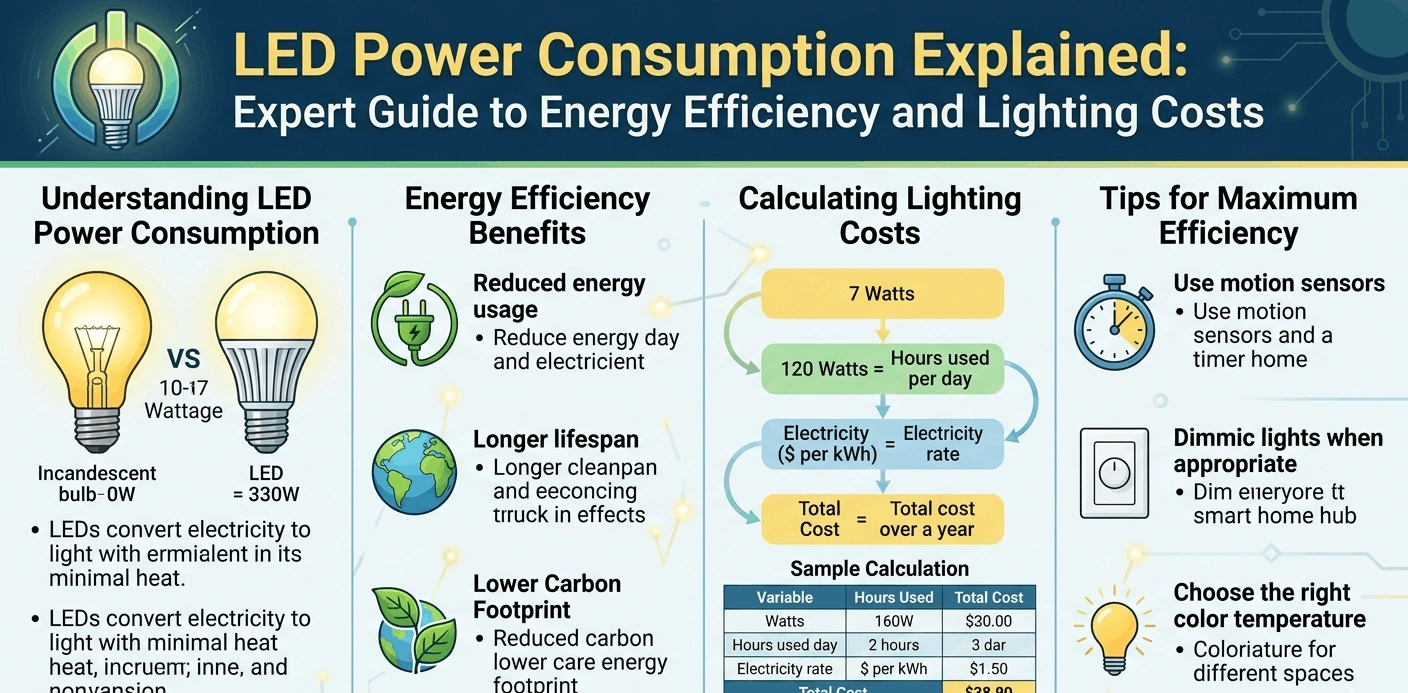
LED power consumption refers to the amount of electrical energy a LED light requires to operate. It is usually measured in watts (W). Unlike incandescent or halogen lights, LEDs produce more light per watt, making them highly energy-efficient.
For example:
- A 10W LED bulb can produce the same brightness as a 60W incandescent bulb.
- This means a smaller electrical load for the same lighting output.
However, energy efficiency is influenced by multiple factors including LED design, driver efficiency, voltage, and the materials used in construction, often referred to as Led power materials.
Common Pain Points People Experience With LED Power
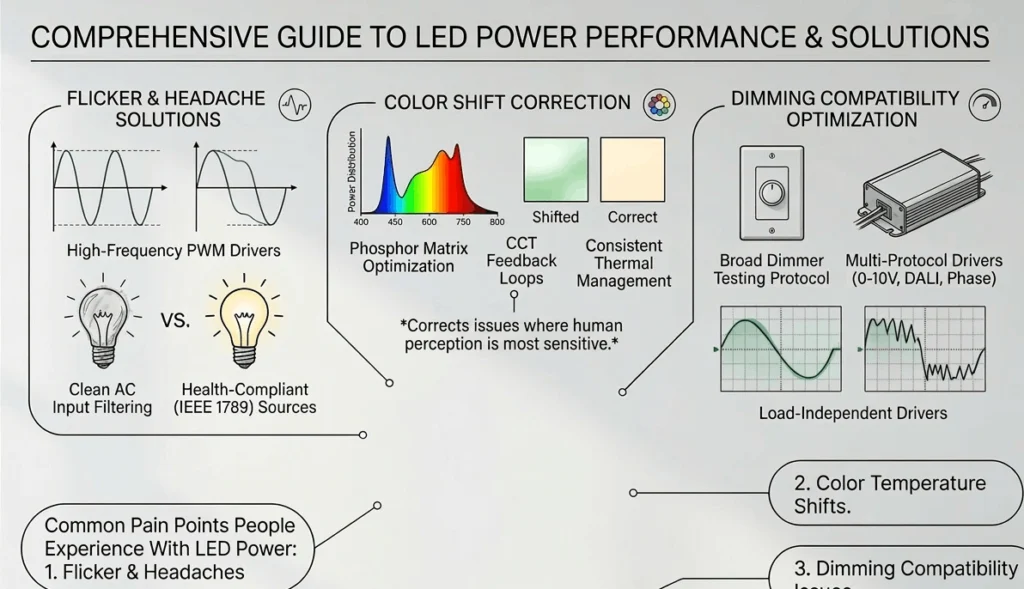
Even though LEDs are marketed as energy-saving lights, users often encounter frustrations that cause confusion and skepticism about their efficiency.
High Electricity Bills Despite LEDs
Some people switch to LED lighting expecting immediate savings, only to notice minimal reductions in their electricity bills. This happens because:
- They use low-quality LEDs with inefficient drivers.
- Multiple LEDs are installed in large spaces, increasing total wattage.
- The LEDs are left on for long durations without dimming or control.
Confusion Over Wattage vs Brightness
Many users believe wattage alone determines brightness. This misconception leads to overspending on unnecessarily high-power LEDs.
- LED wattage indicates energy usage, not light output.
- Lumens measure brightness. Always check lumens to understand actual light levels.
Compatibility Issues
Some people experience flickering or reduced lifespan due to power supply issues. Low-quality power drivers or incorrect voltage can increase power consumption or damage LEDs.
Factors Affecting LED Power Consumption
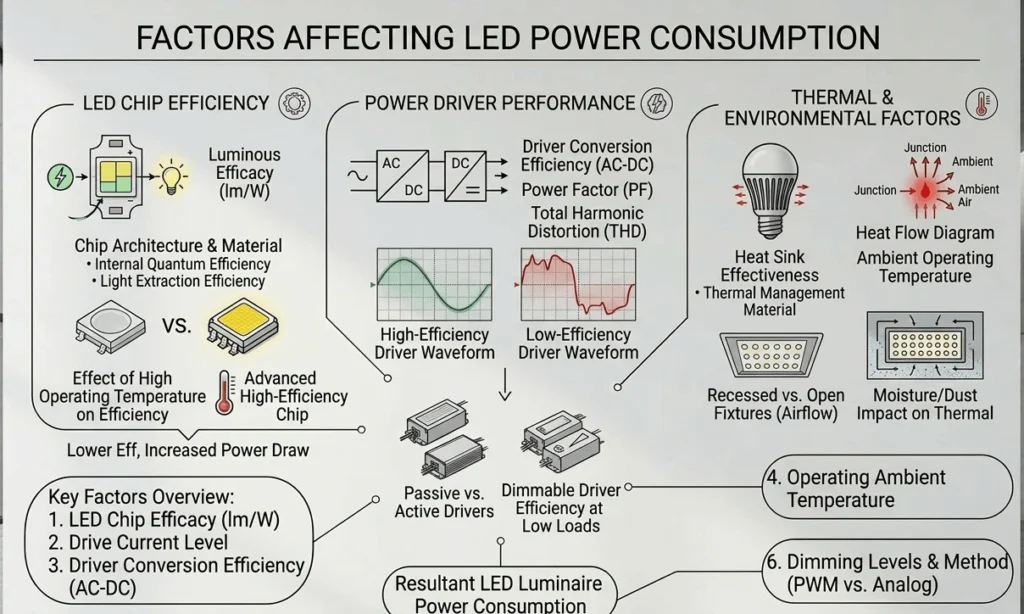
To optimize LED efficiency, it’s important to understand the main factors affecting power consumption.
LED Chip Efficiency
Modern LED chips vary in efficiency, measured as lumens per watt (lm/W). High-efficiency chips consume less power while delivering the same brightness.
Driver Quality
LEDs require a driver to convert AC mains power to low-voltage DC power suitable for LEDs. Poor-quality drivers can:
- Waste energy as heat
- Cause flickering
- Reduce overall lifespan
Operating Voltage
LEDs operate at different voltages (typically 12V or 24V for strip lights, or standard mains 110-240V for bulbs). Improper voltage matching increases power consumption and risks damage.
Temperature and Heat
Excess heat reduces LED efficiency. LEDs installed in poorly ventilated spaces may draw more power to maintain the same brightness.
Materials Used in LED Construction
High-quality Led power materials such as aluminum heat sinks and premium semiconductor chips improve energy efficiency and reduce unnecessary power usage. Low-quality materials can result in higher electricity consumption and early burnout.
Calculating LED Power Consumption
Many users struggle to determine how much energy their LEDs will consume over time. Here’s a simple method:
Formula:Energy (kWh)=Wattage (W)×Hours of Use (h)÷1000
Example:
- A 12W LED strip running 6 hours/day for 30 days:
12 W×6 h/day×30 days÷1000=2.16 kWh/month
This allows users to calculate monthly electricity costs accurately.
LED Power Consumption in Different Lighting Applications
Understanding power consumption is context-dependent. Here’s a breakdown of common applications.
Residential Lighting
- Typical LED bulb: 7–15W
- LED ceiling panels: 15–40W
- LED strip lights: 4–20W per meter
Even though individual LEDs consume low power, cumulative use in large homes can add up. Proper placement, dimmers, and timers can optimize efficiency.
Commercial Lighting
- Office panels: 30–50W
- Retail track lights: 10–30W
- High bay LEDs: 80–150W
Commercial spaces require careful planning. Poor layout or oversizing LED fixtures increases energy costs unnecessarily.
Outdoor and Architectural Lighting
- LED floodlights: 20–200W
- Wall washers: 15–60W
- Signage LEDs: 5–30W per meter
Outdoor lighting often runs for extended hours, making energy efficiency critical. Using high-quality Led power materials ensures minimal power loss and long lifespan.
Energy Efficiency Advantages of LEDs
Despite the complexities, LEDs still provide clear energy benefits compared to traditional lighting:
- Up to 80% less energy consumption than incandescent bulbs
- Lower heat output, reducing cooling costs in buildings
- Longer lifespan (25,000–50,000 hours), reducing replacement frequency
- Compatibility with smart controls (dimmers, timers, motion sensors) for further savings
Optimizing LED Power Consumption
Users can take several steps to minimize energy use while maintaining performance:
Choose High-Efficiency LEDs
Check lumens per watt ratings. Premium LEDs with high lm/W provide more brightness per unit of power.
Use Appropriate Power Drivers
Invest in quality drivers that match LED voltage and current requirements. Avoid cheap, generic drivers.
Implement Smart Controls
Timers, motion sensors, and dimmers help reduce unnecessary LED usage.
Optimize Placement
Install LEDs in positions where they can illuminate larger areas efficiently. For example, using cove lighting reflects light across ceilings instead of directly pointing a single LED bulb.
Consider Heat Management
Use aluminum channels, heat sinks, or ventilation to prevent overheating, which can increase energy consumption and reduce lifespan.
Common Misconceptions About LED Power Consumption
“LEDs Don’t Use Any Power”
Some users mistakenly think LEDs are free to run. While LEDs are energy-efficient, they still consume electricity. Large installations or prolonged usage can contribute to electricity costs.
“Higher Wattage Means Brighter Light”
Brightness depends on lumens, not watts. High-wattage LEDs are not always necessary for adequate illumination.
“All LEDs Are Equally Efficient”
LED efficiency varies by manufacturer, chip quality, and materials. Premium LEDs with quality Led power materials outperform cheaper options.
Calculating Long-Term Costs
To estimate total energy savings:
- Determine the LED wattage
- Multiply by average usage hours per day
- Multiply by electricity rate per kWh
LED vs Traditional Lighting: Power Comparison
| Type | Wattage for Similar Brightness | Energy Use |
|---|---|---|
| Incandescent Bulb | 60W | High |
| CFL Bulb | 15W | Moderate |
| LED Bulb | 10W | Low |
Switching to LEDs reduces consumption significantly, especially in commercial and outdoor installations.
Environmental Impact of Efficient LED Power Usage
Using LEDs reduces greenhouse gas emissions by lowering electricity demand. Properly designed LED installations with smart controls contribute to sustainable building practices.
When to Consult Experts
Some projects require professional guidance:
- Large commercial or industrial LED installations
- Complex architectural lighting
- Integration with smart building systems
Experts help select high-quality LEDs, optimize placement, and calculate accurate power requirements.