
Digital signage is a modern way to show information, ads, and messages using screens instead of printed signs. You see digital signage every day in malls, shops, offices, airports, restaurants, hospitals, and on roads. These screens show videos, images, text, and live updates to attract attention and share useful information.
In this complete guide, you will learn what digital signage is, how it works, where it is used, its benefits, types, and how to choose the right digital signage for your business.
What Is Digital Signage?
Digital signage is a system that uses electronic screens to display content. This content can include advertisements, announcements, directions, menus, promotions, or brand messages. The content can be updated anytime without changing physical materials.
Unlike printed banners or posters, digital signage allows businesses to show moving content, videos, animations, and real-time information. This makes it more engaging and effective.
How Digital Signage Works
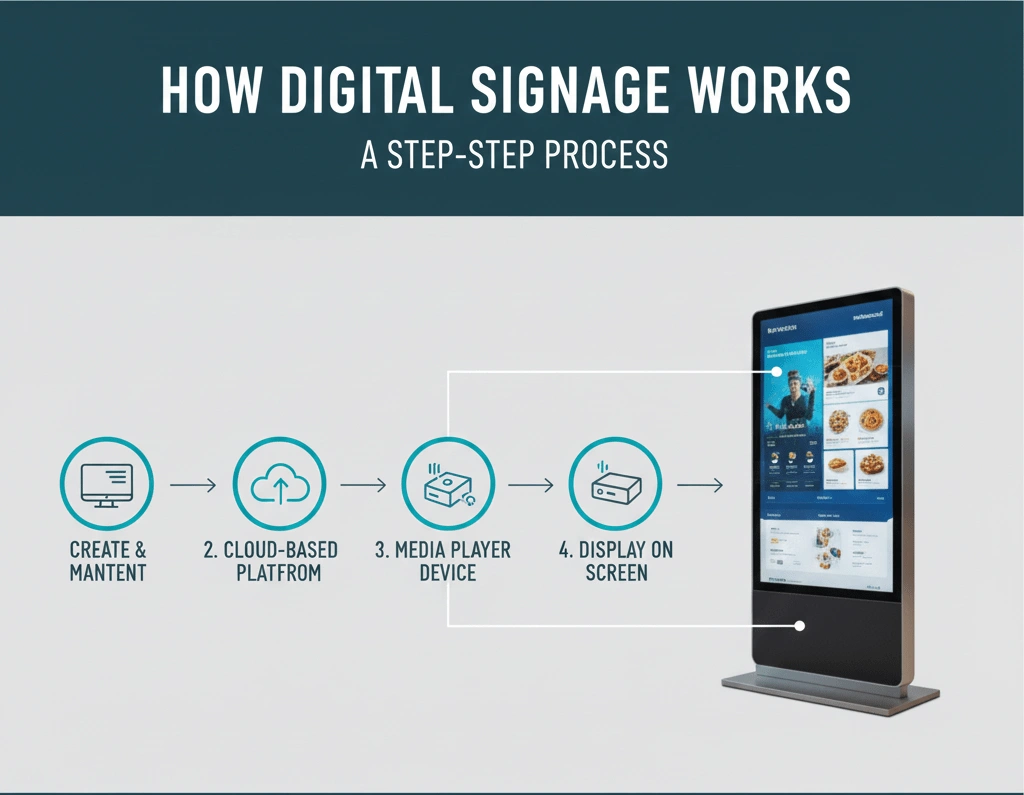
Digital signage works through three main parts:
1. Display Screen
This is the screen where content appears. These screens can be LED, LCD, or touch screens. Many businesses use commercial display screens because they are built to run for long hours without damage.
2. Media Player
The media player stores and plays the content. It connects to the screen and shows videos, images, or text based on the schedule.
3. Content Management System (CMS)
The CMS is software that allows you to control what appears on the screen. You can change content remotely, schedule ads, or update messages instantly.
Why Digital Signage Is Important
Digital signage is important because it helps businesses communicate better. It attracts attention faster than printed signs and delivers messages clearly.
Key reasons why businesses use digital signage:
- Easy to update content
- Saves printing costs
- Looks modern and professional
- Attracts more customers
- Works day and night
- Shows real-time information
Types of Digital Signage
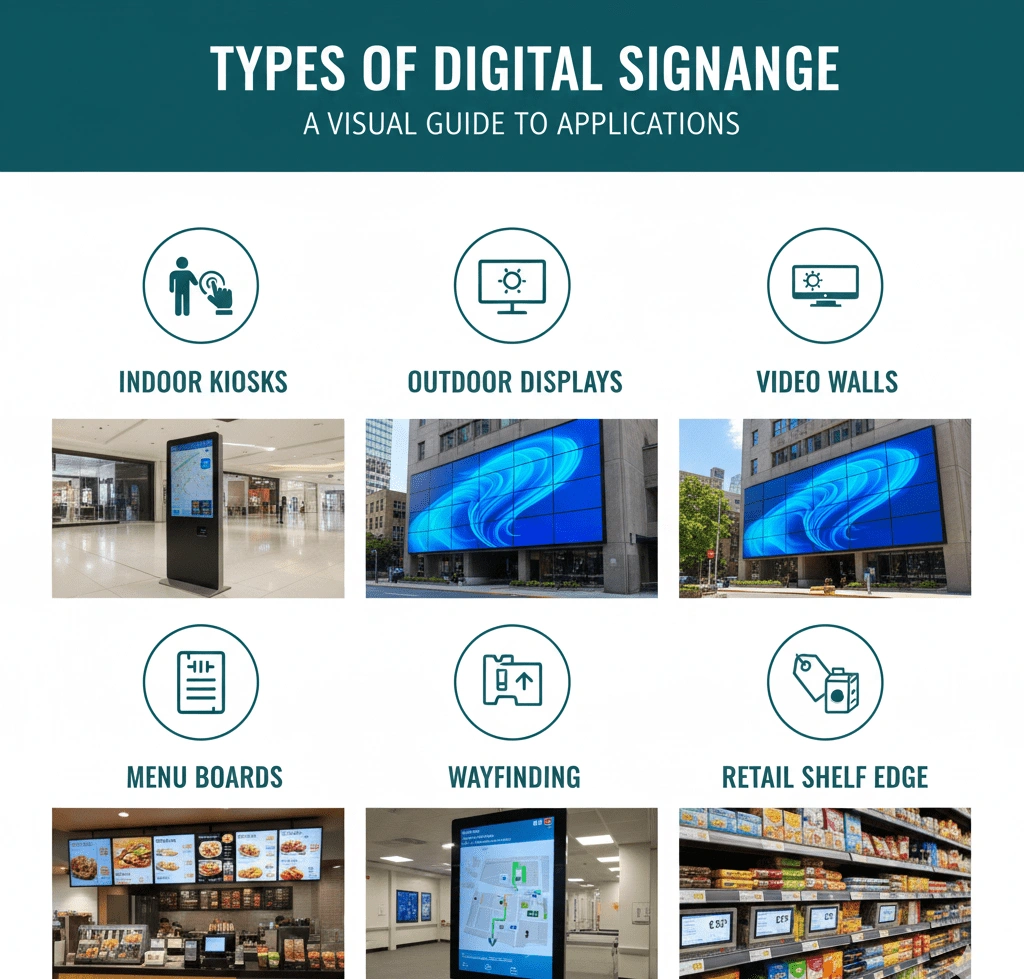
There are many types of digital signage based on usage and location.
Indoor Digital Signage
Indoor digital signage is used inside buildings such as malls, offices, stores, and hospitals. These displays focus on high image quality and clear visibility.
Examples:
- Menu boards
- Office welcome screens
- Retail promotion displays
Outdoor Digital Signage
Outdoor digital signage is designed to handle heat, dust, and sunlight. These screens are brighter and weather-resistant.
Examples:
- Roadside advertising screens
- Building facade displays
- Outdoor event screens
Interactive Digital Signage
Interactive signage allows users to touch the screen and interact with content. This improves user experience and engagement.
A good example is Double Sided Free Standing Touch displays, which allow interaction from both sides and are ideal for malls, exhibitions, and public spaces.
Where Digital Signage Is Used
Digital signage is used in almost every industry today.
Retail Stores
Retail stores use digital signage to promote products, show discounts, and attract customers. Moving visuals increase sales and customer interest.
Restaurants and Cafes
Digital menu boards replace printed menus. They are easy to update and look more appealing.
Corporate Offices
Offices use digital signage for announcements, welcome screens, meeting schedules, and internal communication.
Hospitals and Clinics
Hospitals use digital signage to guide patients, show appointment details, and share health information.
Airports and Transport Areas
Digital signage displays arrival times, departure updates, directions, and safety messages.
Benefits of Digital Signage
Better Attention
Moving content grabs attention faster than static signs.
Easy Content Updates
You can update content anytime without printing new materials.
Cost Effective
Although setup cost is higher, digital signage saves money over time.
Brand Visibility
Digital screens make your brand look modern and professional.
Targeted Messaging
Content can be changed based on time, location, or audience.
Digital Signage vs Traditional Signage
Traditional signage uses printed banners, boards, or posters. These are fixed and need replacement when content changes.
Digital signage allows:
- Instant updates
- Video and animation
- Remote management
- Better engagement
This makes digital signage more flexible and powerful.
What Content Can Be Shown on Digital Signage?
Digital signage can show many types of content:
- Advertisements
- Promotional offers
- Videos
- Slideshows
- News updates
- Weather information
- Directions and maps
- Social media feeds
The content can be scheduled to play at specific times.
Choosing the Right Digital Signage
Before choosing digital signage, consider the following:
Location
Is the screen for indoor or outdoor use?
Screen Size
Choose size based on viewing distance and space.
Brightness
Outdoor screens need higher brightness.
Touch or Non-Touch
Interactive displays are ideal for customer engagement.
Usage Time
Commercial-grade screens are better for long hours.
Digital Signage for Business Growth
Digital signage helps businesses grow by improving communication and marketing. It increases brand awareness and helps deliver the right message at the right time.
Using commercial display screens ensures long-lasting performance and better image quality, especially in busy environments.
Maintenance of Digital Signage
Digital signage requires minimal maintenance. Regular cleaning and software updates keep the system running smoothly. Professional installation also helps avoid future issues.
Common Questions About Digital Signage
Is digital signage expensive?
Initial cost can be higher, but it saves money over time.
Can content be updated remotely?
Yes, most systems allow remote updates.
Is digital signage suitable for small businesses?
Yes, even small stores can benefit from digital signage.
Does digital signage work in sunlight?
Outdoor screens are designed for high brightness.
Future of Digital Signage
Digital signage continues to grow with new technology. Touch screens, AI-based content, and smart scheduling are becoming more common. Businesses that invest in digital signage stay ahead of competition.
Interactive solutions like Double Sided Free Standing Touch displays show how digital signage is becoming more user-friendly and engaging.