Digital signage has become an essential tool for businesses, organizations, and public spaces to communicate messages, advertise products, and provide real-time information. From retail stores to corporate offices, airports, and stadiums, digital displays offer vibrant visuals, dynamic content, and interactive features. However, the increasing use of digital signage also brings the responsibility of ensuring safety, reliability, and regulatory compliance.
This comprehensive guide explores the key safety standards for digital signage, highlighting installation best practices, electrical safety, fire prevention, weather resistance, content considerations, and maintenance protocols. For businesses sourcing quality displays, partnering with a trusted Digital Led screens supplier ensures compliance with industry safety standards and high-quality performance.
Understanding Digital Signage Safety
Digital signage safety encompasses several aspects, including:
- Electrical safety: Proper wiring, voltage regulation, and grounding to prevent short circuits, shocks, or equipment damage.
- Structural safety: Secure mounting and support to prevent panels from falling or tipping over.
- Fire safety: Use of fire-resistant materials and adherence to local fire codes to minimize risks.
- Environmental protection: Ensuring screens can withstand exposure to outdoor conditions, moisture, and dust.
- Operational safety: Preventing overheating, glare, or content issues that could impact viewers or passersby.
Failure to adhere to safety standards can result in property damage, personal injury, legal liabilities, and reduced lifespan of the equipment. Therefore, every digital signage project must integrate safety measures from design to installation and ongoing maintenance.
Electrical Safety Standards for Digital Signage
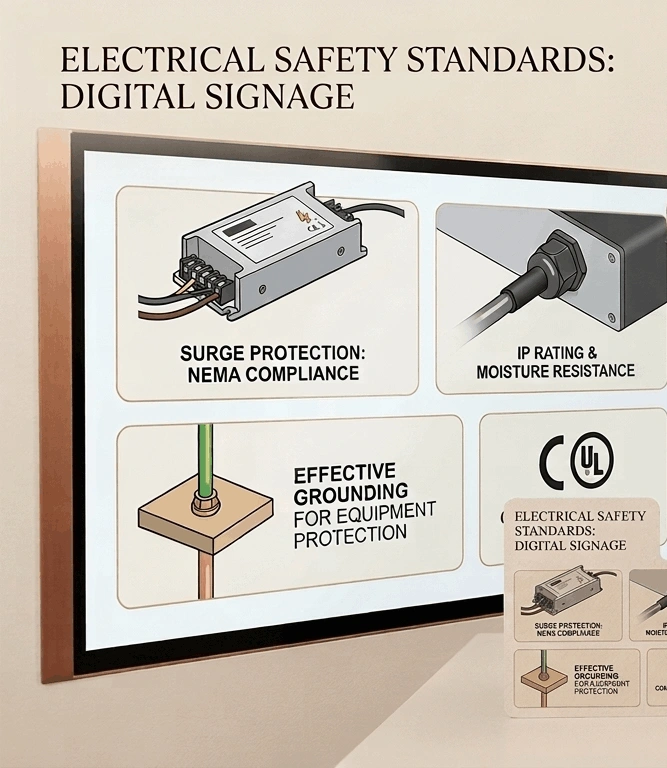
1. Proper Wiring and Installation
All digital signage installations require qualified electricians to handle wiring and connections. Key considerations include:
- Use of certified electrical cables and connectors that comply with local regulations
- Correct voltage and current rating matching the specifications of the display
- Adequate grounding to prevent electric shock
Improper wiring or unregulated power supply can lead to short circuits, equipment failure, or fire hazards. Using surge protectors and stabilizers is recommended for high-power displays.
2. Overcurrent and Circuit Protection
Digital displays, especially large LED walls, consume significant power. Overcurrent protection, including circuit breakers and fuses, ensures that sudden electrical surges do not damage components or pose safety risks.
3. Power Source Reliability
Outdoor or public digital signage may require backup power or uninterrupted power supply (UPS) systems to prevent unexpected shutdowns that could cause display malfunction or electrical hazards.
Structural Safety Standards
1. Mounting and Support Systems
Digital signage, particularly large LED panels, must be securely mounted. Structural safety standards include:
- Proper selection of mounting brackets and supports rated for the weight of the panel
- Use of anchor bolts and fasteners suitable for wall type or frame material
- Regular inspection of mounting systems for wear, corrosion, or loosening
For floor-standing displays, stability is essential to prevent tipping, especially in high-traffic areas. Base supports, anti-tip brackets, and weight distribution are critical considerations.
2. Seismic and Environmental Considerations
In regions prone to seismic activity, digital signage must meet standards for earthquake-resistant mounting. Outdoor screens must also account for wind load, vibration, and potential impact from environmental factors.
Fire Safety Standards
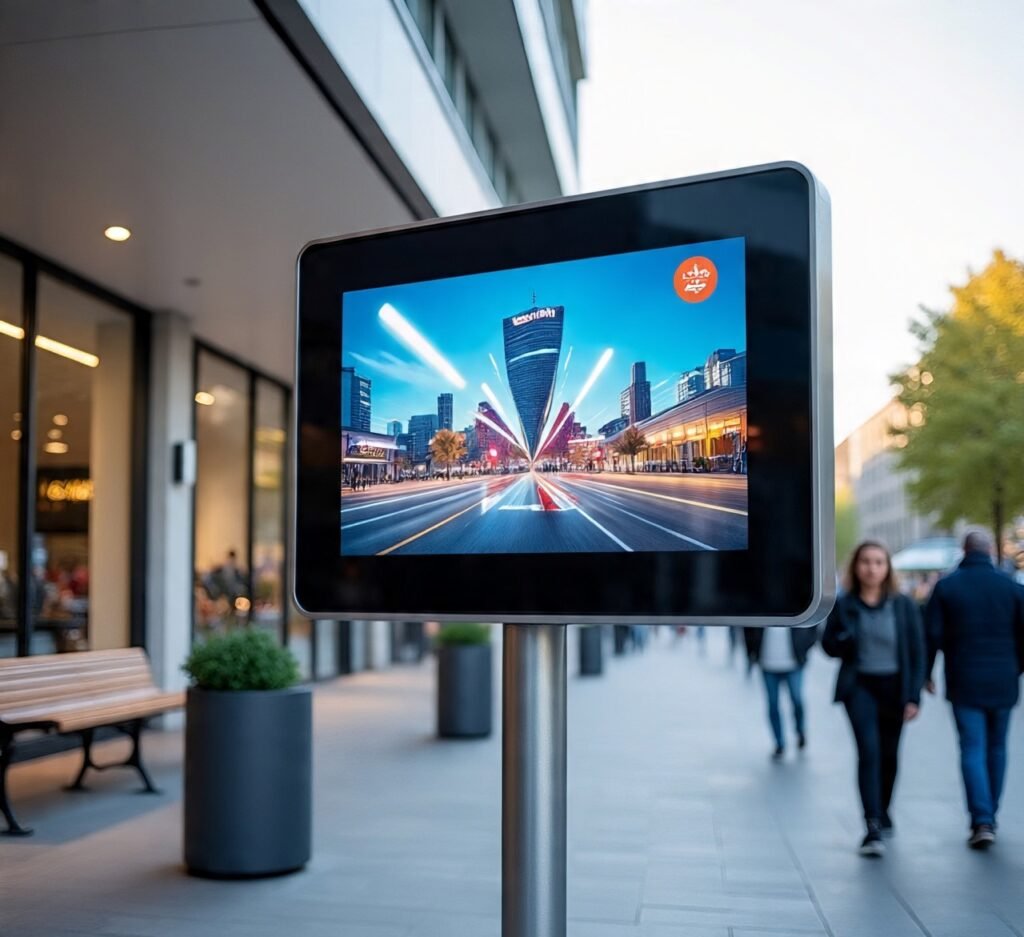
Fire safety is a critical aspect of digital signage, especially for indoor installations. Key measures include:
- Using fire-retardant materials for panels, frames, and mounting structures
- Ensuring adequate ventilation and cooling to prevent overheating of electronic components
- Compliance with local building and fire codes, including the National Fire Protection Association (NFPA) or Dubai Civil Defense regulations
- Installing fire detection and suppression systems in large or high-risk installations
Regular inspections help identify potential fire hazards such as blocked ventilation, overloaded circuits, or overheating components.
Environmental and Weather Resistance
Outdoor digital signage is exposed to sunlight, rain, humidity, dust, and temperature fluctuations. Safety standards require:
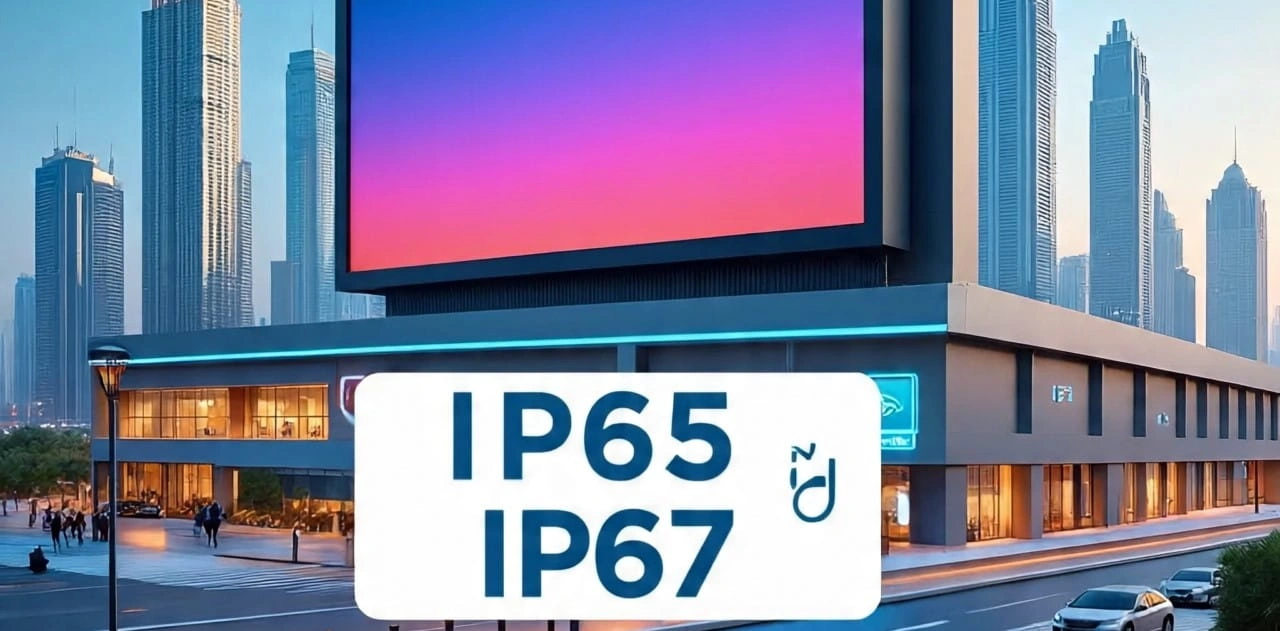
- IP-rated enclosures: Screens must have appropriate Ingress Protection ratings (IP65 or higher for outdoor applications) to prevent water and dust ingress
- UV-resistant coatings: Protect screens from fading or overheating due to direct sunlight
- Temperature control systems: Built-in fans, cooling systems, or heating units to maintain operational temperature range
Proper environmental protection not only ensures safety but also extends the lifespan of the digital display.
Content and Operational Safety

Safety standards for digital signage also extend to operational and content considerations:
1. Glare and Light Intensity
Excessively bright displays or poorly positioned screens can cause eye strain or distract drivers and pedestrians. Standards suggest:
- Adjusting brightness levels according to location and ambient light
- Using anti-glare coatings for outdoor and street-facing signage
2. Motion and Animation Safety
Rapidly flashing content or high-contrast animations may trigger photosensitive reactions in vulnerable individuals. Content scheduling should follow guidelines to minimize such risks.
3. Screen Placement and Accessibility
Screens must be positioned at safe heights and distances, ensuring they do not obstruct pathways, emergency exits, or create tripping hazards.
Compliance with International Standards
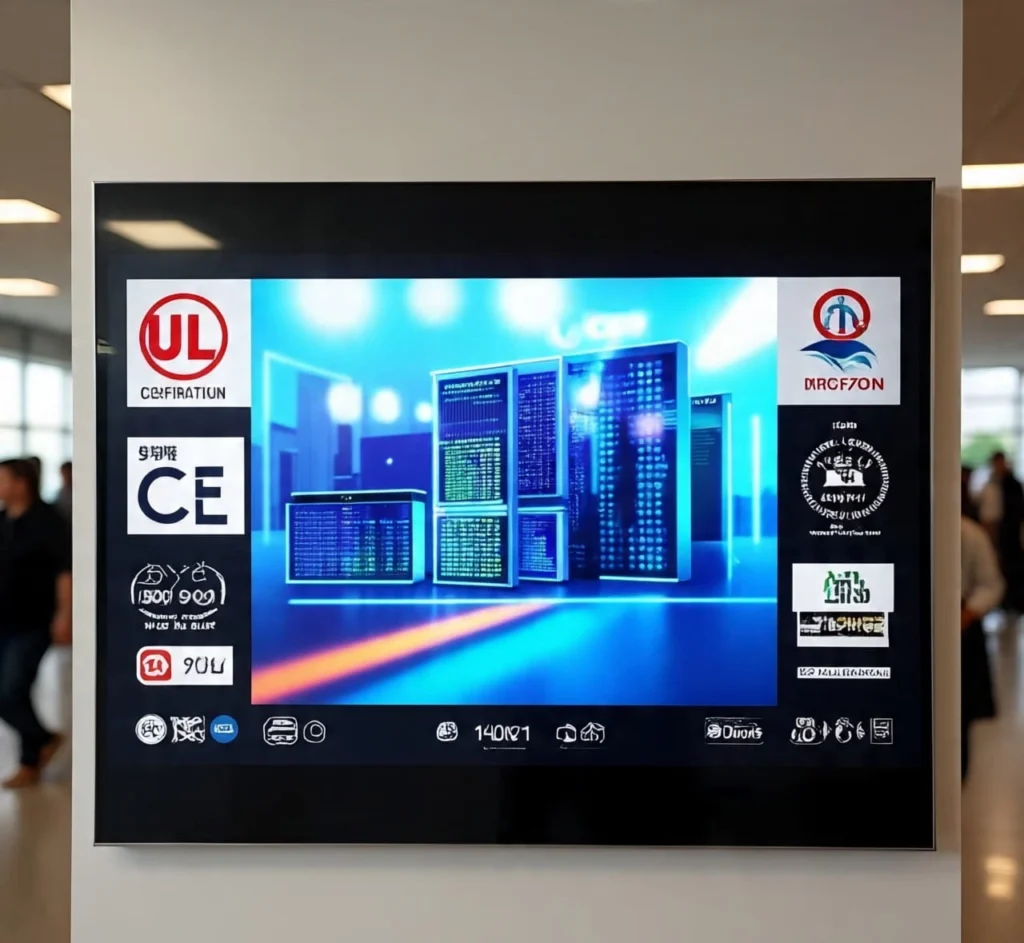
To ensure safety and reliability, digital signage products should comply with recognized international standards:
- UL Certification (Underwriters Laboratories): Confirms electrical and fire safety compliance
- CE Marking: Compliance with European health, safety, and environmental standards
- ISO 9001 / ISO 14001: Ensures quality management and environmental safety practices
- RoHS Compliance: Restriction of hazardous substances in electronic components
Working with a certified Digital Led screens supplier guarantees that the products meet these international safety and quality benchmarks.
Maintenance and Inspection Protocols
Even well-installed digital signage requires regular inspection and maintenance:
- Electrical system checks: Inspect cables, connectors, and fuses for wear or damage
- Structural integrity: Check mounting brackets, bolts, and supports periodically
- Cleaning: Remove dust and debris from screens, vents, and enclosures
- Software and firmware updates: Ensure control systems operate safely and efficiently
Routine maintenance prevents unexpected failures, overheating, or safety incidents, while also improving the operational lifespan of the display.
Indoor vs Outdoor Safety Considerations
Indoor Displays
- Often located in malls, airports, offices, and exhibition halls
- Must follow strict fire and electrical safety codes
- Brightness and glare control are critical to prevent eye strain
Outdoor Displays
- Exposed to weather, dust, and UV radiation
- Require IP-rated enclosures and temperature regulation
- Must be securely anchored to withstand wind and environmental stress
Both indoor and outdoor installations benefit from proper safety training for installation teams and clear documentation of safety compliance.
Advanced Safety Features
Modern digital signage solutions include built-in safety mechanisms such as:
- Overheat sensors and automatic shutdown systems
- Voltage regulators and surge protection
- Lockable enclosures to prevent tampering in public spaces
- Remote monitoring to detect operational anomalies
Integrating these safety features ensures that digital displays operate reliably in any environment.
Why Safety Standards Matter
Adhering to safety standards for digital signage is not just regulatory compliance—it also protects:
- People: Prevents injury from electrical shocks, fire hazards, or falling displays
- Property: Reduces the risk of fire or damage caused by faulty installations
- Business Reputation: Shows professionalism, trustworthiness, and commitment to quality
- Investment: Ensures the longevity and reliability of the digital signage solution
Businesses in Dubai and worldwide can mitigate risks, improve operational efficiency, and maintain high-quality visual communication by following these standards.
Working with a Trusted Digital Led Screens Supplier
Partnering with a certified Digital Led screens supplier is crucial for ensuring that safety standards are met. A reliable supplier provides:
- Certified products that comply with electrical, fire, and environmental safety standards
- Guidance on proper installation, maintenance, and regulatory compliance
- High-quality displays with long-term warranties
- Technical support and safety audits
Choosing the right supplier reduces the risk of accidents, equipment failure, and costly replacements while guaranteeing a safe viewing experience for audiences.