Designing an LED screen is not about picking a random size. It is a technical process that combines viewing distance, pixel pitch, resolution, content type, and installation environment.
After working on LED display projects across Dubai, from retail screens in Dubai Mall to outdoor billboards in Sheikh Zayed Road, one key principle always applies:
A correctly calculated LED screen size delivers clarity, impact, and ROI. A wrong calculation leads to wasted budget and poor visibility.
This guide explains the exact professional method used to calculate custom LED screen sizes for any space.
Understanding the Core Concept First
Before calculating size, you need to understand:
LED Screens Are Modular
LED displays are not made in fixed sizes like TVs. They are built using panels (modules).
Typical module sizes:
- 250mm × 250mm
- 320mm × 160mm
- 500mm × 500mm
This means:
Final screen size must always be a multiple of module dimensions.
Step-by-Step Process to Calculate LED Screen Size
Step 1: Measure the Installation Area
Start with the available wall or structure.
Example:
- Width: 6 meters
- Height: 3 meters
But you cannot directly use this size. You must adjust it based on module dimensions.
Step 2: Define Viewing Distance
Viewing distance determines pixel pitch.
Rule of Thumb:
Minimum viewing distance (meters) ≈ Pixel pitch (mm)
Examples:
- P2.5 → 2.5 meters
- P5 → 5 meters
- P10 → 10 meters
Real Example in Dubai:
- Indoor retail store in Mall of the Emirates → P2.5 or P3
- Outdoor billboard on Sheikh Zayed Road → P6 to P10
Step 3: Choose Pixel Pitch Based on Use Case
Pixel pitch = distance between LEDs.
Indoor Screens:
- P1.8 – P3 → high resolution
- Close viewing
Outdoor Screens:
- P4 – P10+ → long-distance visibility
Choosing wrong pitch affects:
- Image clarity
- Cost
- Performance
Step 4: Calculate Resolution Requirements
Resolution depends on content.
Standard Guidelines:
- Retail advertising → High resolution
- Corporate presentations → Medium
- Outdoor ads → Lower resolution acceptable
Example Calculation:
If you want:
- Width: 1920 pixels (Full HD)
- Pixel pitch: P2.5
Then:
Width in meters = Pixel count × Pixel pitch
= 1920 × 2.5mm
= 4800mm = 4.8 meters
Step 5: Match Screen Size with Module Dimensions
This is where most people make mistakes.
If module size is:
- 320mm × 160mm
Then screen size must be:
Width:
4.8m ÷ 0.32m = 15 modules
Height:
2.7m ÷ 0.16m = 16.8 → adjust to 17 modules
Final adjusted size:
- Width: 4.8m
- Height: 2.72m
The Real Formula Used by Professionals
Screen Width (m) = Number of Pixels × Pixel Pitch (mm) ÷ 1000
Screen Height (m) = Number of Pixels × Pixel Pitch (mm) ÷ 1000
But in real projects, we also consider:
- Module size
- Cabinet size
- Installation structure
Aspect Ratio: The Hidden Factor
Most screens follow:
- 16:9 (standard video)
- 4:3 (presentations)
- Custom ratios for creative displays
If aspect ratio is wrong:
- Content gets stretched
- Visual quality drops
Real-World Scenarios
1. Retail Store LED Screen
Location: City Walk
Requirements:
- Close viewing
- High brightness
Solution:
- Pixel pitch: P2.5
- Size: Based on wall
- Resolution: High
2. Outdoor Billboard
Location: Sheikh Zayed Road
Requirements:
- Long-distance visibility
- Weather resistance
Solution:
- Pixel pitch: P8
- Large format
- Lower resolution acceptable
3. Corporate Office Display
Location: Business Bay
Requirements:
- Presentations
- Branding
Solution:
- Pixel pitch: P2–P3
- Standard 16:9 ratio
Common Mistakes in LED Screen Size Calculation
Ignoring Viewing Distance
Leads to:
- Blurry image
- Poor readability
Choosing Wrong Pixel Pitch
Too small:
- Expensive
Too large:
- Low quality
Not Matching Module Size
Results in:
- Wasted space
- Improper installation
Overlooking Content Type
Different content requires different resolution.
Structural and Installation Considerations
Weight and Mounting
LED screens are heavy.
You must consider:
- Wall strength
- Steel structure
Power Requirements
Large screens consume significant power.
Ventilation
Especially important in hot climates like Dubai.
Indoor vs Outdoor LED Screen Sizing
Indoor Screens
- Smaller pitch
- Higher resolution
- Controlled lighting
Outdoor Screens
- Larger pitch
- High brightness
- Weatherproof
Cost Impact of Screen Size Calculation
Screen cost depends on:
- Pixel pitch
- Total area (sqm)
- Resolution
- Installation complexity
Important insight:
Smaller pixel pitch = higher cost per sqm
Advanced Concept: Content-Led Screen Design
Modern projects do not start with size.
They start with content.
Questions to ask:
- What will be displayed?
- Video or static?
- Text readability?
Then size is calculated accordingly.
Why You Need an Expert Supplier
LED screen sizing is not a DIY process.
A professional custom modern led screen supplier will:
- Analyze your space
- Calculate optimal size
- Recommend correct pixel pitch
- Ensure perfect installation
This avoids costly mistakes and ensures long-term performance.
Future Trends in LED Screen Sizing
The industry is moving toward:
- Flexible LED screens
- Transparent displays
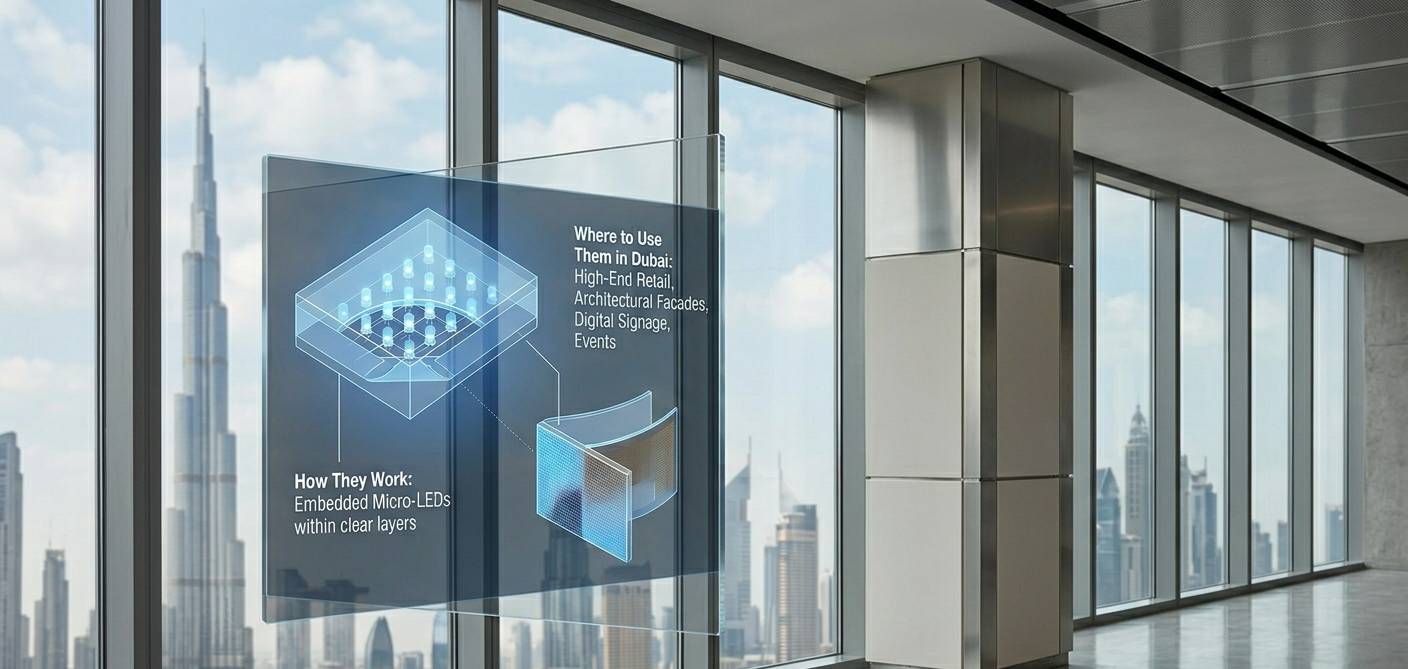
- Curved installations
- AI-based content scaling
Cities like Dubai are already adopting these in malls, roads, and commercial buildings.