Introduction
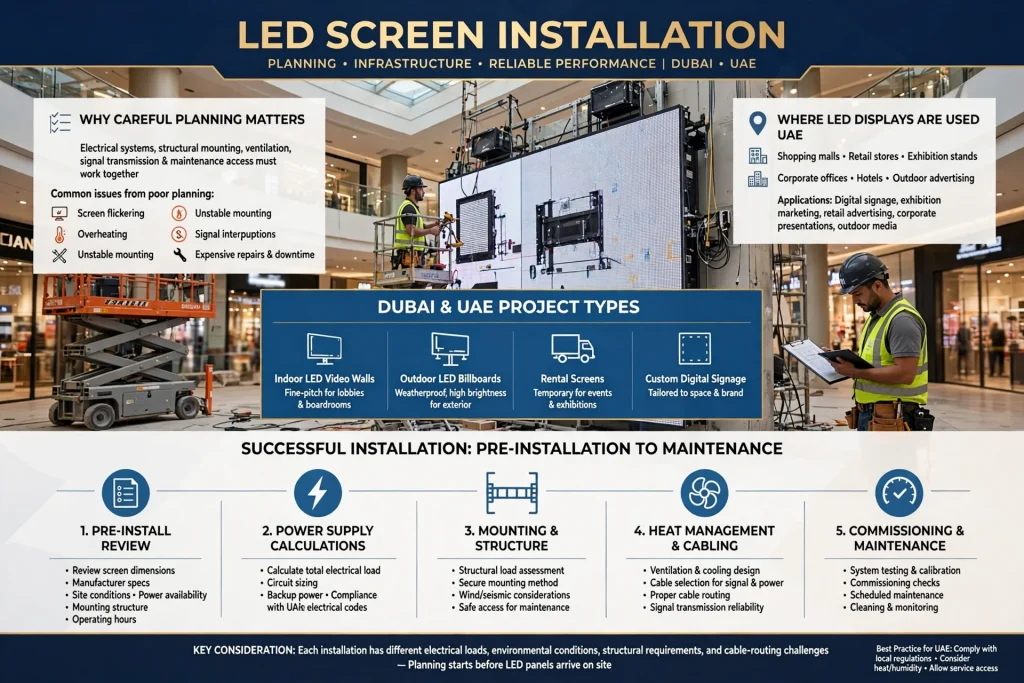
LED screen installation requires careful coordination between electrical systems, structural mounting, ventilation, signal transmission and maintenance access. Whether a display is installed in a shopping mall, retail store, exhibition stand, corporate office, hotel or outdoor advertising location, each component must work together to provide reliable performance. Poor planning can lead to screen flickering, overheating, unstable mounting, signal interruptions and expensive repairs.
In Dubai and other parts of the UAE, LED displays are widely used for digital signage, exhibition marketing, retail advertising, corporate presentations and outdoor media. Projects may involve indoor LED video walls, fine-pitch LED displays, outdoor LED billboards, rental screens and custom digital signage. Each installation has different electrical loads, environmental conditions, structural requirements and cable-routing challenges.
A successful installation begins before the LED panels arrive on site. The installer should review the screen dimensions, manufacturer specifications, site conditions, power availability, mounting structure and intended operating hours. This guide explains how to plan LED screen installation, including power supply calculations, mounting methods, heat management, cable selection, commissioning and ongoing maintenance.
1. Assess the Installation Site Before Choosing the Equipment
The first step is to inspect the installation location and determine whether it can safely accommodate the proposed LED screen. The assessment should cover wall dimensions, available mounting space, structural capacity, environmental exposure, electrical distribution and access for technicians.
For an indoor LED video wall in a Dubai office or shopping mall, the assessment should consider the wall construction, nearby lighting, ventilation and visibility from the intended viewing positions. For an outdoor LED billboard in Sharjah, Abu Dhabi or Dubai, additional factors include wind exposure, rain, dust, direct sunlight and access for maintenance.
The screen’s intended use also affects the installation plan. A retail display showing promotional content may operate for long hours every day, while an exhibition LED wall may be installed temporarily and dismantled after an event. A control-room display may require continuous operation and a carefully designed backup strategy.
Before finalising the design, record the screen width and height, total cabinet weight, power requirements, signal connections, installation height and maintenance access needs. These details provide the foundation for electrical, structural and thermal planning.
2. Calculate the LED Screen Power Supply Requirements
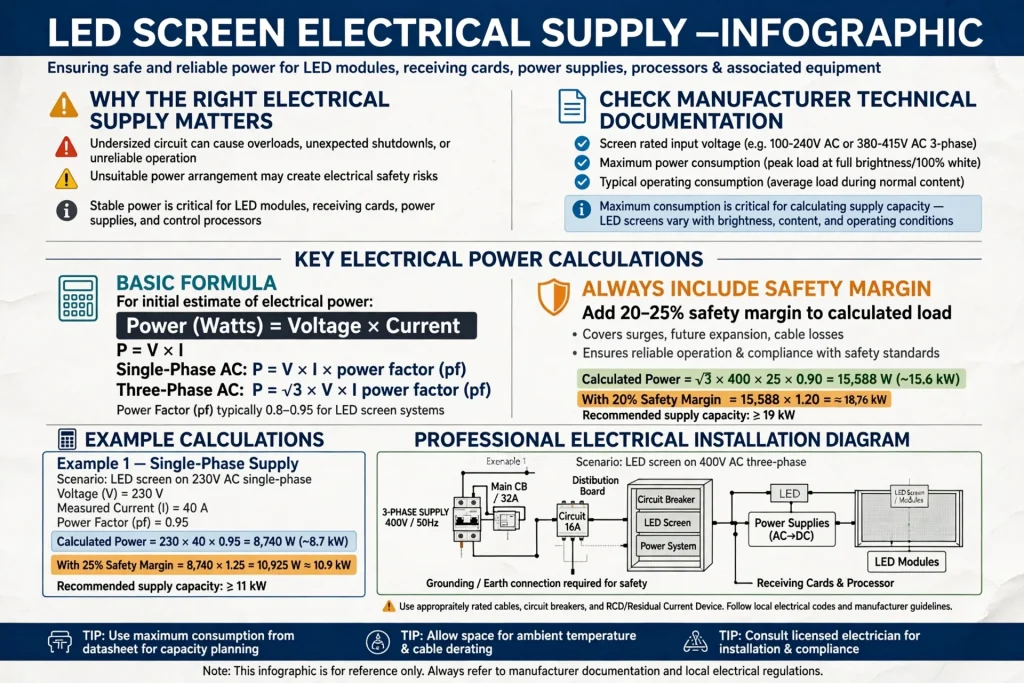
An LED screen needs a suitable electrical supply to operate its LED modules, receiving cards, power supplies, processors and associated equipment. An undersized circuit can cause overloads, unexpected shutdowns or unreliable operation, while an unsuitable power arrangement may create electrical safety risks.
The manufacturer’s technical documentation should identify the screen’s rated input voltage, maximum power consumption and typical operating consumption. Maximum consumption is particularly important when calculating the supply capacity because LED screens can draw different amounts of power depending on brightness, content and operating conditions.
For an initial estimate, electrical power can be calculated using:
Power (W) = Voltage (V) × Current (A)
For example, if a device operates at 230 V and draws 5 A, its electrical input power is approximately 1,150 W, assuming the stated values and power characteristics support that calculation. Actual electrical design must also account for power factor, circuit protection, startup behaviour and the manufacturer’s specifications.
For LED video walls, do not calculate the entire installation using a single cabinet’s typical consumption alone. Multiply the appropriate per-cabinet rating by the number of cabinets, then account for processors, media players, control equipment and other connected devices.
The final electrical design should be reviewed by a qualified electrical professional. Circuit capacity, conductor size, protective devices, earthing and distribution arrangements must suit the installation and applicable local requirements.
3. Understand Maximum and Typical Power Consumption
Maximum power consumption describes the upper operating demand specified by the manufacturer under defined conditions. Typical consumption represents a more usual operating level, which may be lower depending on content and brightness.
This distinction matters for large LED displays. A screen showing bright, predominantly white content may consume more power than the same screen displaying darker promotional graphics. Outdoor LED billboards operating at high brightness may also have different energy demands from indoor fine-pitch displays.
Consider a hypothetical LED display with a manufacturer-rated maximum consumption of 600 W per square metre. If the total display area is 8 square metres, the estimated maximum screen consumption would be:
8 m² × 600 W/m² = 4,800 W, or 4.8 kW.
This is an illustrative calculation, not a specification for every LED display. The actual value must come from the selected product’s datasheet. The electrical designer should determine the appropriate supply and protection arrangements based on the full installation requirements.
Avoid selecting a power supply or circuit using average consumption alone. Adequate capacity helps accommodate the specified operating demand and reduces the likelihood of nuisance tripping or unstable performance.
4. Select the Correct Power Distribution and Protection
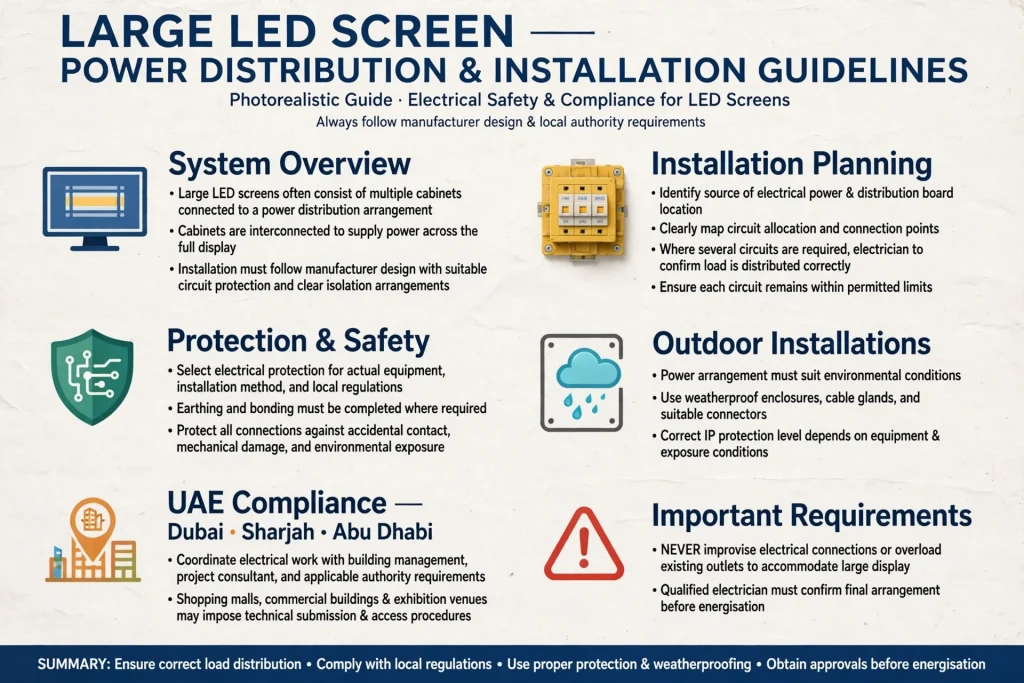
Large LED screens often consist of multiple cabinets connected to a power distribution arrangement. Power should be distributed according to the manufacturer’s design, with suitable circuit protection and clear isolation arrangements.
The installation plan should identify the source of electrical power, distribution board location, circuit allocation and connection points. Where several circuits are required, the electrician should confirm that the load is distributed correctly and that each circuit remains within its permitted limits.
Electrical protection must be selected for the actual equipment, installation method and local regulations. Earthing and bonding should be completed where required, and connections should be protected against accidental contact, mechanical damage and environmental exposure.
For outdoor LED screens, the power arrangement must also suit the environmental conditions. Weatherproof enclosures, cable glands and suitable connectors may be necessary, but the correct protection level depends on the equipment and exposure conditions.
In Dubai, Sharjah and Abu Dhabi, electrical work should be coordinated with the relevant building management, project consultant and applicable authority requirements. Shopping malls, commercial buildings and exhibition venues may also impose their own technical submission and access procedures.
Never improvise electrical connections or overload existing outlets to accommodate a large display. A qualified electrician should confirm the final arrangement before energisation.
5. Choose a Safe and Suitable LED Screen Mounting Method
Mounting is a critical part of LED screen installation because the supporting structure must safely carry the display’s weight and withstand the conditions at the installation site. A mounting system that is suitable for a small indoor screen may not be appropriate for a large video wall or outdoor billboard.
Common mounting options include wall-mounted frames, floor-supported structures, freestanding displays, modular video-wall frames and engineered overhead suspension systems. The correct method depends on the screen dimensions, cabinet weight, wall construction, viewing position and maintenance requirements.
For indoor installations, check whether the wall consists of concrete, masonry, steel framing or lightweight partition construction. The visible wall surface alone does not confirm its load-bearing capacity. Anchors, brackets and supporting members must be suitable for the actual substrate and expected loads.
Large LED video walls may require an independent support frame rather than direct attachment to a decorative wall. This can be particularly important in retail interiors, hospitality environments and commercial fit-out projects where the wall finish is not designed to support heavy equipment.
Outdoor installations require additional structural assessment for wind loads, support foundations, corrosion exposure and access for maintenance. A qualified structural engineer should determine the appropriate design where necessary.
6. Plan Wall-Mounted, Freestanding and Suspended Displays
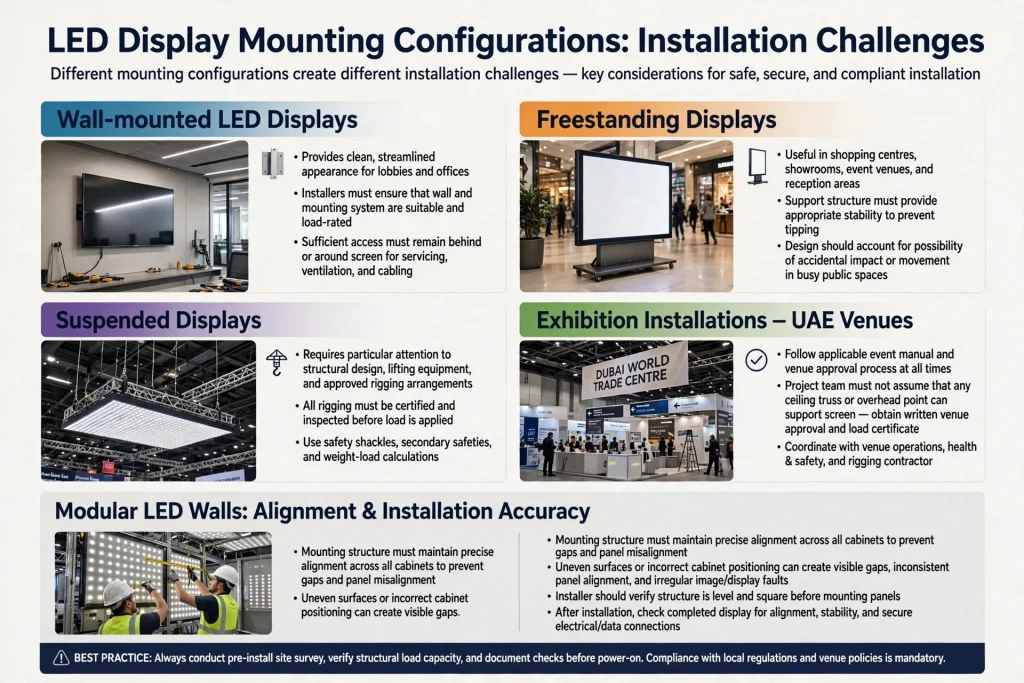
Different mounting configurations create different installation challenges. Wall-mounted LED displays can provide a clean appearance, but installers must ensure that the wall and mounting system are suitable and that sufficient access remains behind or around the screen.
Freestanding displays may be useful in shopping centres, showrooms, event venues and reception areas. Their support structure must provide appropriate stability, and the design should account for the possibility of accidental impact or movement in busy public spaces.
Suspended displays require particular attention to structural design, lifting equipment and approved rigging arrangements. Exhibition installations at Dubai World Trade Centre or other UAE venues should follow the applicable event manual and venue approval process. The project team must not assume that any ceiling, truss or overhead point can support a screen.
For modular LED walls, the mounting structure must maintain alignment across cabinets. Uneven surfaces or incorrect cabinet positioning can create visible gaps, inconsistent panel alignment and an irregular image.
The installer should verify the structure before mounting the panels and check the completed display for alignment, stability and secure connections.
7. Provide Adequate Ventilation and Heat Dissipation
LED screens convert electrical energy into light and heat. If heat cannot escape effectively, internal temperatures may rise and affect component life, performance or reliability.
Ventilation planning should follow the manufacturer’s installation instructions. Some LED cabinets use passive cooling, while others incorporate fans or specific airflow arrangements. The installer must preserve the designed air paths and avoid blocking ventilation openings with decorative panels, insulation or nearby equipment.
For indoor video walls, check the clearance between the display and the rear wall. A tightly enclosed installation may trap warm air, particularly when multiple cabinets operate continuously. Where a recessed installation is required, the surrounding enclosure should be designed with appropriate airflow and service access.
Outdoor LED screens also need thermal consideration. Direct sunlight and high ambient temperatures in the UAE can increase the thermal load even when the display is operating normally. The equipment should be rated for the expected environmental conditions, and any required cooling or ventilation provisions must be incorporated into the design.
Do not assume that adding an air-conditioning unit will solve every overheating problem. Poor airflow, blocked vents, dirty filters or unsuitable enclosure design can still restrict heat removal. Temperature monitoring and routine inspection help identify problems before they cause unexpected downtime.
8. Select the Right Power and Signal Cables
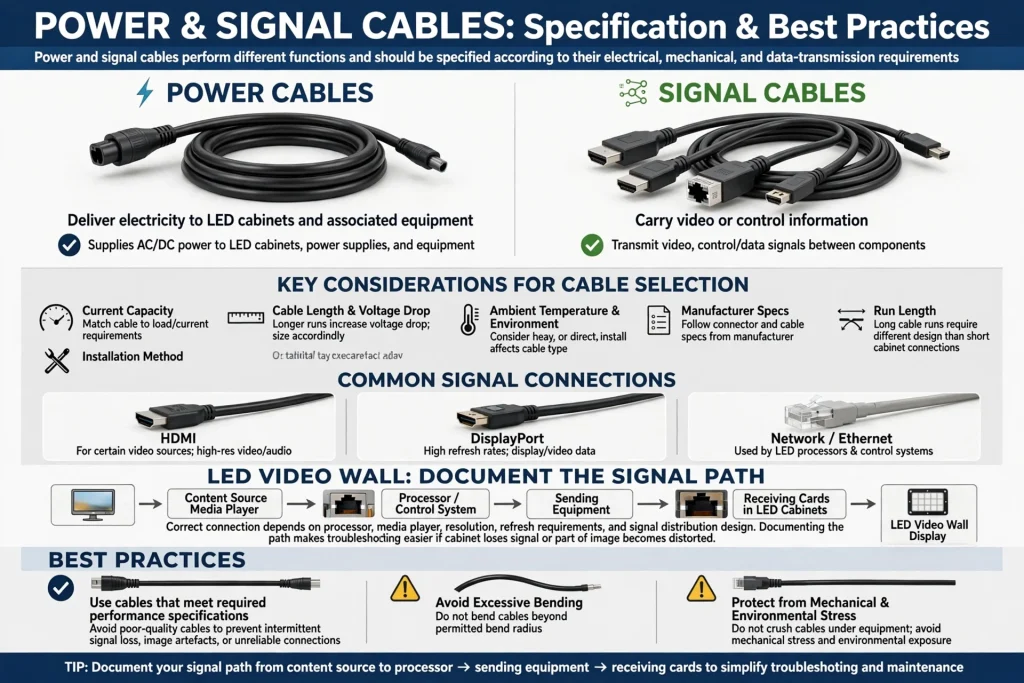
Power and signal cables perform different functions and should be specified according to their electrical, mechanical and data-transmission requirements. Power cables deliver electricity to the LED cabinets and associated equipment, while signal cables carry video or control information.
Cable selection should consider current capacity, cable length, voltage drop, installation method, ambient temperature, environmental exposure and the manufacturer’s connection specifications. Long cable runs may require a different design from short connections within a display cabinet.
Common signal connections include HDMI and DisplayPort for certain video sources, as well as network-based connections used by compatible LED processors and control systems. The correct connection depends on the processor, media player, resolution, refresh requirements and signal distribution design.
For larger LED video walls, the signal path should be documented from the content source to the processor, sending equipment and receiving cards. This makes troubleshooting easier if a cabinet loses signal or part of the image becomes distorted.
Use cables that meet the required performance specifications. Poor-quality or unsuitable cables can cause intermittent signal loss, image artefacts or unreliable connections. Avoid bending cables beyond their permitted radius, crushing them under equipment or exposing them to unnecessary mechanical stress.
9. Separate and Organise Power and Signal Routing
Good cable management improves safety, appearance, maintenance and troubleshooting. Poorly organised cables can become difficult to trace, may be damaged during servicing and can create hazards in public areas.
Plan the cable routes before installing the screen. Identify cable trays, conduits, access panels and entry points into the display structure. Where cables pass through metal openings or other potentially abrasive surfaces, suitable protection should be provided.
Power and data cables should be routed according to the manufacturer’s instructions and applicable electrical requirements. Separation may be needed to reduce electromagnetic interference and to support safe access. The appropriate arrangement depends on the cable type, system design and installation conditions.
For exhibition stands, cable routes should be concealed where practical without creating inaccessible connections. For outdoor displays, cables and connectors must be suitable for the exposure conditions and protected against water ingress, ultraviolet exposure and physical damage as applicable.
Label important cables and both ends of critical connections. A simple identification system can help technicians isolate a cabinet or trace a signal path without disconnecting unrelated equipment.
Before handover, inspect cable routes for loose connections, excessive tension, sharp bends, damaged insulation and obstructions to ventilation.
10. Consider Weatherproofing for Outdoor LED Screens
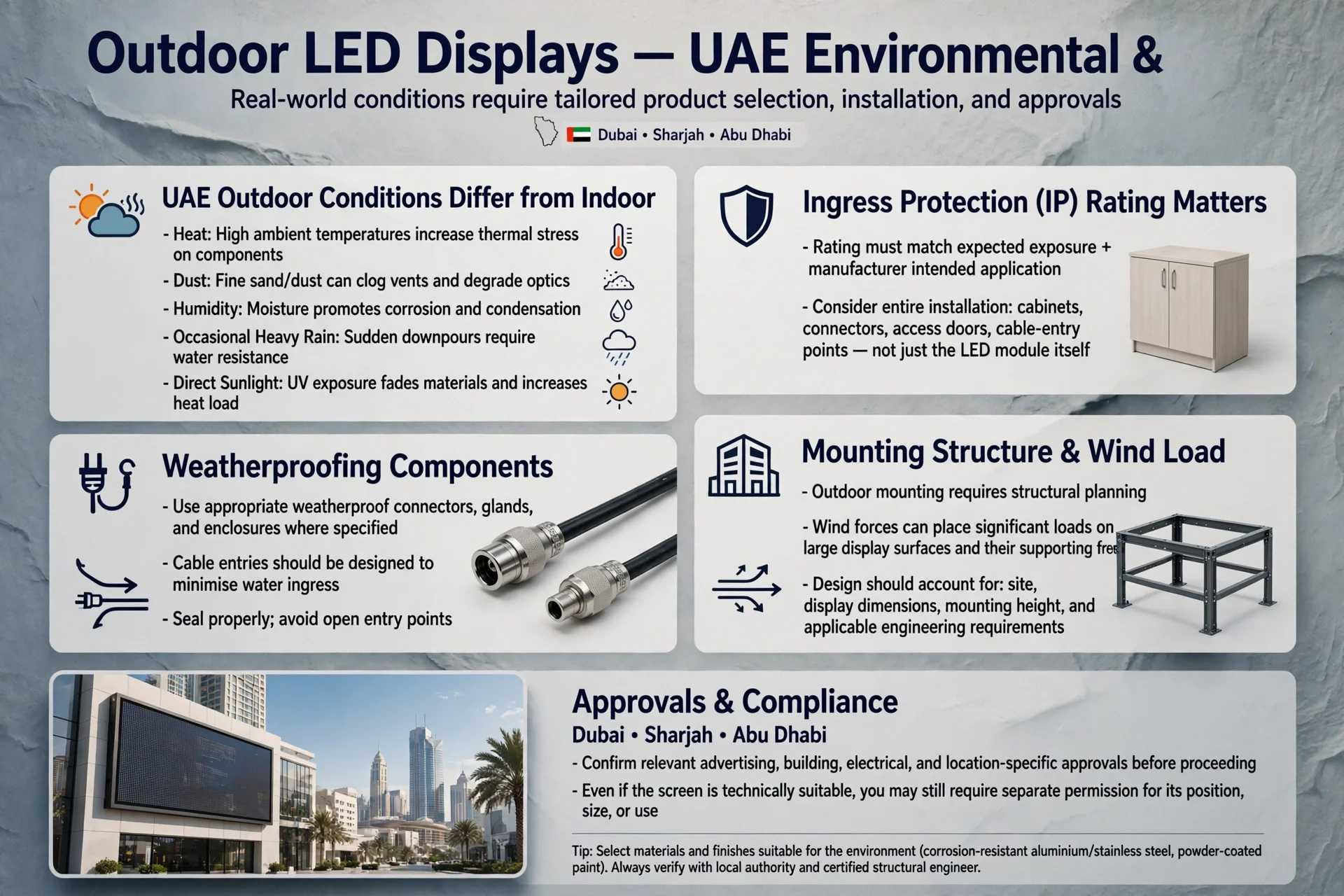
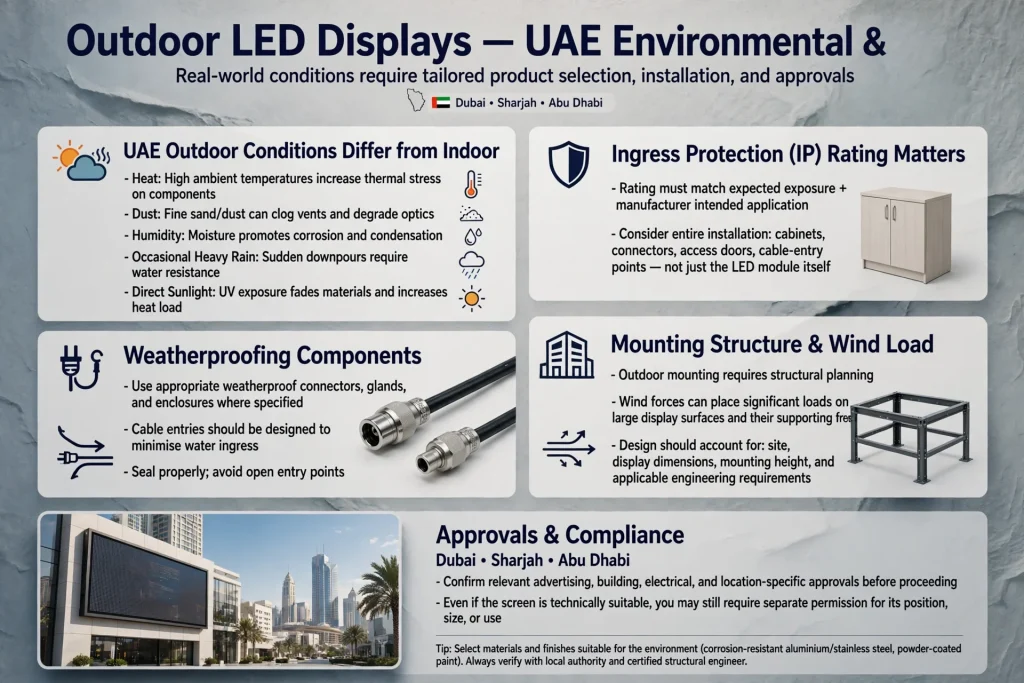
Outdoor LED displays face conditions that differ significantly from indoor screens. In the UAE, dust, humidity, heat, occasional heavy rain and direct sunlight should be considered during product selection and installation.
The display’s ingress protection rating should match the expected exposure and the manufacturer’s intended application. The rating for the complete installation may depend on cabinets, connectors, access doors and cable-entry points, not just the LED module itself.
Use appropriate weatherproof connectors, glands and enclosures where specified. Cable entries should be designed to minimise water ingress, and the mounting structure should use materials and finishes suitable for the environment.
Outdoor mounting also requires structural planning. Wind forces can place significant loads on large display surfaces and their supporting frames. The design should account for the site, display dimensions, mounting height and applicable engineering requirements.
For installations in Dubai, Sharjah or Abu Dhabi, confirm any relevant advertising, building, electrical and location-specific approvals before proceeding. A screen that is technically suitable may still require separate permission for its position, size or use.
11. Configure the LED Processor and Content System
Once the screen is mounted and the electrical installation is ready, the video processor and control system must be configured to match the display’s physical layout.
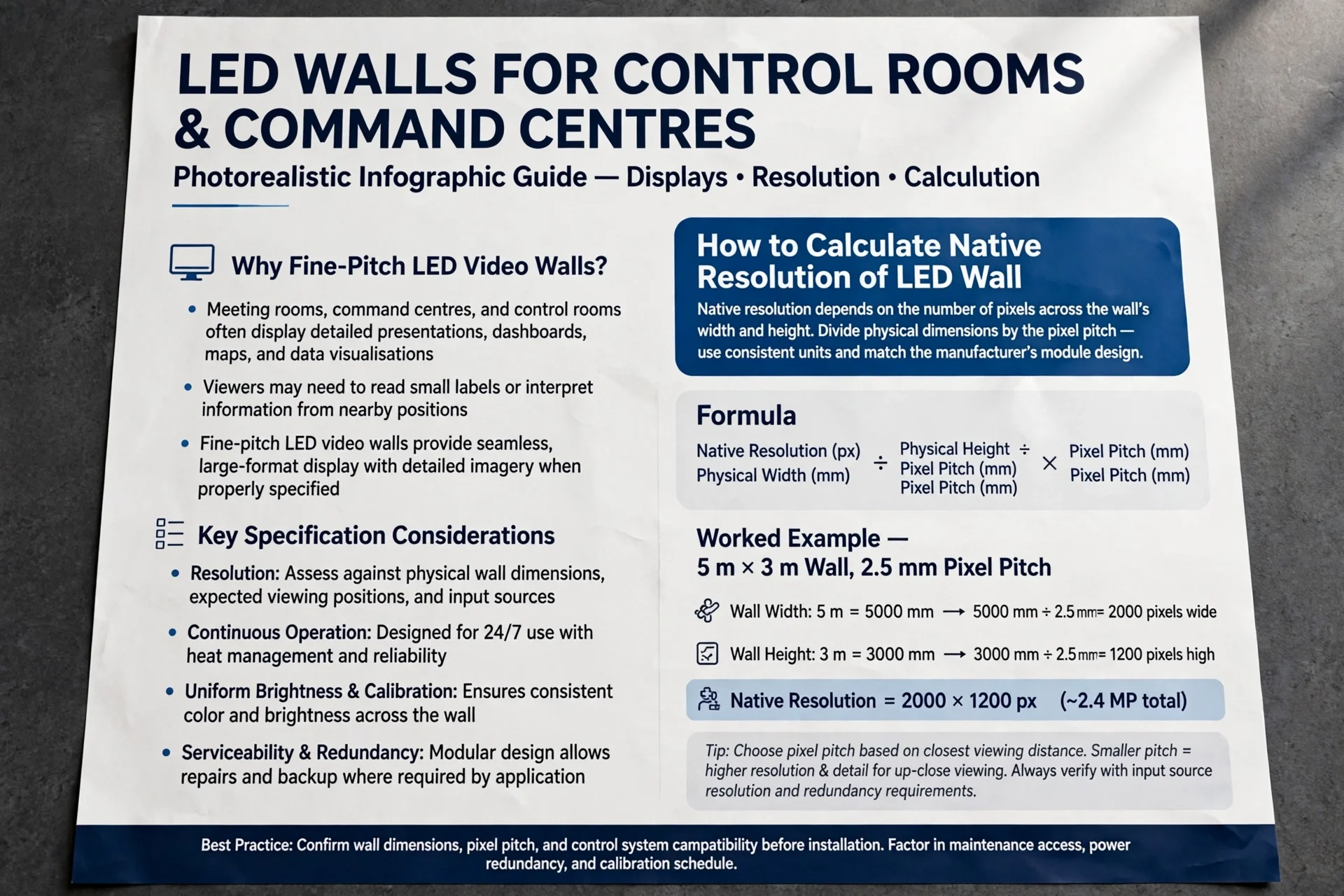
The configuration should account for cabinet arrangement, total pixel dimensions, refresh settings, colour calibration and the intended content source. Incorrect mapping can cause the image to appear in the wrong position, repeat across cabinets or display with missing sections.
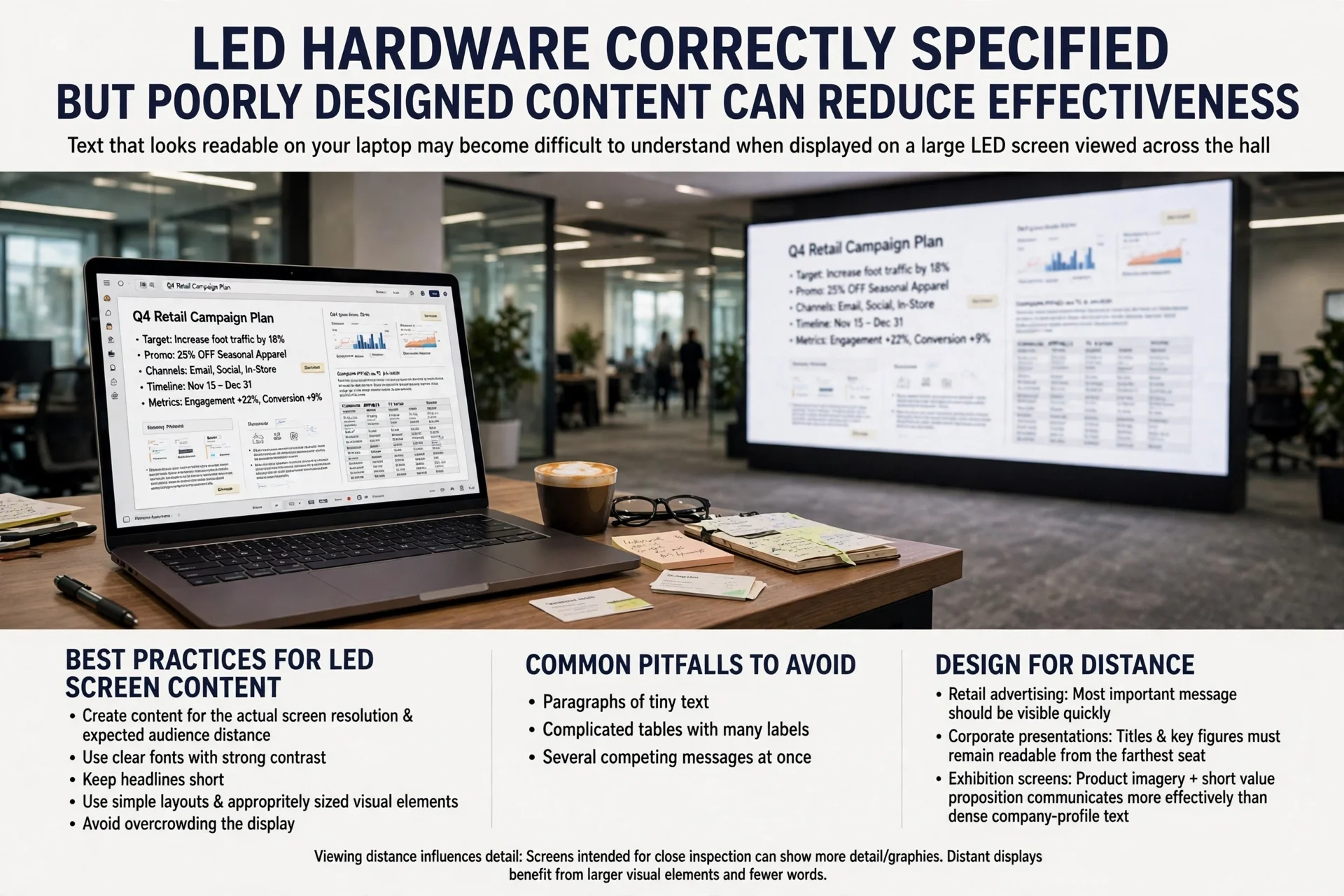
The content resolution should be suitable for the screen’s native pixel dimensions. Where the source resolution differs, the processor may scale the image, but scaling cannot recreate detail that is absent from the original content.
For commercial digital signage, decide whether content will be played from a local media player, a dedicated signage platform or a live computer input. If the display depends on network access, check connectivity and provide a contingency plan for service interruptions.
Test the system with representative content, including text, video, still images and any interactive features. Verify that the image remains stable and that the processor, cables and receiving equipment operate reliably under the intended conditions.
12. Test and Commission the Screen Before Handover
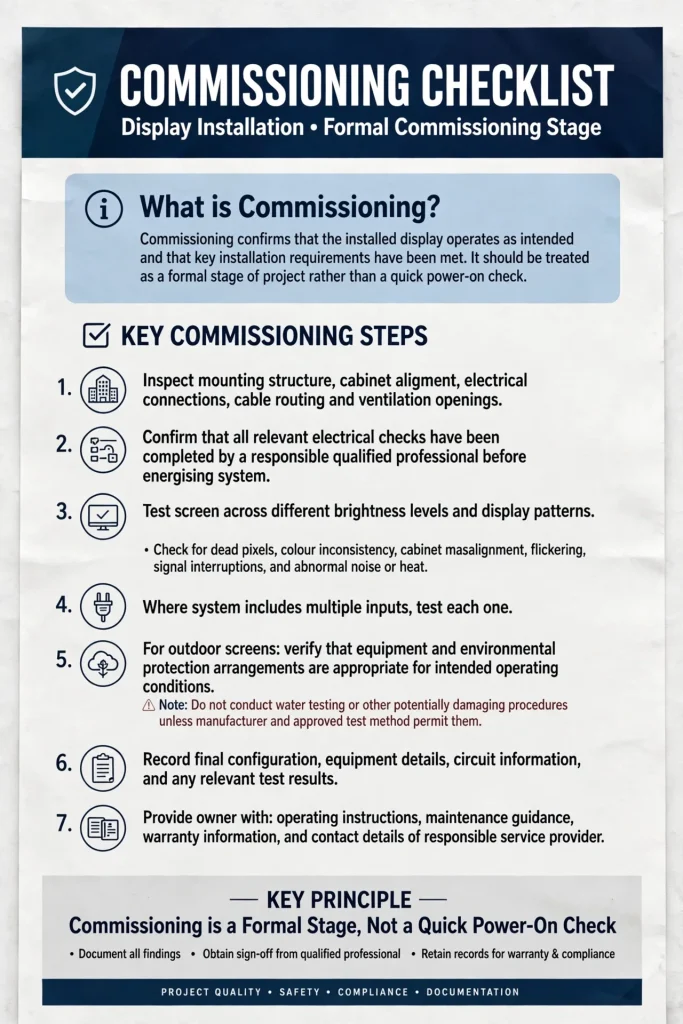
Commissioning confirms that the installed display operates as intended and that key installation requirements have been met. It should be treated as a formal stage of the project rather than a quick power-on check.
Start by inspecting the mounting structure, cabinet alignment, electrical connections, cable routing and ventilation openings. Confirm that all relevant electrical checks have been completed by the responsible qualified professional before energising the system.
Test the screen across different brightness levels and display patterns. Check for dead pixels, colour inconsistency, cabinet misalignment, flickering, signal interruptions and abnormal noise or heat. Where the system includes multiple inputs, test each one.
For outdoor screens, verify that the equipment and environmental protection arrangements are appropriate for the intended operating conditions. Do not conduct water testing or other potentially damaging procedures unless the manufacturer and approved test method permit them.
Record the final configuration, equipment details, circuit information and any relevant test results. Provide the owner with operating instructions, maintenance guidance, warranty information and the contact details of the responsible service provider.
13. Plan Maintenance Access and Future Repairs
Maintenance should be considered during the original design because technicians may need access to power supplies, receiving cards, connectors, fans and individual LED modules.
Front-serviceable LED cabinets can be useful when the rear of the display is inaccessible. Rear-serviceable systems may be appropriate where a dedicated service corridor or sufficient rear clearance is available. The correct arrangement depends on the product design and installation location.
In shopping malls, hotels and offices, maintenance may need to take place outside business hours to minimise disruption. Exhibition displays may require a different service plan, particularly when the screen must operate for long periods during a live event.
Routine inspections should check ventilation, dust accumulation, cable condition, cabinet alignment and signs of overheating. Outdoor displays may require additional inspection of weather seals, enclosures and structural components.
Keep spare parts and technical documentation available according to the project’s operational requirements. The ability to identify a faulty cabinet or connection quickly can reduce downtime and help maintain a consistent display experience.
14. Choose Professional LED Screen Installation Services
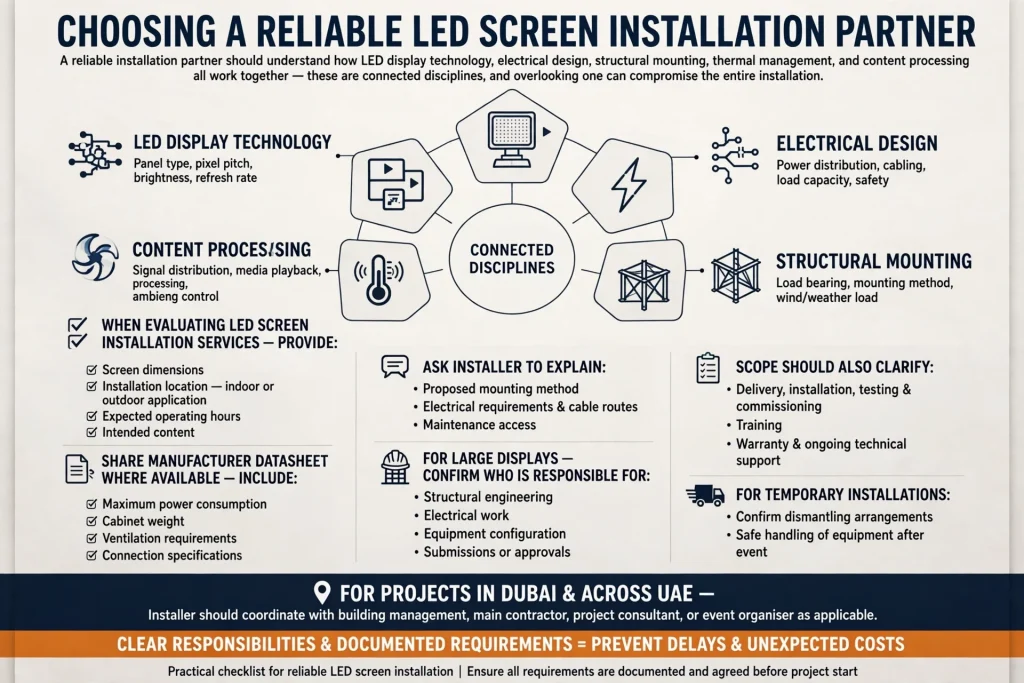
A reliable installation partner should understand the relationship between LED display technology, electrical design, structural mounting, thermal management and content processing. These are connected disciplines, and overlooking one can compromise the entire installation.
When evaluating LED Screen Installation Services, provide the screen dimensions, installation location, indoor or outdoor application, expected operating hours and intended content. Share the manufacturer’s datasheet where available, including maximum power consumption, cabinet weight, ventilation requirements and connection specifications.
Ask the installer to explain the proposed mounting method, electrical requirements, cable routes and maintenance access. For large displays, confirm who is responsible for structural engineering, electrical work, equipment configuration and any necessary submissions or approvals.
The scope should also clarify delivery, installation, testing, commissioning, training, warranty and ongoing technical support. For temporary installations, confirm dismantling arrangements and the safe handling of equipment after the event.
For projects in Dubai and across the UAE, the installer should coordinate with building management, the main contractor, the project consultant or event organiser as applicable. Clear responsibilities and documented requirements help prevent delays and unexpected costs.
15. Common LED Screen Installation Problems and How to Prevent Them
Electrical overload can result from estimating power requirements using typical consumption instead of the manufacturer’s maximum rating. Prevent this by calculating the complete installation load and having the electrical design reviewed before installation.
Overheating may result from blocked ventilation, inadequate clearance or equipment operating outside its rated environmental conditions. Follow the manufacturer’s airflow requirements and verify that the installed enclosure allows heat to escape.
Image interruptions can occur because of poor cable selection, loose connections, incorrect processor configuration or unsuitable signal distribution. Document the signal path, use compatible components and test all connections before handover.
Structural problems may arise when the mounting surface or frame is not designed to carry the display’s weight. Confirm the substrate, fixing method and support design before lifting the cabinets into position.
Finally, insufficient service access can make routine repairs expensive and disruptive. Include maintenance clearances and access requirements in the initial drawings rather than attempting to resolve them after installation.
Conclusion
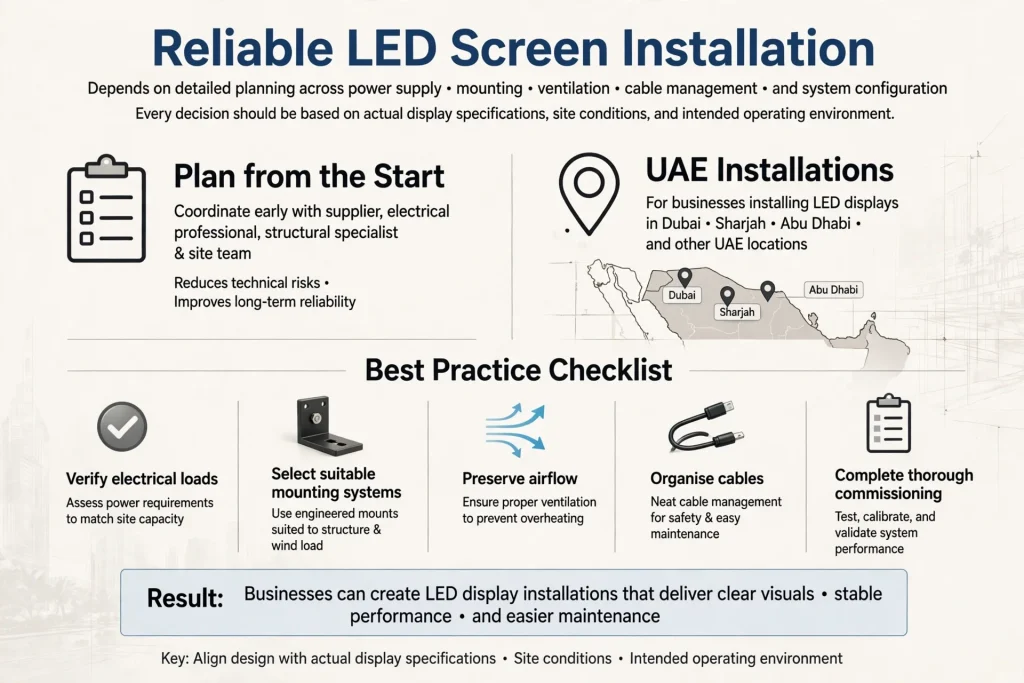
Reliable LED screen installation depends on detailed planning across power supply, mounting, ventilation, cable management and system configuration. Every decision should be based on the actual display specifications, site conditions and intended operating environment.
For businesses installing LED displays in Dubai, Sharjah, Abu Dhabi and other UAE locations, early coordination between the supplier, electrical professional, structural specialist and site team helps reduce technical risks and improve long-term reliability.
By verifying electrical loads, selecting suitable mounting systems, preserving airflow, organising cables and completing thorough commissioning, businesses can create LED display installations that deliver clear visuals, stable performance and easier maintenance.
Frequently Asked Questions
What power supply is required for an LED screen installation?
The required supply depends on the screen’s rated voltage, maximum power consumption, cabinet count and associated equipment. Use the manufacturer’s specifications and have a qualified electrical professional determine the appropriate circuit capacity, wiring and protection.
How much ventilation does an LED screen need?
Ventilation requirements vary by cabinet design, operating temperature and installation configuration. Follow the manufacturer’s clearance and airflow instructions, and ensure that recessed enclosures or decorative panels do not trap heat.
Can an LED screen be mounted directly onto a gypsum partition?
Not without confirming that the wall and its support system are suitable for the screen’s weight and mounting loads. Lightweight partitions may require an engineered support frame or a different mounting arrangement.
Which cables are used for LED screen installation?
Installations may use power cables, HDMI or DisplayPort connections, network cables and manufacturer-specific control connections. The correct cable depends on the display processor, signal distance, resolution, power demand and environmental conditions.
How can overheating be prevented in outdoor LED screens in Dubai?
Select equipment rated for the expected environment, follow the specified ventilation requirements, maintain airflow and inspect the display for dust or blocked cooling components. The installation should also account for direct sunlight and high ambient temperatures.
What should be tested before an LED screen is handed over?
Check structural stability, cabinet alignment, electrical connections, signal transmission, image quality, brightness, ventilation and control settings. Document the configuration and provide the owner with operating and maintenance instructions.
Is professional installation necessary for a large LED video wall?
Large LED video walls typically require coordinated electrical, structural and technical planning. Qualified professionals can verify power requirements, mounting safety, cable routing and commissioning in accordance with the equipment specifications and applicable local requirements.