Introduction
LED rental screens have become one of the most important technologies in the modern event industry. Whether organizing a corporate conference, international exhibition, product launch, luxury wedding, live concert, sporting event, retail activation, government ceremony, or cultural festival, choosing the correct LED rental screen directly impacts audience engagement, visual communication, and overall event success.
Across the UAE, businesses and event organizers increasingly rely on professional LED display solutions to create immersive experiences that capture attention and deliver clear, high-quality content. Major commercial destinations including Dubai, Abu Dhabi, Sharjah, Ajman, Ras Al Khaimah, Fujairah, Al Ain, and Umm Al Quwain host thousands of indoor and outdoor events every year. Iconic venues such as Dubai World Trade Centre, Expo City Dubai, Coca-Cola Arena, Dubai Opera, Madinat Jumeirah, Dubai Festival City, Atlantis The Palm, Emirates Palace Abu Dhabi, Yas Island, Business Bay, Dubai Marina, Downtown Dubai, and DIFC regularly use large-format LED screens to support conferences, exhibitions, entertainment productions, and corporate events.
However, one of the most common questions event planners ask is whether they should rent an indoor LED screen or an outdoor LED screen. While both technologies use modular LED display systems, they are engineered for completely different operating environments. Differences in brightness, weather protection, pixel pitch, cabinet construction, viewing distance, installation methods, and structural design all influence which display is suitable for a particular event.
Selecting the wrong type of screen can reduce visibility, increase operating costs, compromise audience experience, and even create safety concerns. Understanding these differences allows businesses to invest in the right solution while maximizing the value of their event.
This guide explains the technical differences between indoor and outdoor LED rental screens, how each system performs under different conditions, and how businesses can choose the most appropriate display for their specific event requirements.

Understanding LED Rental Screen Technology
Modern LED rental screens consist of modular display cabinets that connect seamlessly to create displays of virtually any size. Unlike traditional LCD video walls, LED displays do not have visible bezels between panels, resulting in one continuous image.
Each rental cabinet typically contains multiple components working together to produce high-quality visuals:
- SMD LED modules
- COB LED modules (premium applications)
- LED cabinets
- Power supplies
- Receiving cards
- Sending cards
- LED controllers
- Video processors
- Signal converters
- Power distribution units
- HDMI and SDI interfaces
- Fiber optic transmission systems
- Precision locking mechanisms
- Flight cases for transportation
Professional rental companies also perform calibration before every installation to ensure consistent brightness, colour accuracy, grayscale performance, and image uniformity across the entire display.
What Is an Indoor LED Rental Screen?
Indoor LED rental screens are specifically designed for controlled environments where sunlight, rain, and extreme weather are not significant concerns.
These displays prioritize high image resolution, excellent colour reproduction, fine pixel pitch, and close viewing distances.
Indoor LED displays are commonly installed for:
- Corporate conferences
- Board meetings
- Hotel ballrooms
- Product launches
- Trade exhibitions
- Fashion shows
- Educational seminars
- University events
- Award ceremonies
- Retail activations
- Shopping mall promotions
- Restaurant presentations
Because audiences often sit only a few metres from the display, indoor LED screens typically feature smaller pixel pitches such as P1.5, P1.9, P2.5, and P2.9.
The smaller spacing between LEDs produces sharper images, smoother graphics, and better readability for text-heavy presentations.

What Is an Outdoor LED Rental Screen?
Outdoor LED rental screens are engineered to withstand demanding environmental conditions while maintaining excellent visibility under direct sunlight.
Unlike indoor displays, outdoor LED systems incorporate weatherproof cabinet designs, higher brightness levels, reinforced structural frames, waterproof electrical components, and improved cooling systems.
Outdoor rental screens are commonly used for:
- Concerts
- Music festivals
- Sporting events
- National celebrations
- Public screenings
- Government ceremonies
- Outdoor exhibitions
- Cultural festivals
- Community events
- Open-air cinemas
- Brand activations
- Roadshows
Outdoor LED displays commonly utilize pixel pitches such as P3.9, P4.8, P5, P6, and larger, depending on audience viewing distance.
Their higher brightness allows images to remain visible even under strong UAE sunlight.
The Biggest Difference Between Indoor and Outdoor LED Screens
Although both display technologies appear similar, they are built for completely different environments.
Indoor displays focus on:
- High resolution
- Fine pixel pitch
- Close viewing
- Lightweight construction
- Slim cabinet design
- Controlled lighting
Outdoor displays prioritize:
- Weather resistance
- High brightness
- Strong structural integrity
- Waterproof protection
- Heat management
- Long-distance visibility
Choosing between them depends entirely on where the event takes place and how audiences will interact with the display.

Brightness Comparison
Brightness is measured in nits, and it plays a major role in display performance.
Indoor environments generally have controlled lighting, meaning excessive brightness is unnecessary.
Typical indoor LED brightness ranges between:
- 600 nits
- 800 nits
- 1000 nits
- 1200 nits
These levels provide comfortable viewing while maintaining excellent colour quality.
Outdoor events experience direct sunlight, changing weather conditions, and varying ambient light throughout the day.
Outdoor LED displays commonly operate between:
- 4500 nits
- 5500 nits
- 6500 nits
- 7500 nits
Higher brightness ensures excellent visibility during daytime events held in locations such as Dubai Marina, Palm Jumeirah, Jumeirah Beach Residence (JBR), Dubai Creek Harbour, Expo City Dubai, and Yas Island.
Pixel Pitch Comparison
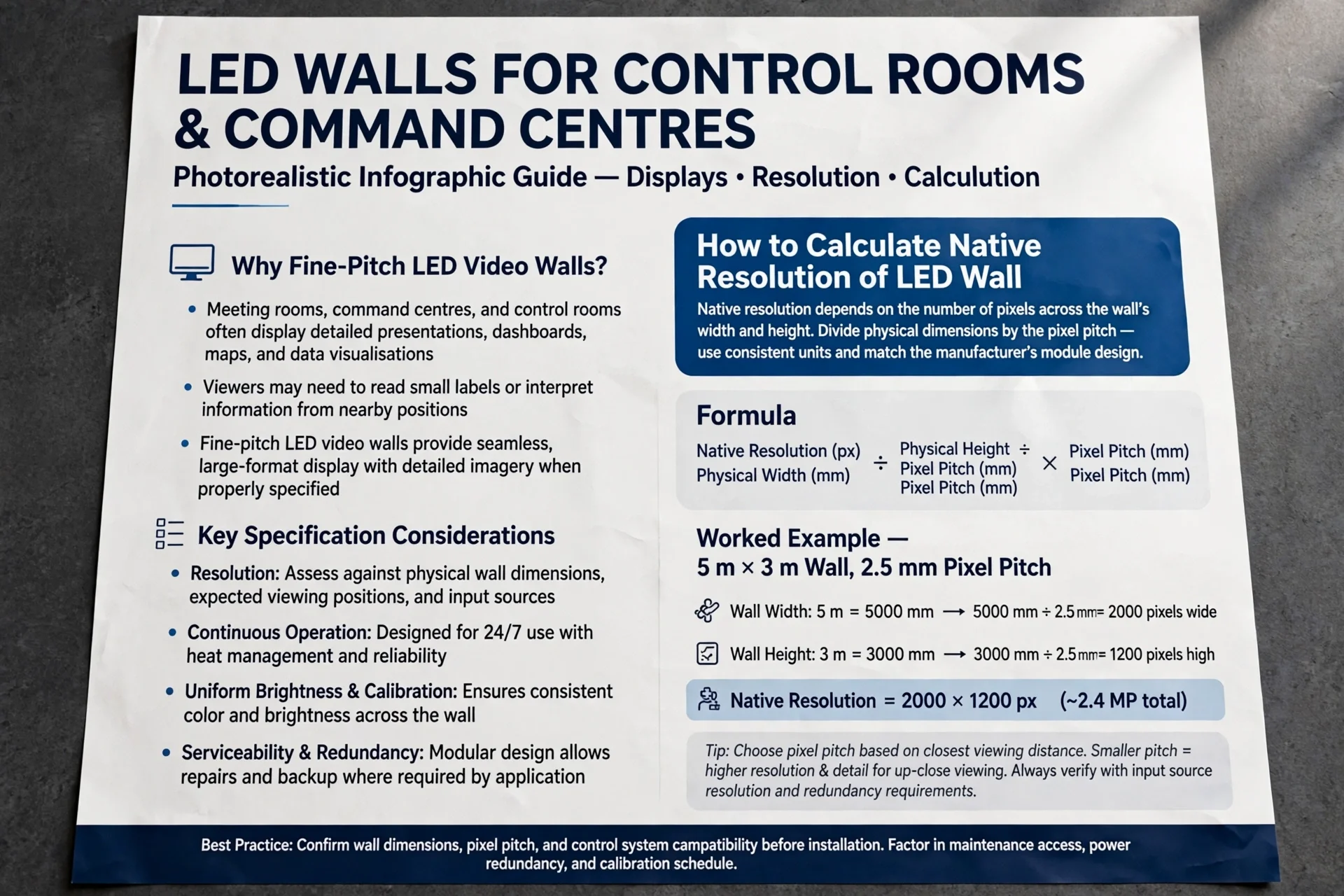
Pixel pitch directly affects image quality.
A smaller pixel pitch means LEDs are positioned closer together, producing greater detail.
Indoor LED Pixel Pitch
Common indoor options include:
- P1.5
- P1.9
- P2.5
- P2.6
- P2.9
These displays are ideal for audiences viewing the screen from short distances.
Outdoor LED Pixel Pitch
Outdoor displays generally use:
- P3.9
- P4.8
- P5
- P6
Since audiences are positioned farther away, larger pixel pitches remain visually sharp while reducing equipment costs.
Understanding audience viewing distance helps event planners select the most cost-effective display without sacrificing image quality.
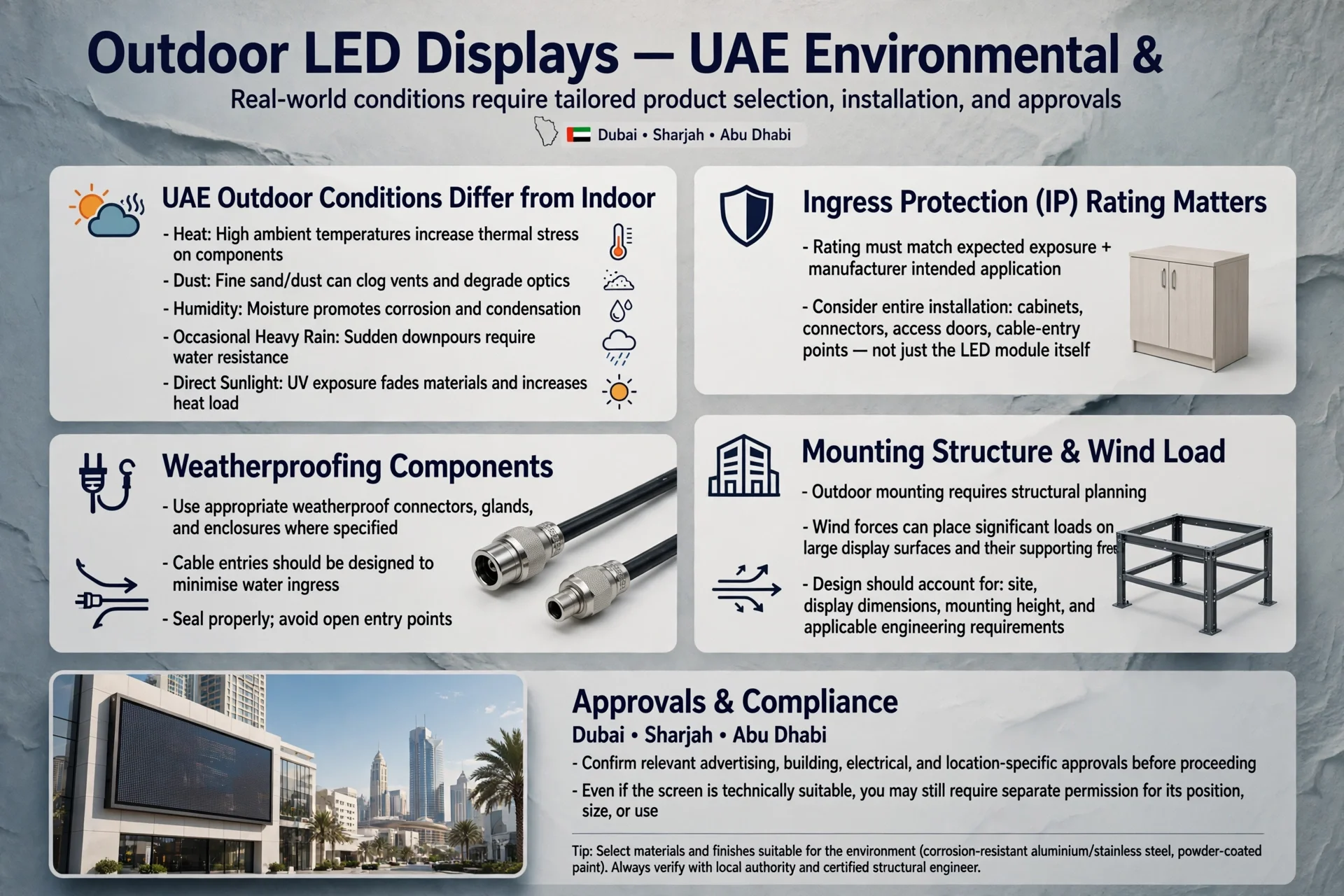
Weather Resistance and IP Ratings
One of the most significant differences between indoor and outdoor LED displays is environmental protection.
Indoor displays are not designed to operate in rain, dust storms, or high humidity.
Outdoor displays incorporate specialized protection including:
- Waterproof cabinets
- Dust-resistant seals
- Weatherproof connectors
- Reinforced electrical enclosures
- Corrosion-resistant hardware
- Marine-grade aluminium
- Advanced cooling systems
Many professional outdoor rental systems carry IP65 or IP67 ratings, providing reliable protection against rain, dust, and harsh environmental conditions frequently experienced across the UAE.
This allows outdoor LED displays to operate safely during concerts, sporting events, and public celebrations throughout the year.

Viewing Distance Plays a Critical Role
One of the most overlooked factors when selecting an LED rental screen is the relationship between pixel pitch and audience viewing distance. Even the most expensive display may fail to deliver the expected visual quality if it is installed in the wrong environment.
For example, if a P4.8 outdoor LED screen is installed inside a hotel conference room where attendees sit only two or three metres from the display, individual pixels will become visible, making text and detailed graphics appear less sharp.
On the other hand, installing a premium P1.5 fine pixel pitch display on a large outdoor concert stage where audiences stand fifty metres away is not a cost-effective investment because viewers cannot perceive the additional resolution at that distance.
As a general guideline:
- P1.5 – P1.9: Executive boardrooms, television studios, luxury retail displays, control rooms
- P2.5 – P2.9: Conferences, exhibitions, hotels, seminars, shopping malls
- P3.9 – P4.8: Concerts, festivals, outdoor stages, sporting events
- P5 – P6 and above: Large public gatherings, stadiums, roadside events, community festivals
Matching pixel pitch with viewing distance ensures excellent image quality while optimizing rental costs.
Cabinet Construction and Portability
Rental LED displays are designed to be assembled and dismantled repeatedly. Unlike permanent fixed installations, rental cabinets prioritize lightweight construction, quick locking systems, and efficient transportation.
Professional rental cabinets typically feature:
- Die-cast aluminium construction
- Precision alignment pins
- Quick-lock mechanisms
- Corner protection
- Modular LED panels
- Lightweight frames
- Flight-case compatibility
- Front and rear service access
Die-cast aluminium cabinets are widely preferred because they combine strength with reduced weight, allowing installation teams to complete projects more quickly while maintaining precise screen alignment.
Outdoor rental cabinets are generally heavier because they include waterproof seals, reinforced structural frames, weatherproof connectors, and enhanced cooling systems.

Structural Support Requirements
Another important difference between indoor and outdoor LED rental screens is how they are supported.
Indoor displays are commonly installed using:
- Wall mounting
- Ground stacking
- Stage support frames
- Exhibition booth structures
- Freestanding display systems
Outdoor displays often require more advanced structural engineering due to larger screen sizes and environmental conditions.
Common outdoor support systems include:
- Ground support trusses
- Hanging truss systems
- Roof-mounted rigging
- Steel support towers
- Ballasted support structures
- Wind-resistant frameworks
Professional engineers calculate structural loads based on screen dimensions, cabinet weight, wind exposure, and venue requirements before installation begins.
This is particularly important for large-scale events held at Dubai World Trade Centre, Expo City Dubai, Meydan, Yas Marina Circuit, Dubai Festival City, and open-air venues throughout the UAE.
Refresh Rate and Video Quality
Refresh rate significantly affects the viewing experience, especially during live broadcasts and professional video production.
A low refresh rate may appear acceptable to the human eye but can produce visible flickering when recorded by television cameras or professional photography equipment.
Modern rental LED displays commonly provide:
- 1920Hz refresh rate
- 3840Hz refresh rate
- 7680Hz refresh rate
High refresh rates provide several advantages:
- Smooth video playback
- Improved motion clarity
- Better camera performance
- Flicker-free broadcasting
- Enhanced livestream quality
- Superior slow-motion recording
Events involving television coverage, hybrid conferences, live streaming, or social media broadcasting should always prioritize displays with higher refresh rates.

Colour Accuracy and Image Performance
Modern LED displays are expected to reproduce vibrant colours, deep blacks, and realistic images across every part of the screen.
Several technologies contribute to superior image quality, including:
- High grayscale processing
- HDR (High Dynamic Range)
- Wide colour gamut
- Automatic colour calibration
- High contrast ratios
- Wide viewing angles
Premium LED displays also maintain consistent brightness and colour even when viewed from different positions within the venue.
This becomes particularly important in conference halls, exhibition centres, luxury hotels, and corporate presentations where every attendee should experience identical image quality.
Indoor LED Rental Applications
Indoor LED displays are ideal for environments where audiences view content at relatively short distances.
Common applications include:
Corporate Conferences
Business conferences rely on high-resolution displays for keynote presentations, financial reports, engineering drawings, architectural renderings, and executive communication.
Trade Shows
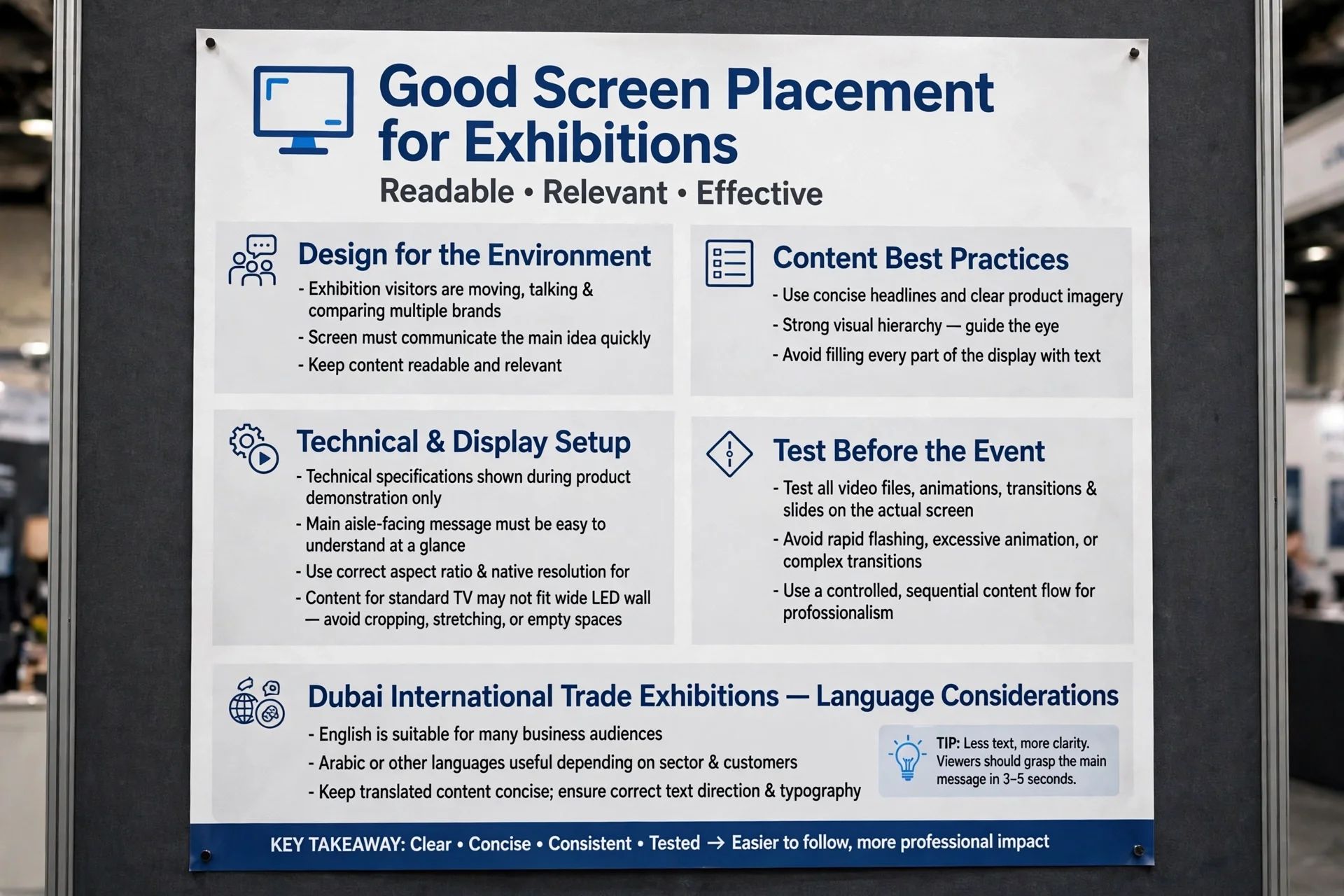
Exhibitors use LED video walls to attract visitors, demonstrate products, display promotional videos, and strengthen brand recognition.
Luxury Retail
Retail brands install temporary LED displays during product launches, seasonal campaigns, and promotional events inside shopping centres including Dubai Mall, Mall of the Emirates, City Centre Mirdif, and Yas Mall.
Hotels and Ballrooms
Hotels frequently rent LED displays for weddings, gala dinners, conferences, award ceremonies, exhibitions, and business meetings.
Educational Institutions
Universities, colleges, and schools use rental LED screens during graduations, seminars, orientation programs, and academic conferences.
Healthcare Conferences
Medical symposiums, healthcare exhibitions, pharmaceutical product launches, and hospital training sessions benefit from fine pixel pitch LED displays capable of presenting highly detailed medical images and presentations.

Outdoor LED Rental Applications
Outdoor LED displays are engineered for challenging environmental conditions while delivering exceptional visibility to large audiences.
Popular outdoor applications include:
Live Concerts
Large concert stages rely on high-brightness LED video walls to display performers, live camera feeds, graphics, and stage visuals.
Sporting Events
Outdoor LED displays provide scoreboards, instant replays, sponsor advertisements, tournament schedules, and audience engagement during football matches, cricket tournaments, marathons, cycling races, golf championships, and motorsport events.
Government Events
National celebrations, cultural festivals, official ceremonies, and public awareness campaigns require reliable outdoor displays capable of continuous operation.
Community Festivals
Cities across Dubai, Abu Dhabi, Sharjah, Ajman, and Ras Al Khaimah frequently organize outdoor festivals where LED displays improve audience communication and entertainment.
Product Launch Roadshows
Brands promoting new vehicles, electronics, industrial equipment, and consumer products often travel between multiple cities using modular outdoor LED rental systems that can be assembled quickly at different venues.
Indoor vs Outdoor LED Displays for UAE Weather
Dubai’s climate presents unique challenges for event technology.
Throughout much of the year, temperatures regularly exceed 40°C. Dust storms, coastal humidity, intense UV radiation, and occasional rainfall all influence display performance.
Indoor LED displays operate within climate-controlled venues and therefore do not require extensive environmental protection.
Outdoor systems, however, must withstand:
- High temperatures
- Strong sunlight
- Wind
- Dust
- Sand
- Humidity
- Coastal salt exposure
- Rainfall
Professional outdoor LED rental equipment incorporates advanced ventilation systems, weather-resistant coatings, waterproof connectors, and durable cabinet designs to ensure reliable operation under these demanding conditions.
Choosing equipment specifically designed for the UAE climate significantly improves operational reliability and reduces the risk of technical failures during important events.

Why Professional Consultation Matters
Every event has unique technical requirements, making professional consultation one of the most valuable parts of the planning process.
Experienced display specialists evaluate:
- Venue dimensions
- Audience capacity
- Viewing distance
- Ambient lighting
- Event duration
- Stage design
- Structural requirements
- Power availability
- Content format
- Camera positions
- Budget objectives
These assessments help determine the most suitable display configuration while avoiding unnecessary costs or performance compromises.
Businesses seeking an experienced Indoor vs Outdoor LED Rental Screens Supplier benefit from expert recommendations, professional installation, on-site technical support, and complete project management, ensuring every display performs reliably from setup to the end of the event.
Common Mistakes When Choosing Between Indoor and Outdoor LED Rental Screens
Many event organizers assume that all LED screens perform the same way. While they may look similar, indoor and outdoor LED displays are engineered for completely different environments. Choosing the wrong system can negatively affect image quality, audience experience, equipment safety, and the overall success of an event.
One of the most common mistakes is selecting an indoor LED screen for an outdoor event simply because it is less expensive. Indoor displays are not designed to withstand rain, dust, direct sunlight, or high temperatures. Exposure to these conditions can damage sensitive electronic components and significantly reduce display performance.
Another frequent mistake is renting an outdoor LED display for a small indoor conference. Although outdoor screens are brighter, excessive brightness inside a conference room can create eye strain and reduce the readability of presentations.
Other mistakes include:
- Ignoring audience viewing distance
- Choosing the wrong pixel pitch
- Underestimating screen size requirements
- Overlooking venue power capacity
- Selecting low refresh rate displays for live broadcasting
- Poor cable management
- Inadequate structural support
- Hiring inexperienced installation teams
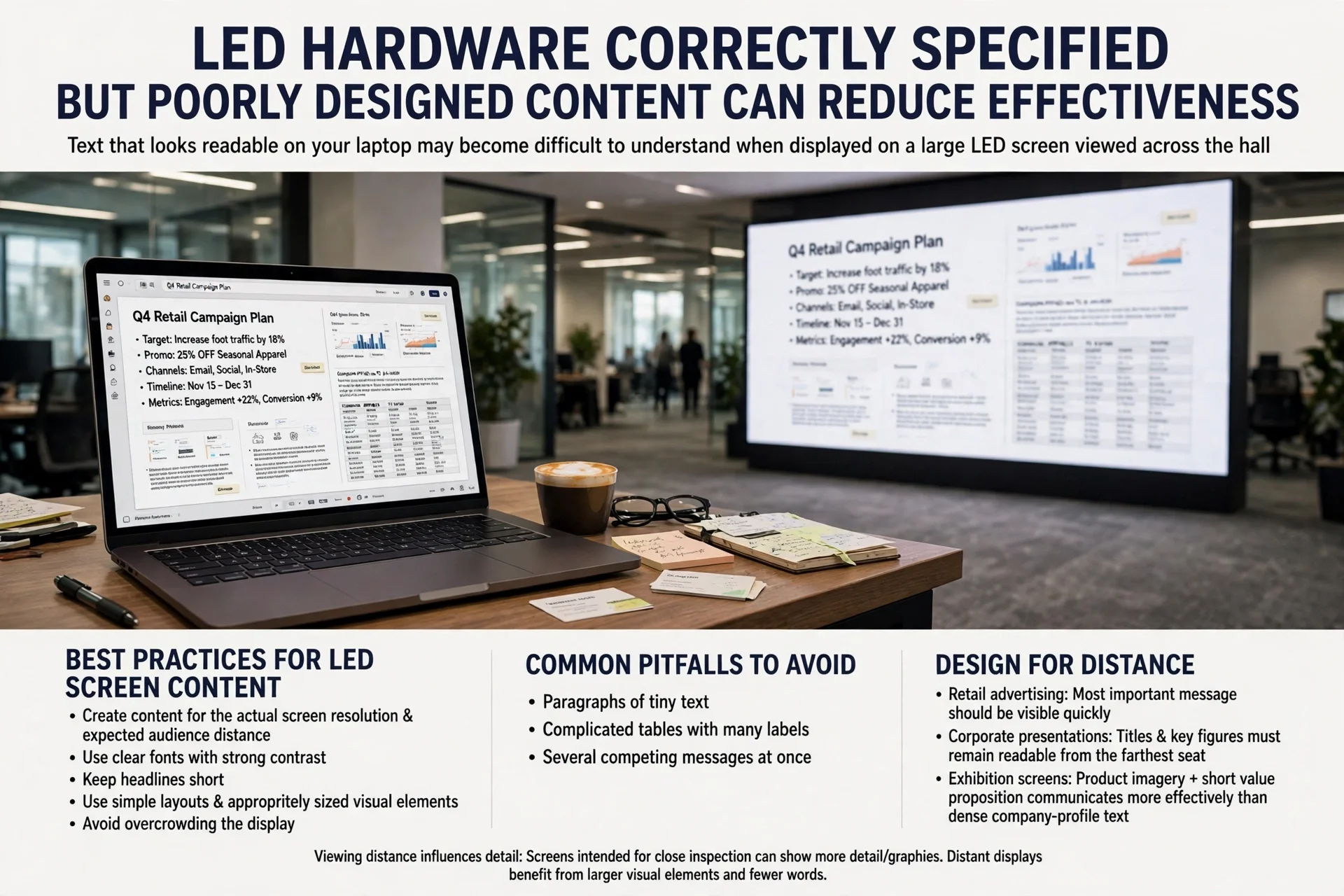
- Failing to test multimedia content before the event
- Not arranging backup power or spare LED modules
Professional planning helps eliminate these risks and ensures smooth event execution.

Understanding the Complete LED Rental Workflow
A successful LED rental project involves much more than simply delivering display panels to a venue. Every stage of the project requires careful coordination between engineers, event planners, AV technicians, electricians, and production teams.
The typical workflow includes:
Site Survey
Engineers inspect the venue to evaluate:
- Available installation space
- Ceiling height
- Stage dimensions
- Audience seating
- Viewing angles
- Ambient lighting
- Structural loading
- Power distribution
- Internet connectivity
- Emergency access
System Design
Based on the site survey, specialists determine:
- Display dimensions
- Pixel pitch
- Cabinet configuration
- Mounting method
- Video processing equipment
- Controller selection
- Signal routing
- Power requirements
Transportation
LED cabinets are transported in protective flight cases that prevent damage during loading, unloading, and transit.
Installation
Professional technicians assemble cabinets, align modules, connect signal cables, configure controllers, and test all display components before the event begins.
Calibration
Advanced calibration software ensures:
- Uniform brightness
- Accurate colour reproduction
- Consistent grayscale
- Proper white balance
- Seamless cabinet alignment
Live Event Support
During the event, technical engineers monitor system performance, troubleshoot issues, manage content playback, and ensure uninterrupted operation.

Dismantling
After the event, technicians safely dismantle the display, inspect equipment, repack flight cases, and prepare the system for future rental projects.
Why LED Rental Screens Offer Better Value Than Traditional Displays
Many organizations still consider projectors or LCD screens when planning events. However, LED rental displays provide several significant advantages.
Compared with projectors, LED screens deliver:
- Higher brightness
- Better colour accuracy
- No image washout
- Improved visibility
- Seamless large-format displays
- Greater reliability
Compared with LCD video walls, LED displays offer:
- No visible bezels
- Flexible screen sizes
- Better scalability
- Higher durability
- Faster installation
- Wider viewing angles
- Superior outdoor performance
These advantages make LED rental screens the preferred solution for conferences, exhibitions, concerts, corporate presentations, and large-scale public events.
Future Trends in LED Rental Display Technology
The LED display industry continues to evolve rapidly as manufacturers introduce technologies that improve image quality, installation efficiency, and energy performance.
Fine Pixel Pitch Displays
Demand for P1.2, P1.5, and P1.8 displays continues to increase because businesses expect television-quality visuals even at close viewing distances.
Micro LED Technology
Micro LED represents the next generation of display technology, offering exceptional brightness, longer lifespan, improved efficiency, and outstanding image quality.
Chip-on-Board (COB) LED
COB technology improves durability, heat dissipation, contrast ratios, and impact resistance, making it suitable for premium commercial applications.
Artificial Intelligence
AI-powered monitoring systems continuously analyze display performance, detect hardware faults, and predict maintenance requirements before failures occur.
Cloud-Based Content Management
Cloud platforms allow businesses to update digital content across multiple event locations simultaneously while reducing operational complexity.
Interactive LED Experiences
Touch-enabled displays, gesture recognition, augmented reality (AR), and immersive multimedia experiences continue transforming exhibitions, retail activations, museums, and corporate events throughout the UAE.
As Dubai advances its Smart City initiatives and digital transformation strategy, LED display technology will continue playing a major role in business communication and event production.

Frequently Asked Questions
Which LED screen is best for corporate conferences?
Fine pixel pitch indoor LED displays such as P1.5, P1.9, or P2.5 provide exceptional image clarity for presentations, financial reports, and detailed graphics viewed from short distances.
Are outdoor LED screens waterproof?
Yes. Professional outdoor rental displays generally feature IP65 or IP67-rated protection that resists rain, dust, humidity, and harsh weather conditions.
Can outdoor LED screens be used indoors?
Technically yes, but it is rarely recommended. Outdoor displays are much brighter and have larger pixel pitches, making them less suitable for close-range indoor viewing.
Which screen provides better image quality?
Indoor LED displays generally provide sharper images because they use smaller pixel pitches designed for close viewing distances. Outdoor displays prioritize visibility over long distances.
How long does installation usually take?
Installation time depends on screen size and venue complexity. Small conference displays may require only a few hours, while large concert stages can take an entire production day.
Conclusion
Choosing between an indoor and outdoor LED rental screen is not simply a matter of location—it is about selecting the right technology for your audience, venue, and event objectives. Indoor displays excel in controlled environments where high resolution, fine pixel pitch, and close viewing are essential. Outdoor displays are engineered to withstand demanding weather conditions while delivering exceptional brightness and visibility across large open spaces.
From executive meetings in DIFC and Business Bay to international exhibitions at Dubai World Trade Centre, luxury weddings on Palm Jumeirah, sporting events on Yas Island, concerts at Coca-Cola Arena, and public festivals across Dubai, Abu Dhabi, Sharjah, Ajman, Ras Al Khaimah, Fujairah, and Al Ain, selecting the correct LED display significantly enhances audience engagement and event success.
Businesses that work with experienced professionals benefit from expert planning, premium display technology, precise installation, and dependable technical support. By evaluating factors such as pixel pitch, brightness, refresh rate, IP rating, viewing distance, structural requirements, and content strategy, event organizers can ensure outstanding visual performance while maximizing the return on their investment.
As demand for digital experiences continues to grow throughout the UAE, understanding the differences between indoor and outdoor LED rental screens will help businesses make informed decisions, deliver memorable events, and stay ahead in an increasingly competitive event industry.