Choosing the right LED rental screen size can significantly affect how an audience experiences an event. A display that is too small may make presentations, videos, branding, and live content difficult to see, while an oversized screen can become unnecessarily expensive and may not suit the available venue space. The ideal LED screen depends on several factors, including venue dimensions, audience size, viewing distance, event type, screen resolution, pixel pitch, aspect ratio, brightness, and installation requirements.
An LED rental screen is a modular display system made from individual LED cabinets that can be assembled into different sizes and configurations. This flexibility makes rental LED displays suitable for conferences, exhibitions, concerts, weddings, product launches, corporate events, sports events, retail activations, and outdoor productions.
For businesses planning an event in Dubai or elsewhere in the UAE, understanding screen dimensions before contacting a rental supplier can make the planning process easier. Venues such as Dubai World Trade Centre (DWTC), Dubai Exhibition Centre, Coca-Cola Arena, Dubai Opera, Madinat Jumeirah, and large hotel ballrooms all have different layouts, audience capacities, lighting conditions, and technical requirements.
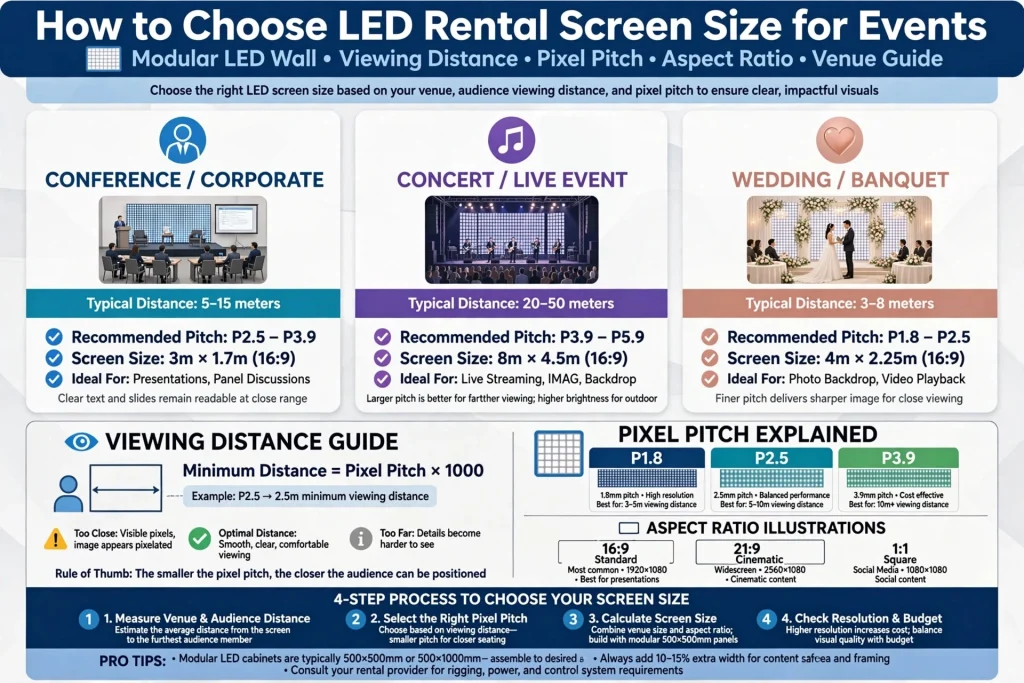
Why LED Screen Size Matters for Event Visibility
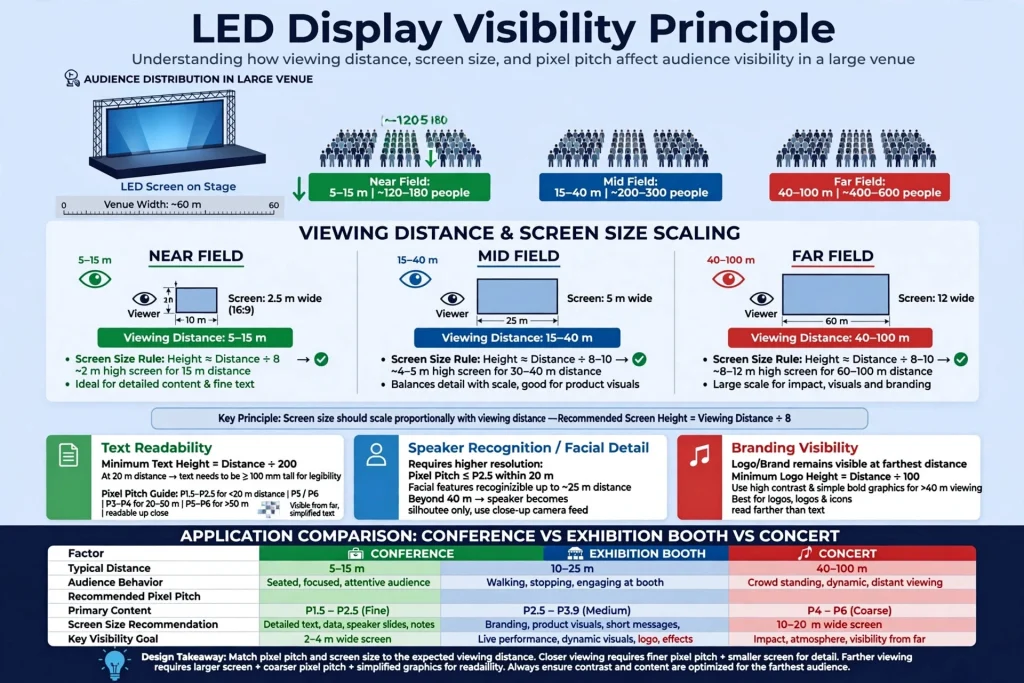
The primary purpose of an LED display is to make visual content clearly visible to the intended audience. Screen size directly influences how easily people can read text, recognize speakers, follow presentations, view videos, and notice branding from different areas of the venue.
A conference with several hundred attendees may require a substantially different screen configuration from a small corporate meeting. Similarly, an exhibition booth may benefit from a compact LED wall, while a concert or outdoor festival may require a large-format video wall.
Screen size should therefore never be selected based only on the available budget. It should be determined by the relationship between the display dimensions, viewing distance, audience distribution, content type, and venue environment.
A useful planning principle is that the farther the audience is from the screen, the larger the display generally needs to be. However, screen size and pixel pitch must also be considered together because a large screen with an unsuitable pixel pitch may not provide the expected image quality at close viewing distances.
How to Calculate the Right LED Rental Screen Size
There is no single screen size that works for every event. The most suitable dimensions can be estimated by examining the venue and audience layout.
Start by identifying the maximum viewing distance. Measure or estimate the distance between the LED screen and the furthest audience member who needs to see important content. Then consider the type of content being displayed.
Presentations containing small text require better visibility than simple background graphics. Video content, speaker close-ups, product demonstrations, and detailed charts may also require higher resolution.
The screen’s aspect ratio is another important consideration. A traditional 16:9 LED video wall is commonly used for presentations and video because it matches many cameras, laptops, streaming systems, and broadcast formats.
For example, a screen measuring approximately 5.3 metres wide by 3 metres high provides a roughly 16:9 configuration. Larger installations can maintain the same aspect ratio by increasing the number of LED cabinets.
For practical planning, an event organizer should consider:
- Audience capacity
- Nearest and furthest viewing distances
- Venue ceiling height
- Stage dimensions
- Stage backdrop
- Content resolution
- Camera position
- Lighting conditions
- Indoor or outdoor installation
- Required screen brightness
- Available installation space
- LED cabinet dimensions
- Rigging or ground-support requirements
These factors work together to determine the most appropriate display configuration.
Choosing a Screen for Small Venues and Meeting Rooms
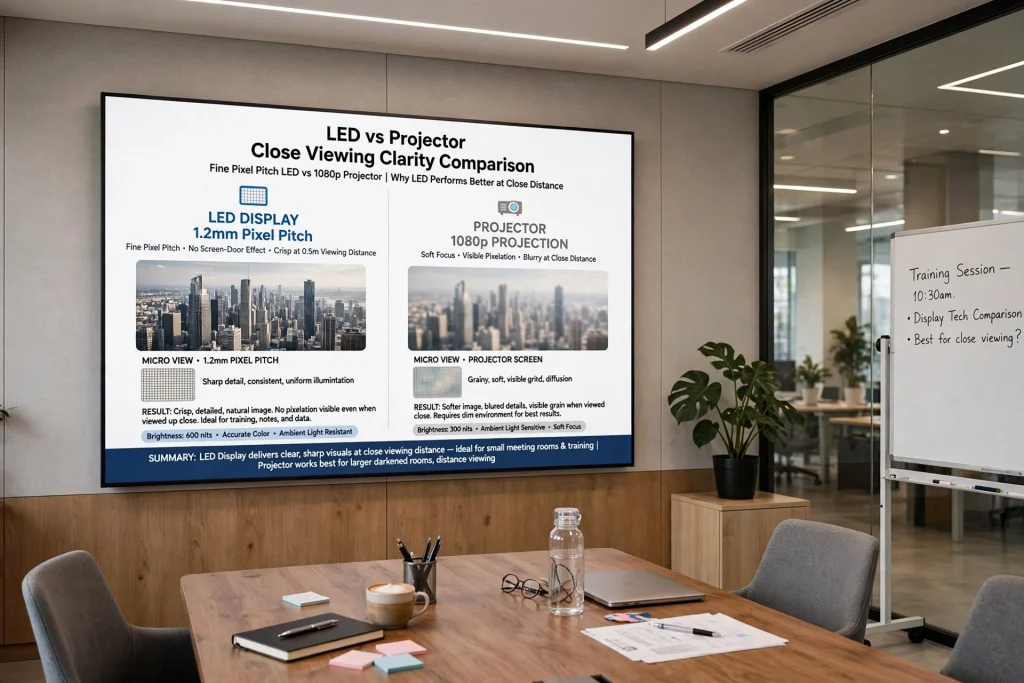
Small meeting rooms, training rooms, boardrooms, and private corporate events typically do not require extremely large LED walls. The priority in these environments is usually clarity rather than physical scale.
A compact LED display can provide a professional alternative to a traditional projector, particularly in rooms where ambient lighting makes projection difficult.
For a small corporate presentation, product demonstration, seminar, or internal meeting, a modular LED wall may be configured to fit the stage or presentation area without overwhelming the room.
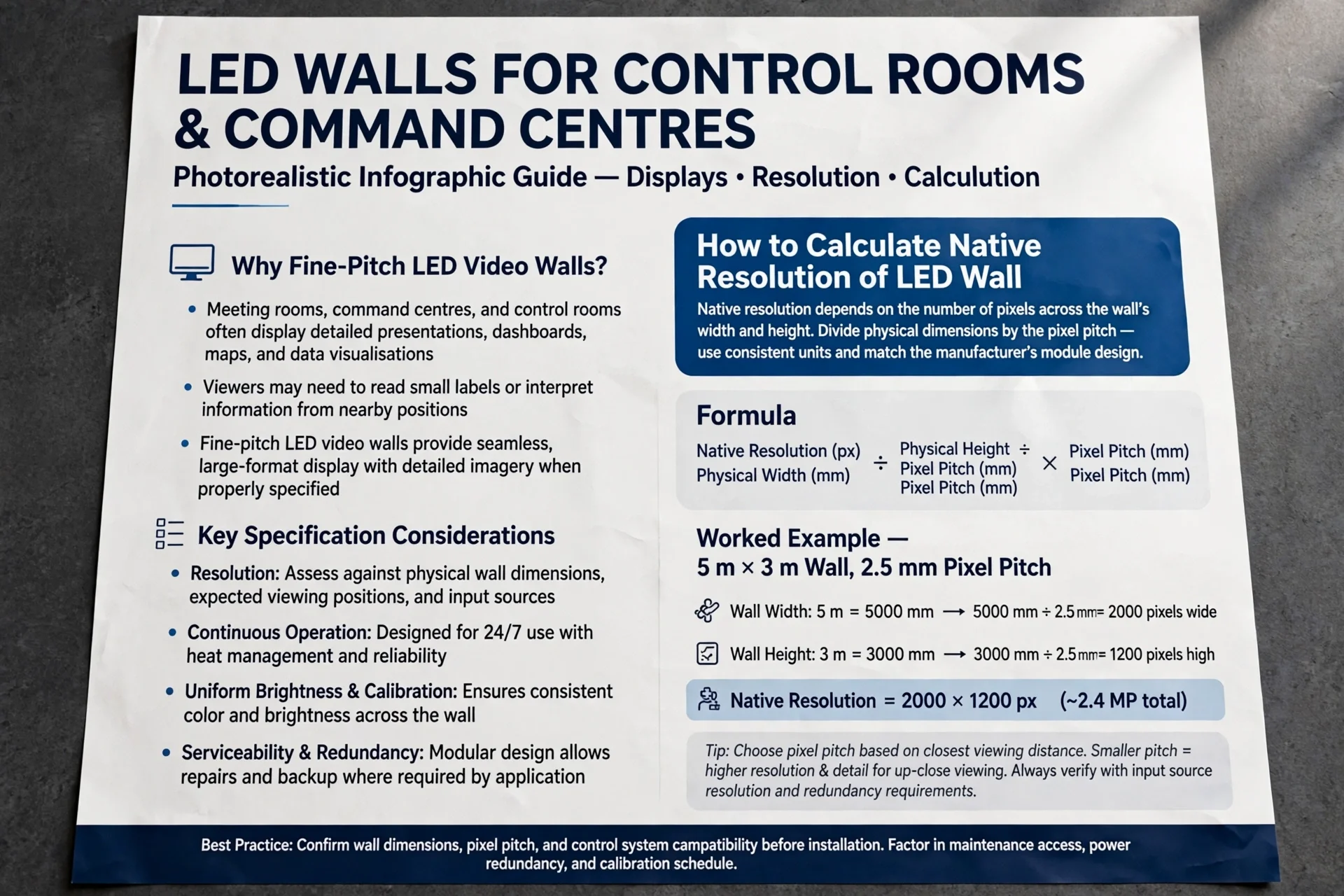
Fine pixel pitch LED technology can be particularly useful in smaller venues because attendees may sit relatively close to the display. Pixel pitch refers to the distance between individual LED pixels. Smaller pixel pitch generally provides higher pixel density and smoother images at close viewing distances.
LED Screen Size for Conferences and Corporate Events
Conferences require careful consideration because audiences are often spread across wide seating arrangements. Attendees may need to view presentation slides, speaker cameras, charts, videos, sponsor logos, and live content throughout the event.
A medium or large LED wall positioned behind the presenter or stage can create a strong visual focal point while maintaining consistent brightness throughout the event.
Dubai is a major destination for international conferences and corporate events, with venues including Dubai World Trade Centre, Dubai Exhibition Centre at Expo City Dubai, major hotels, convention centres, and dedicated event spaces.
For large conferences, event planners may use one central LED wall combined with confidence monitors, side screens, stage displays, or additional LED columns. This approach allows people sitting toward the sides of the room to maintain a clear view.
A central LED wall should also be coordinated with the stage design. The screen should not be so large that it restricts lighting positions, speaker movement, stage entrances, or scenic elements.
Selecting LED Screen Dimensions for Exhibition Stands
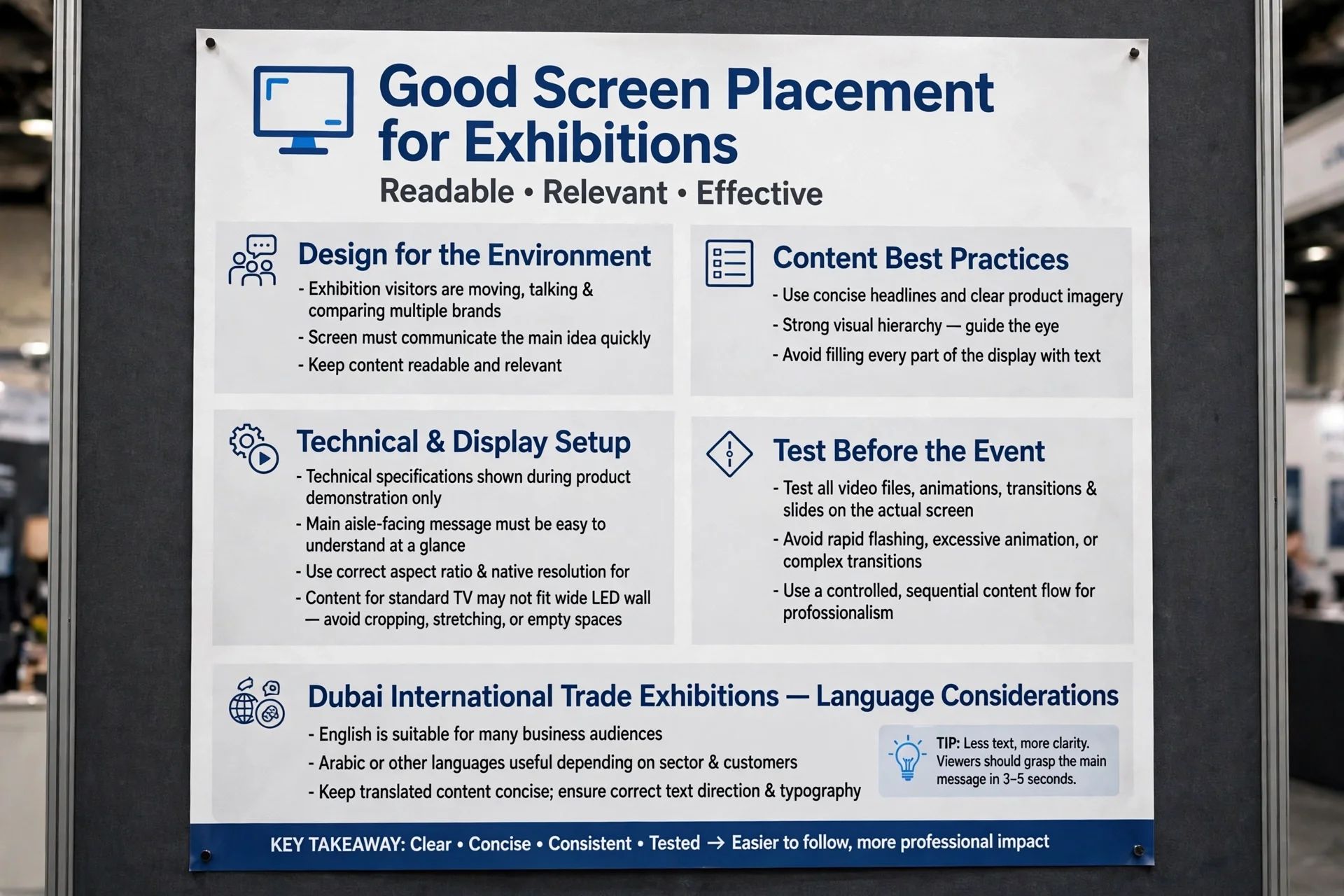
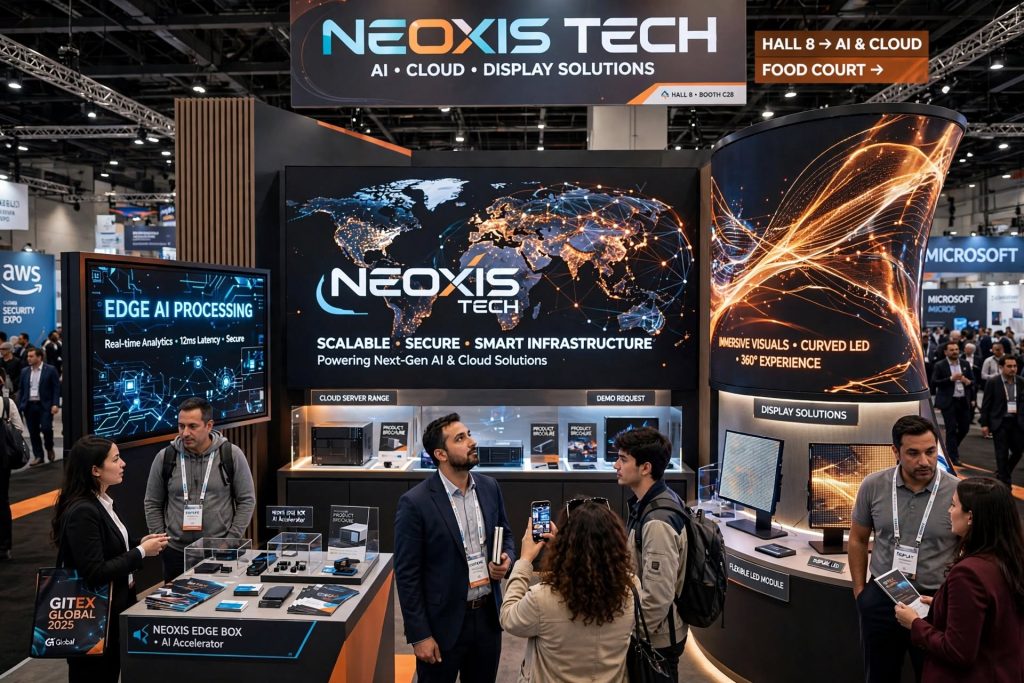
Exhibitions present different requirements because attendees can approach the screen from several directions and distances. An LED display can be used as a visual attraction to communicate a company’s products, services, videos, campaigns, and brand message.
At events such as GITEX Global, Gulfood, Arab Health, The Big 5, Dubai International Boat Show, and other exhibitions at major Dubai venues, exhibitors compete for visitor attention in busy halls.
A compact LED wall may work well for a smaller booth, while a larger stand can accommodate a wide LED backdrop or curved LED installation.
The physical dimensions of the exhibition stand should be considered before choosing the display. A screen that occupies the entire rear wall may create strong visual impact, but it also needs enough structural support and sufficient space for branding, product displays, storage, and visitor interaction.
For exhibition applications, screen size should support the marketing objective rather than simply maximize display area.
Large LED Screens for Concerts and Live Entertainment
Concerts, festivals, award ceremonies, fashion shows, and live entertainment events typically require much larger LED displays because audiences may be spread across a substantial area.
A main LED wall can act as the visual centerpiece behind performers, while additional side screens can show camera feeds, graphics, sponsor content, and close-up footage.
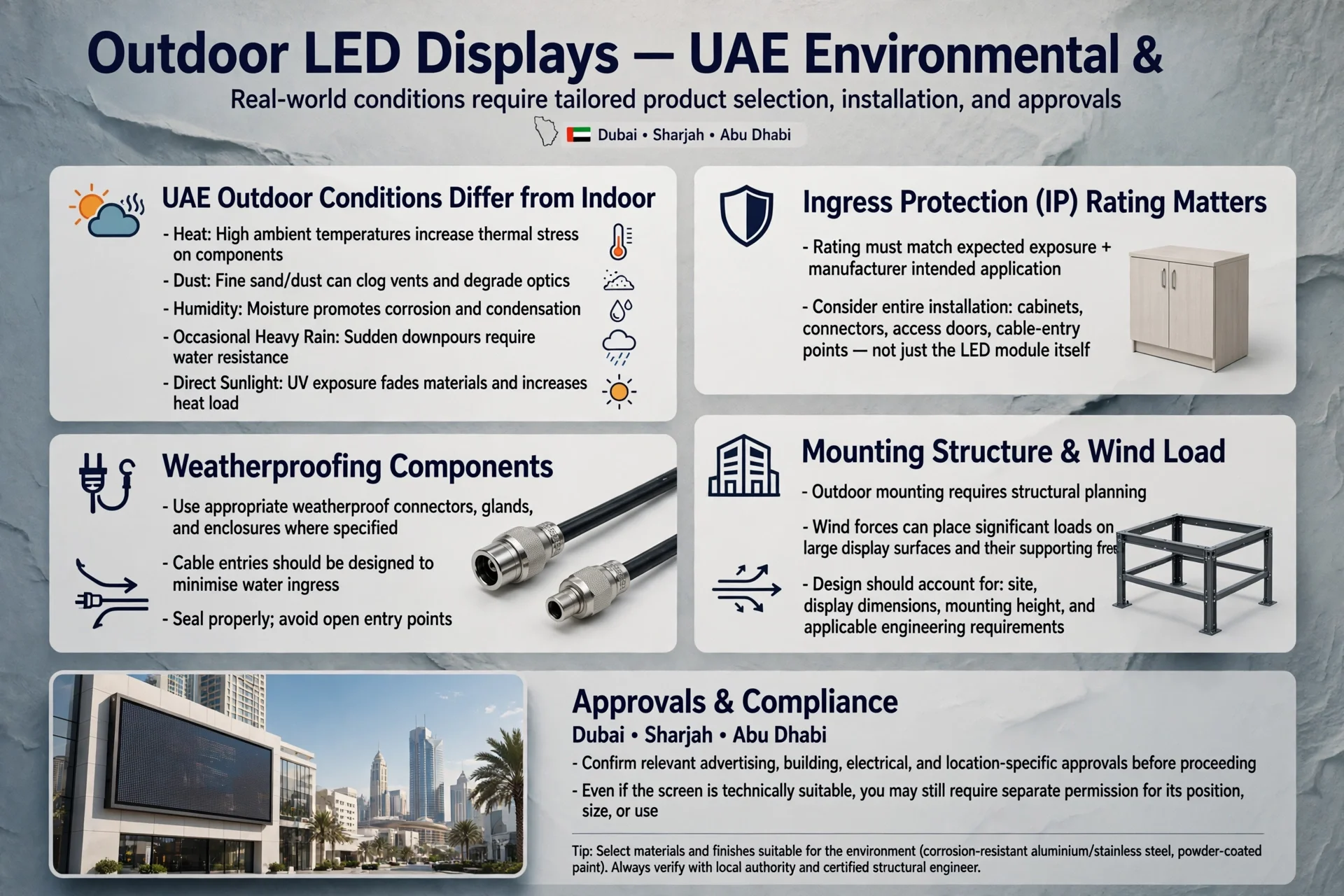
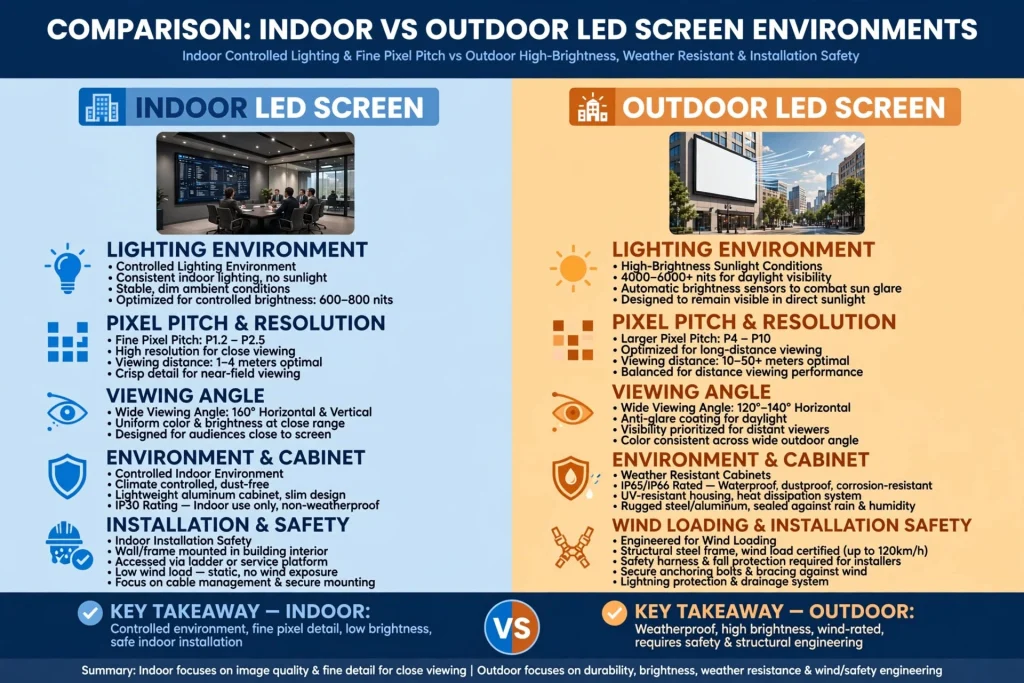
Outdoor events require additional technical considerations. The LED display must be suitable for outdoor conditions and provide sufficient brightness to remain visible in daylight. Weather protection, cabinet durability, power distribution, structural support, and safe installation are also important.
Large-format rental systems may use high-brightness outdoor LED cabinets combined into screens that can span several metres or even much larger stage structures.
For entertainment productions, the screen size should be planned alongside the camera system, video processor, stage lighting, rigging structure, and content production workflow.
Indoor vs Outdoor LED Screen Size Requirements
The environment has a major influence on LED screen selection.
Indoor venues generally have controlled lighting, meaning extremely high brightness may not be necessary. Displays are often viewed from shorter distances, making fine pixel pitch an important consideration.
Outdoor environments are more challenging because sunlight can significantly reduce perceived screen brightness. Outdoor LED rental displays therefore typically use higher brightness levels and weather-resistant cabinets.
An outdoor screen also needs to be positioned so that its viewing angle works effectively for the audience. A display may technically be large enough, but poor positioning can still create visibility problems.
Weather, wind loading, temporary structures, electrical distribution, and installation safety must be evaluated by qualified event production professionals.
Pixel Pitch and Screen Size Should Be Planned Together
Screen dimensions alone do not determine image quality. Pixel pitch is equally important.
Pixel pitch describes the distance between the centres of adjacent LED pixels. Common rental LED configurations include P1.9, P2.6, P2.9, P3.9, P4.8, and larger outdoor pixel pitches.
Fine pixel pitch is generally more appropriate when the audience is close to the screen. Larger pixel pitches can be suitable when the display is viewed from greater distances.
For example, a P2.6 LED screen can provide detailed visuals for many indoor applications, while P3.9 or P4.8 rental LED screens are commonly considered for larger spaces where the audience is positioned farther away.
The relationship between screen size, pixel pitch, and viewing distance should therefore be assessed as one complete system.
Aspect Ratio and Content Resolution
Another important consideration is the relationship between LED screen dimensions and content.
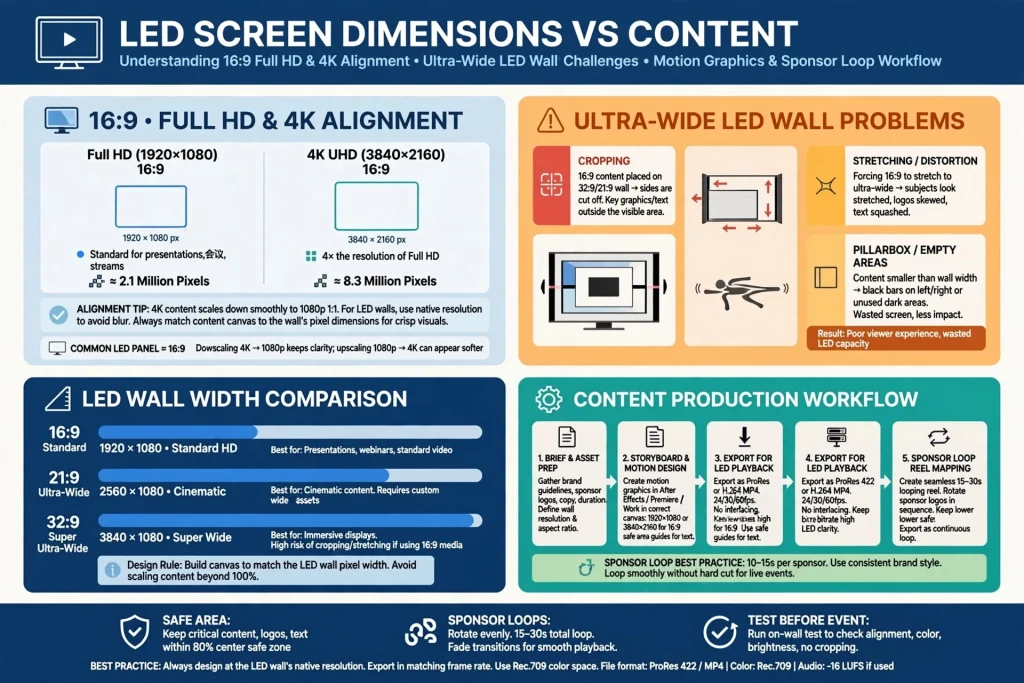
A 16:9 screen configuration is widely used because it aligns with Full HD and 4K video formats. This can simplify content playback and reduce unnecessary cropping or stretching.
If the physical screen has an unusual aspect ratio, content may need to be specially designed. For example, an ultra-wide LED wall can be visually impressive, but standard video may not naturally fill the entire display.
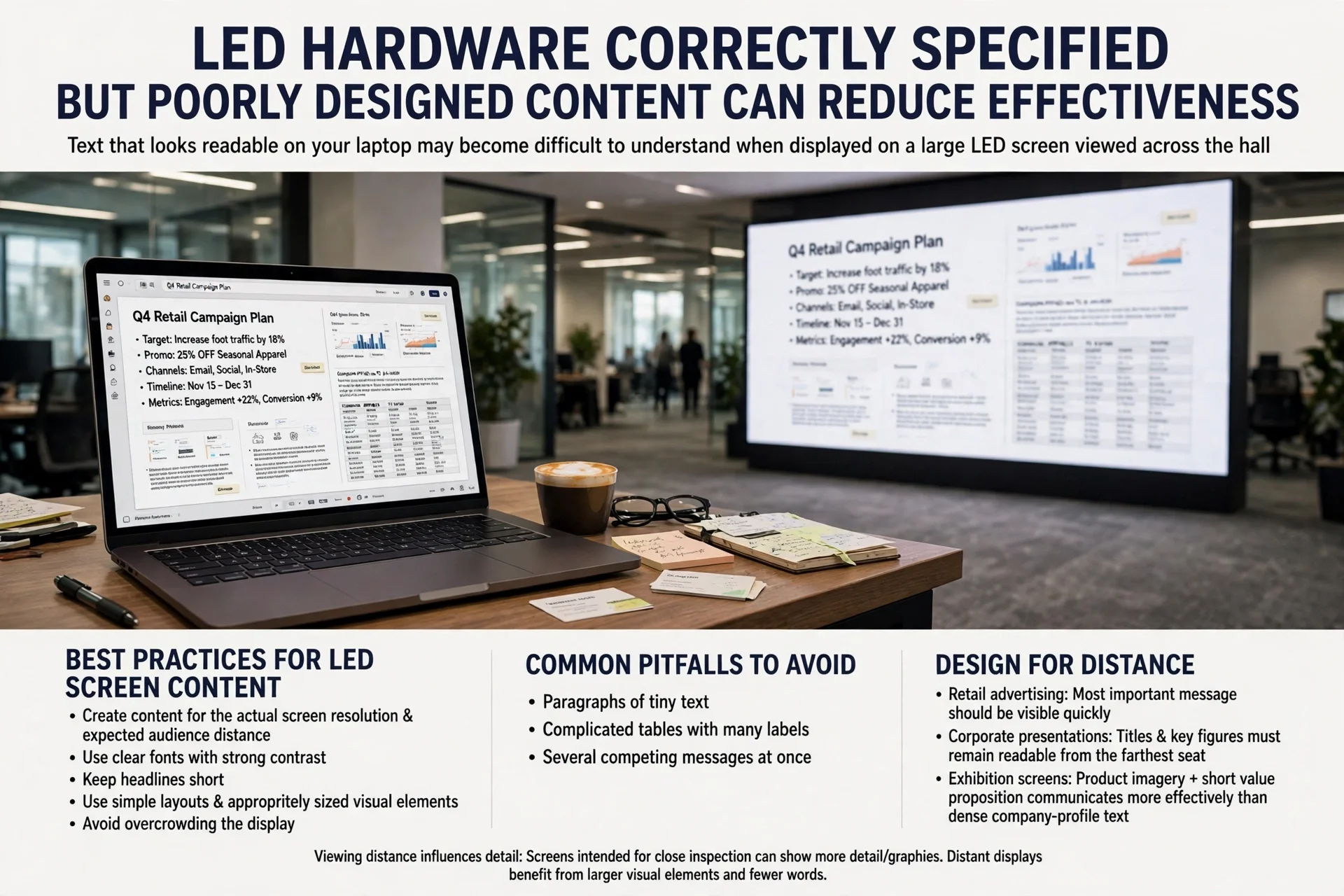
Event organizers should communicate the final screen dimensions to the content production team before the event. Motion graphics, presentations, videos, sponsor loops, live camera feeds, and event branding can then be produced at the appropriate resolution.
This prevents problems such as stretched graphics, empty screen areas, incorrect proportions, and low-resolution content.
LED Screen Size for Hotel Ballrooms
Dubai’s hotel ballrooms are frequently used for weddings, corporate dinners, award ceremonies, conferences, gala events, and product launches.
These spaces often have large walls and high ceilings, but the screen still needs to be proportionate to the stage and audience.
A large LED backdrop can provide a premium appearance for gala dinners and award ceremonies, while a smaller display may be more appropriate for intimate corporate events.
The room’s chandeliers, lighting fixtures, stage curtains, decorative structures, and ceiling height should all be considered when determining screen dimensions.
The LED wall should enhance the venue rather than visually dominate every other element.
Dubai Venues and Event Planning Considerations
Dubai has one of the world’s most active event environments, making professional display planning particularly important. Events may take place at Dubai World Trade Centre, Dubai Exhibition Centre, Coca-Cola Arena, Dubai Opera, Expo City Dubai, hotels in Downtown Dubai, Business Bay, Dubai Marina, Palm Jumeirah, and other commercial and hospitality locations.
Each venue can have different technical rules concerning loading access, rigging points, power availability, ceiling heights, installation schedules, and approved contractors.
Before confirming an LED rental screen, organizers should obtain the venue’s technical specifications and event-production guidelines.
For large exhibitions and conferences, early planning is especially important because installation windows can be limited and multiple suppliers may need to coordinate access.
How Audience Size Influences Screen Dimensions
Audience size is one of the simplest ways to understand the scale of an LED display.
A small audience sitting close to the stage may need only a moderate display. A large audience distributed across a ballroom or exhibition hall may require a wider screen or multiple displays.
The width of the audience area is also important. A narrow screen positioned centrally may be difficult to see from extreme side angles.
In larger venues, using multiple LED displays can sometimes provide better visibility than installing one extremely large screen. Side screens, vertical LED columns, or secondary displays can distribute visual information more effectively.
This is particularly useful when the audience surrounds a stage or when a venue has an unusually wide seating arrangement.
Choose the Right LED Screen for Your Event
Planning a conference, exhibition, concert, wedding, or corporate event in Dubai? Get the right screen size, pixel pitch, and configuration based on your venue, audience size, and viewing distance. Contact our LED rental team today for professional guidance and a display setup designed around your event requirements.
Common LED Rental Screen Sizes
There are no universal standard sizes because rental LED walls are assembled from modular cabinets. However, several configurations are frequently used.
Small event screens may measure approximately 2–4 metres wide. Medium LED walls often range from around 4–8 metres wide, while large conference, concert, and outdoor installations can extend well beyond 10 metres.
The exact dimensions depend on the cabinet size and the required aspect ratio.
For example, a supplier may build a screen from 500 × 500 mm or 500 × 1000 mm LED cabinets. The final screen width and height are then determined by combining these modules.
This modular design is one of the major advantages of rental LED technology because the display can be adapted to different venues and event requirements.
Cost Factors When Choosing an LED Screen Size
Larger LED screens generally require more cabinets, greater power consumption, additional processing, stronger structural support, and more installation labour. These factors can increase rental costs.
However, screen size is only one part of the rental price.
Other cost factors can include pixel pitch, indoor or outdoor cabinet type, rental duration, delivery, installation, dismantling, rigging, ground support, video processing, technicians, content management, and additional displays.
A professional rental supplier should therefore provide a configuration based on the event requirements rather than simply quoting a price per square metre.
Choosing the cheapest screen without considering viewing distance and content requirements can result in poor visibility and an unsatisfactory audience experience.

Technical Equipment Behind an LED Rental Screen
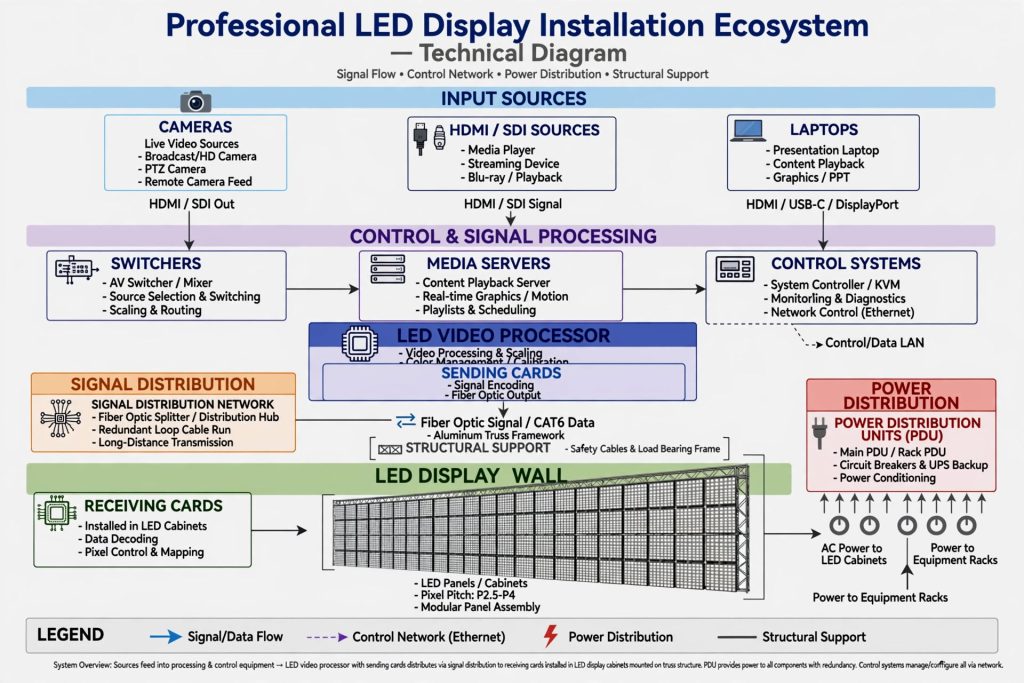
A professional LED display installation includes more than LED cabinets.
The system may involve an LED video processor, sending cards, receiving cards, media servers, signal distribution equipment, HDMI or SDI sources, switchers, cameras, laptops, control systems, power distribution units, and structural support.
Video processors help scale and manage incoming signals so that content is displayed correctly across the LED wall.
For live events, technicians may also integrate camera feeds, presentation systems, playback systems, stage management equipment, and broadcast signals.
Understanding this technical ecosystem is important because the correct screen dimensions must be compatible with the event’s overall production workflow.
Safety and Installation Requirements
Temporary LED walls can be heavy structures, especially when large numbers of cabinets are combined. Safe installation is therefore essential.
Depending on the configuration, the display may be ground-supported, flown from a suitable structure, integrated into a stage set, or installed using a custom support system.
Rigging calculations, load capacity, electrical distribution, cable management, access routes, emergency exits, and audience safety must be considered.
For outdoor installations, wind conditions and structural stability become particularly important.
Professional LED rental suppliers and event production companies should coordinate with the venue and follow applicable safety requirements before installation.
A Practical LED Rental Screen Size Guide for Event Planners
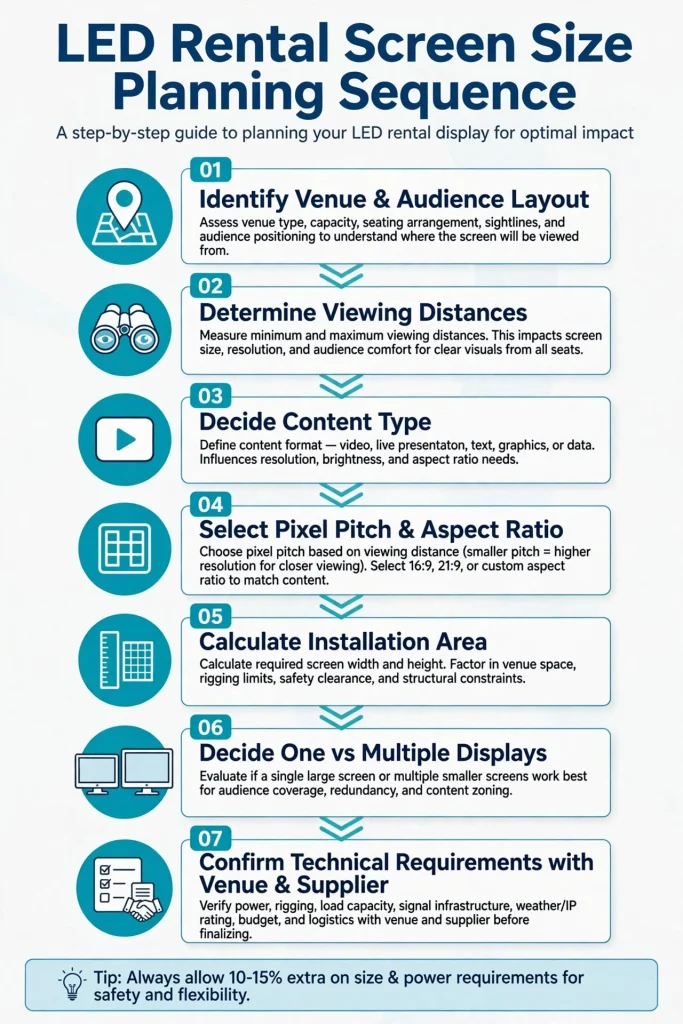
When selecting a display, event organizers can use the following planning sequence.
First, identify the venue and audience layout. Next, determine the nearest and furthest viewing distances. Then decide what content will be displayed, such as presentations, videos, live camera feeds, advertising, product demonstrations, or graphics.
After that, select an appropriate pixel pitch and aspect ratio. Calculate the available stage or installation area and determine whether one central screen or several displays will provide better visibility.
Finally, confirm technical requirements with the venue and rental supplier.
For a detailed internal reference, use the LED Rental Screen Size Guide to understand how screen dimensions can be matched with different venue types, audience distances, and event formats.
How to Avoid Choosing the Wrong LED Screen Size
One of the most common mistakes is selecting a screen based only on stage width. The stage may be large, but the audience may sit relatively close to the screen, making pixel pitch more important.
Another mistake is selecting a screen that looks impressive in photographs but does not match the actual audience viewing distance.
Event organizers should also avoid designing content before the final LED dimensions are confirmed. Screen proportions affect how graphics, videos, presentations, and camera feeds should be created.
Ignoring ambient lighting is another potential problem. An indoor screen may require different brightness characteristics from a daytime outdoor display.
Finally, organizers should not overlook installation logistics. A screen may physically fit inside a venue but still be difficult to transport through doors, loading bays, lifts, or restricted access routes.
Why Professional LED Rental Planning Adds Value
Professional LED rental planning combines visual design, technical production, venue requirements, and audience experience.
An experienced supplier can evaluate the event floor plan, stage dimensions, viewing distances, screen position, pixel pitch, brightness, content requirements, power needs, and installation method.
This helps ensure that the final display is not simply large, but actually appropriate for the environment.
For Dubai exhibitions, conferences, corporate events, weddings, concerts, and product launches, proper planning can also reduce installation delays and technical problems during the event.
The best LED rental screen is therefore not necessarily the biggest one available. It is the display configuration that provides the right combination of size, resolution, pixel pitch, brightness, viewing distance, aspect ratio, reliability, and installation practicality.
Conclusion
Choosing the perfect LED rental screen size requires more than measuring the available wall or stage. Event planners need to consider audience capacity, viewing distance, venue dimensions, content type, pixel pitch, aspect ratio, brightness, indoor or outdoor conditions, installation requirements, and budget.
Small meeting rooms may benefit from compact fine-pitch displays, while conferences can require larger central LED walls and side screens. Exhibition stands may use modular displays to attract visitors, while concerts and outdoor festivals often require large high-brightness LED systems.
In Dubai and the wider UAE, where conferences, exhibitions, entertainment productions, weddings, and corporate events take place throughout the year, careful screen planning can make a major difference to audience engagement and event presentation.
By matching the physical display dimensions with viewing distance, content resolution, venue characteristics, and technical requirements, organizers can create a clear, professional, and visually engaging experience without unnecessarily increasing rental costs.
The most effective approach is to treat LED screen size as part of the complete event-production strategy rather than as an isolated equipment choice. When screen dimensions, pixel pitch, content, lighting, processing, and installation are planned together, an LED rental display can become one of the strongest visual elements of an event.