Green screens and digital kits have become valuable tools for modern content production, corporate events, exhibitions, product launches, education, entertainment and live experiences. A green screen allows a camera to record a subject against a controlled colour background that can later be replaced digitally with another image, video, virtual environment or branded visual.
Digital kits can take this concept further by combining green-screen backgrounds with lighting, cameras, displays, stands, digital signage, control equipment and other production accessories. This creates flexible environments for businesses that need professional-looking video content without constructing a permanent studio for every project.
In the UAE, demand for visual content continues to connect with the country’s strong exhibition, hospitality, retail, media and events sectors. Dubai locations such as Dubai World Trade Centre, Expo City Dubai, Downtown Dubai, Business Bay, Dubai Marina and Dubai Media City regularly host activities where branded digital experiences and content production can add value.
Understanding how green screens and digital kits work helps businesses select the right equipment for studios, exhibitions, conferences, promotional campaigns, social media production and live events.
What Is a Green Screen?
A green screen is a background surface, normally fabric, paper, vinyl or another suitable material, used for chroma key compositing.
The green colour is selected because it provides strong separation from many skin tones and common foreground colours. During post-production, chroma key software identifies the selected green colour and makes it transparent, allowing another background to appear behind the subject.
The replacement background can be almost anything, including a corporate office, product environment, city skyline, virtual studio, presentation graphic, architectural visualisation, branded campaign or animated scene.
Green screens are used extensively in film production, television, photography, advertising, online video, corporate communications and live event production.
What Are Digital Kits?
A digital kit is generally a collection of equipment designed to support a particular digital production or presentation workflow.
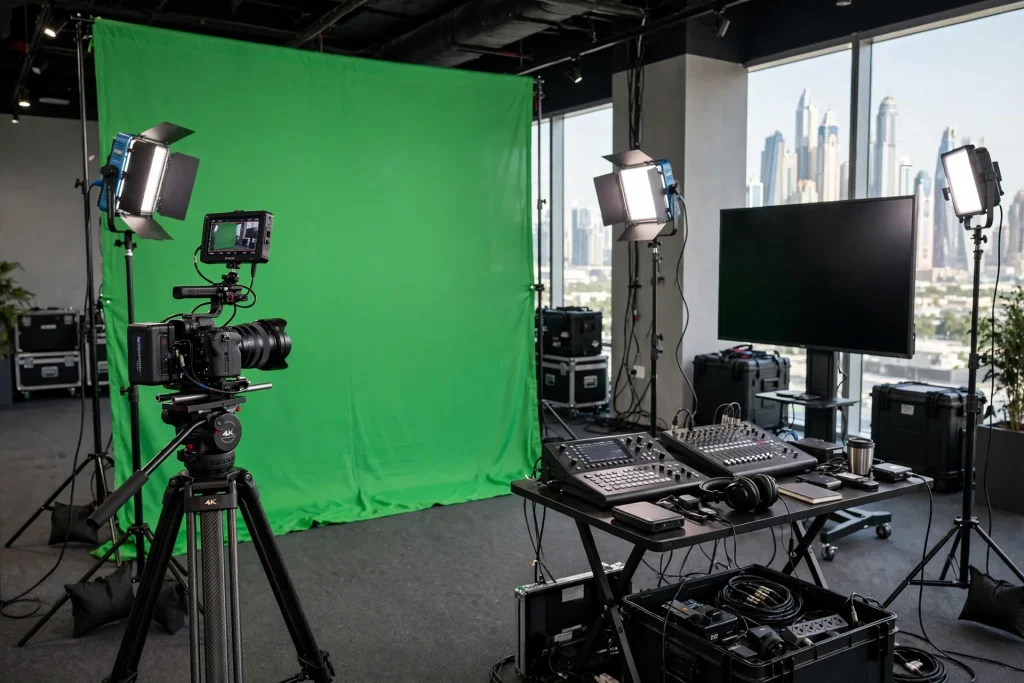
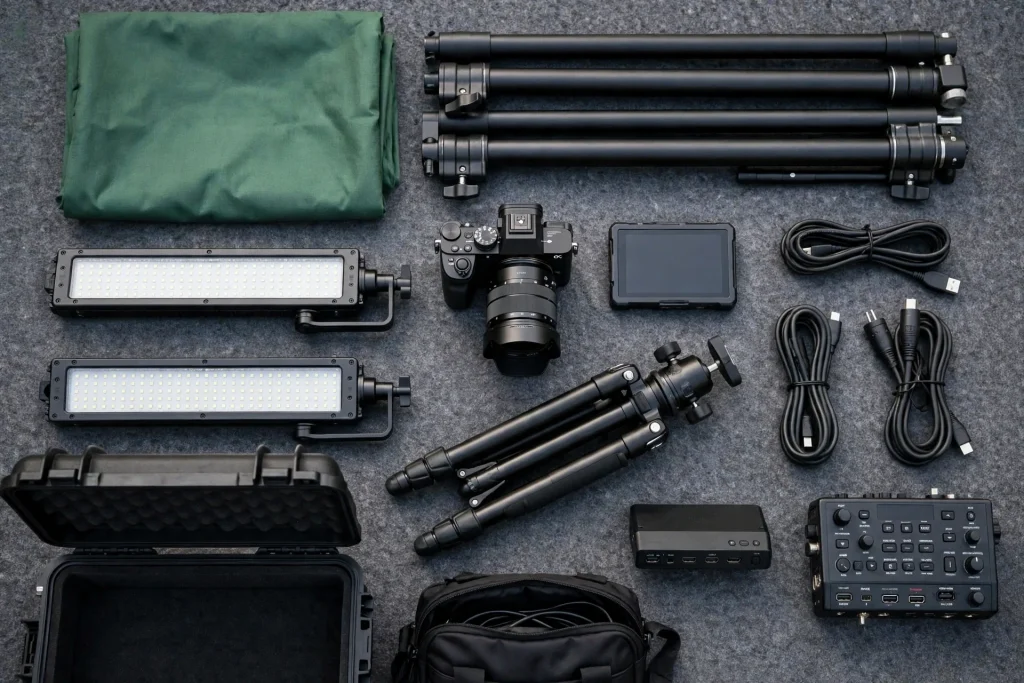
Depending on the application, a kit may include a green-screen background, support frame, lighting equipment, camera accessories, LED displays, media players, tripods, control equipment, cables and other production components.
The exact contents can vary considerably, so buyers should confirm what is included rather than assuming that every digital kit contains the same equipment.
For businesses, the main advantage is convenience. Instead of sourcing every component individually, a coordinated kit can provide a practical starting point for a complete visual-production setup.
How Green Screen Technology Works
Green-screen production depends on a process called chroma keying.
A camera records the subject in front of a controlled green background. Editing or live-production software identifies the green colour and removes it from the image. A replacement digital background is then placed behind the subject.
For successful results, the green background needs to be evenly illuminated. Shadows, wrinkles, reflections and significant colour variations can make keying more difficult.
The subject should also be separated from the background where possible. This helps reduce green spill and makes the edge around the person or object easier to process.
Professional production therefore involves more than simply placing a green cloth behind a person. Lighting, camera settings, background distance, exposure and software configuration all influence the final result.
Why Lighting Matters for Green Screens
Lighting is one of the most important factors in green-screen production.
An unevenly lit background may contain bright and dark areas that make chroma keying difficult. Shadows behind the subject can also create unwanted variations in the green surface.
The background should normally be illuminated as evenly as practical, while the subject should receive separate lighting designed for the intended visual style.
LED lighting is particularly useful for digital production because it can provide controllable brightness and colour temperature while generating less heat than many traditional lighting technologies.
For professional installations, lighting should be selected according to the studio size, camera system, subject distance and production requirements.
Green Screen for Corporate Video Production
Businesses increasingly use video for corporate communication, training, recruitment, product demonstrations and marketing.
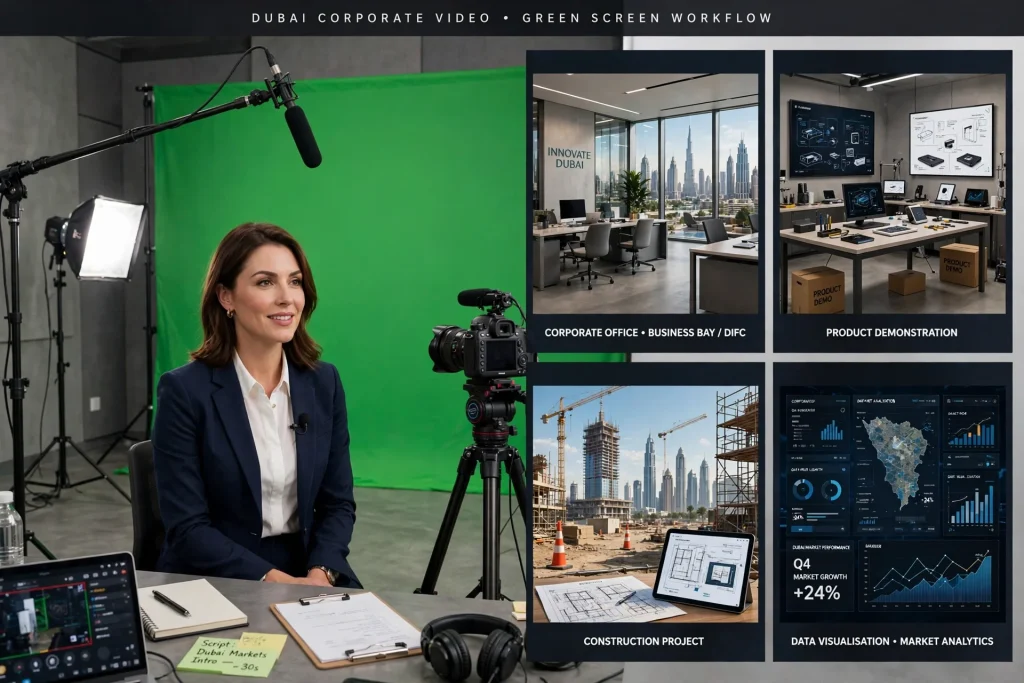
A green screen allows a company to create multiple visual environments without physically changing the studio.
For example, a presenter could appear in front of a branded corporate office, a product demonstration environment, a construction project, a data visualisation or an international city background.
This flexibility can be particularly useful for companies operating across multiple markets.
Dubai businesses in Business Bay, Downtown Dubai, DIFC, Dubai Media City and Dubai Internet City can use green-screen setups for presentations, interviews, training videos, social media campaigns and corporate announcements.
Green Screens for Exhibitions and Trade Shows
Exhibitions create opportunities for brands to turn visitors into participants rather than simply displaying printed graphics.
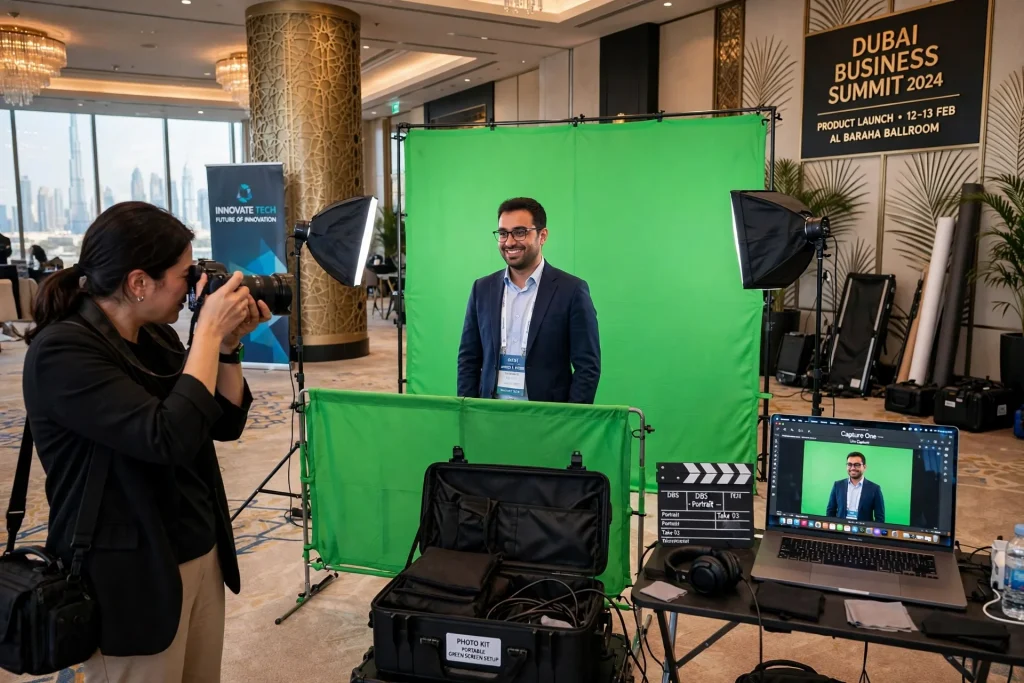
A green-screen activation can allow visitors to appear inside a branded virtual environment, promotional video or themed scene.
This can be used at trade shows, product launches, corporate exhibitions and experiential marketing campaigns.
At venues such as Dubai World Trade Centre and Expo City Dubai, exhibitors can integrate digital content into their booths to create more interactive experiences.
A well-designed green-screen activation can also encourage visitors to share their finished images or videos on social platforms, extending the experience beyond the physical exhibition space.
Green Screens for Product Launches
Product launches often require memorable visual experiences.
A green screen can place presenters, influencers or customers inside a digital environment associated with the product. For example, a technology brand could use a futuristic virtual environment, while a travel company could create destination-themed content.
Digital kits can support these activations by combining background systems, lighting, cameras and display equipment.
The content should be prepared before the event so that the production team understands exactly how the final composition will look.
Digital Kits for Events
Corporate events often require equipment that can be installed quickly and removed after the event.
Digital kits can provide a practical solution when a company needs a temporary production environment.
Depending on the event, the setup may include a green-screen backdrop, lighting, camera equipment, display screens and digital content.
Hotels, conference venues and event spaces across Dubai frequently host conferences, award ceremonies, product launches and corporate gatherings. A portable digital setup can allow the same equipment to be adapted for different venues.
Green Screen Photography
Green-screen photography can be used for branded portraits, event photography, promotional campaigns and visitor experiences.
Instead of providing a conventional photo backdrop, businesses can create a series of digital environments.
A visitor could be photographed in front of a company-branded design, a destination image, an event theme or a product-related scene.
For professional results, the photographer needs to consider camera exposure, white balance, subject positioning and background lighting.
The green surface should also be large enough to cover the complete camera frame at the intended shooting distance.
Green Screen Video Production
Video production places additional demands on a green-screen environment because the camera may move and the subject may change position.
Camera movement needs to be considered when designing the background and compositing workflow.
If the production uses multiple cameras, lighting consistency becomes even more important.
For interviews and corporate videos, a fixed camera setup may be sufficient. More advanced productions can incorporate camera tracking, virtual backgrounds and real-time compositing.
The appropriate system depends on whether the content will be edited later or produced live.
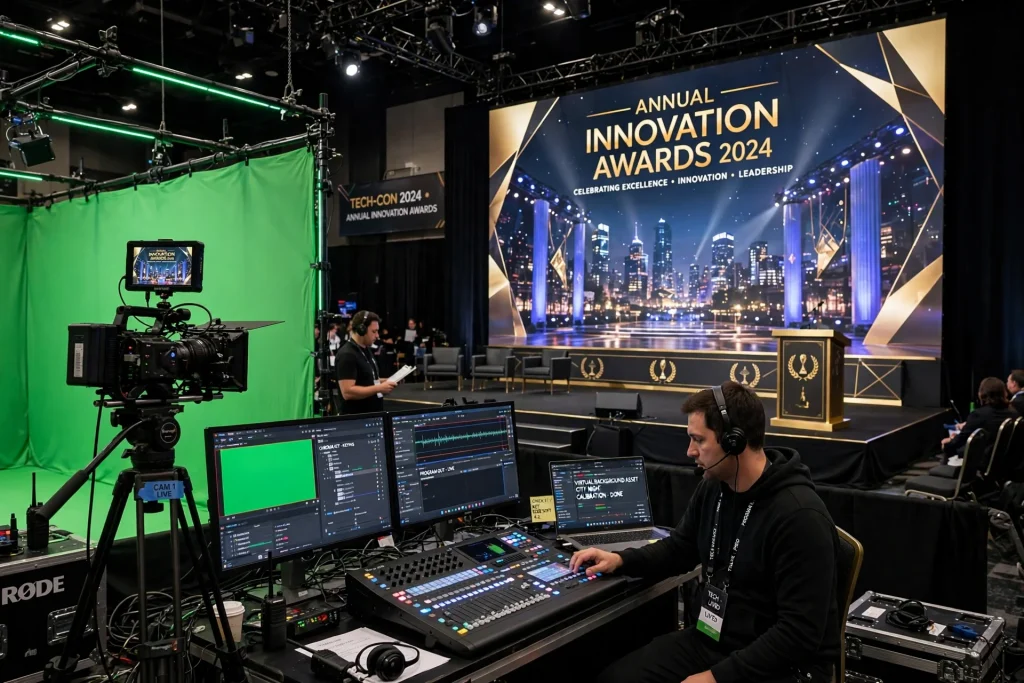
Green Screen for Live Events
Green-screen technology can also be used in live environments.
With suitable cameras, video processors and software, the background can be replaced in real time and displayed on an LED screen or other digital display.
This can create a virtual stage environment for conferences, award ceremonies, broadcasts and promotional events.
Real-time production requires more technical coordination than simple photography because the camera feed, chroma key system, processing equipment, content and display need to work together.
Technical testing before the event is therefore essential.
LED Screens and Green Screen Systems
LED displays can complement green-screen technology by providing a large digital surface for the final output.
For example, a green-screen camera feed can be processed and displayed on an LED screen while an audience watches the finished composition in real time.
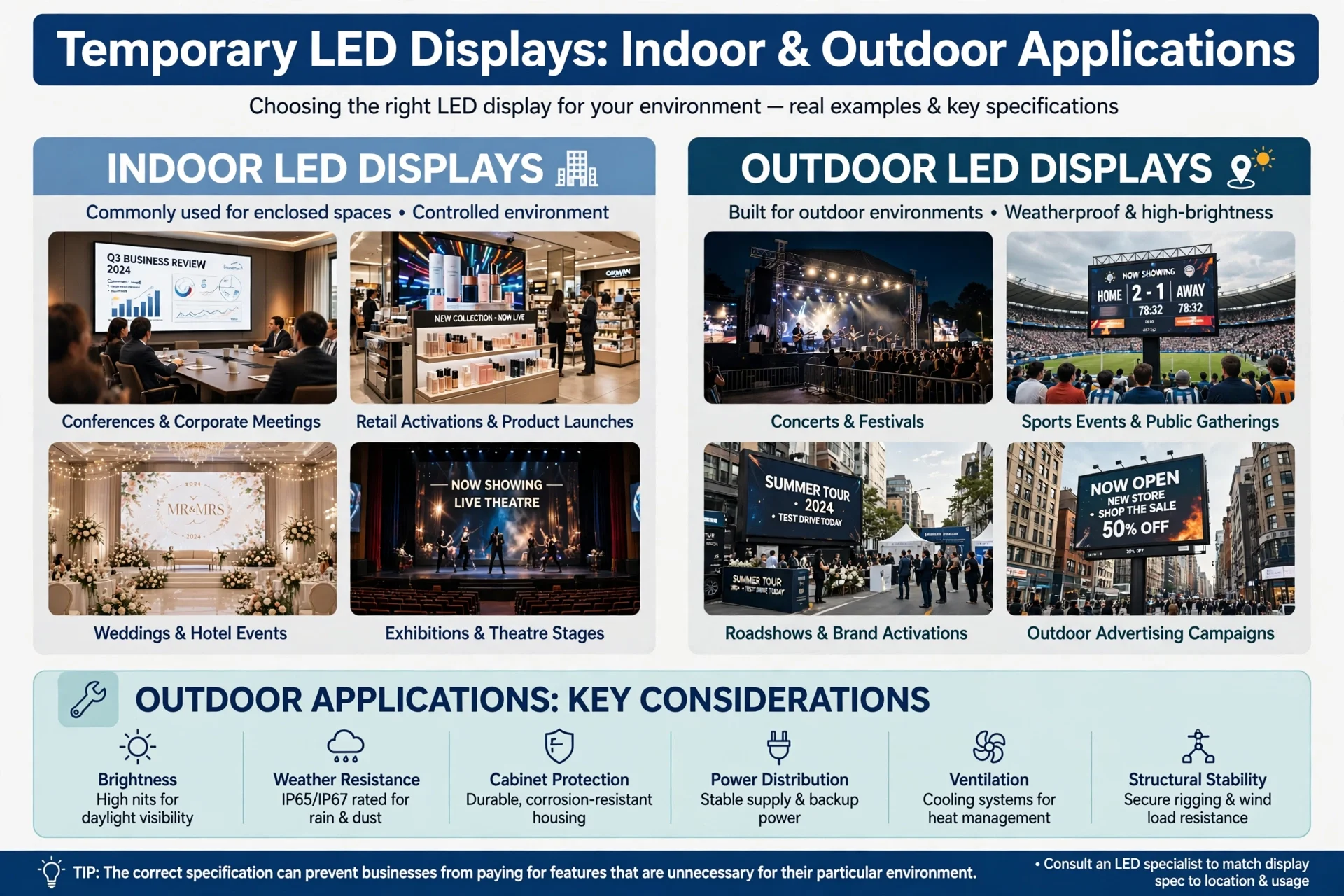
LED screens can also be used independently as digital backdrops for events.
Unlike traditional green screens, LED virtual production systems can display the background directly without requiring the same chroma-key workflow. However, LED volume systems involve more complex equipment, content preparation and production requirements.
The choice between green screen and LED virtual production depends on the project, budget, studio environment and desired visual effect.
Green Screen Versus LED Virtual Production
Green-screen production and LED virtual production solve similar visual challenges in different ways.
Green screens rely on chroma keying to remove the background and replace it digitally. LED virtual production uses a large LED display to show the background behind the subject during filming.
Green screens can be flexible and cost-effective for many conventional productions. LED virtual production can provide real-time visual backgrounds and interactive lighting effects but may require more advanced equipment.
Neither system is automatically suitable for every project.
The right choice depends on camera movement, lighting, production timeline, desired realism, studio space and available technical resources.
Choosing the Right Green Screen Material
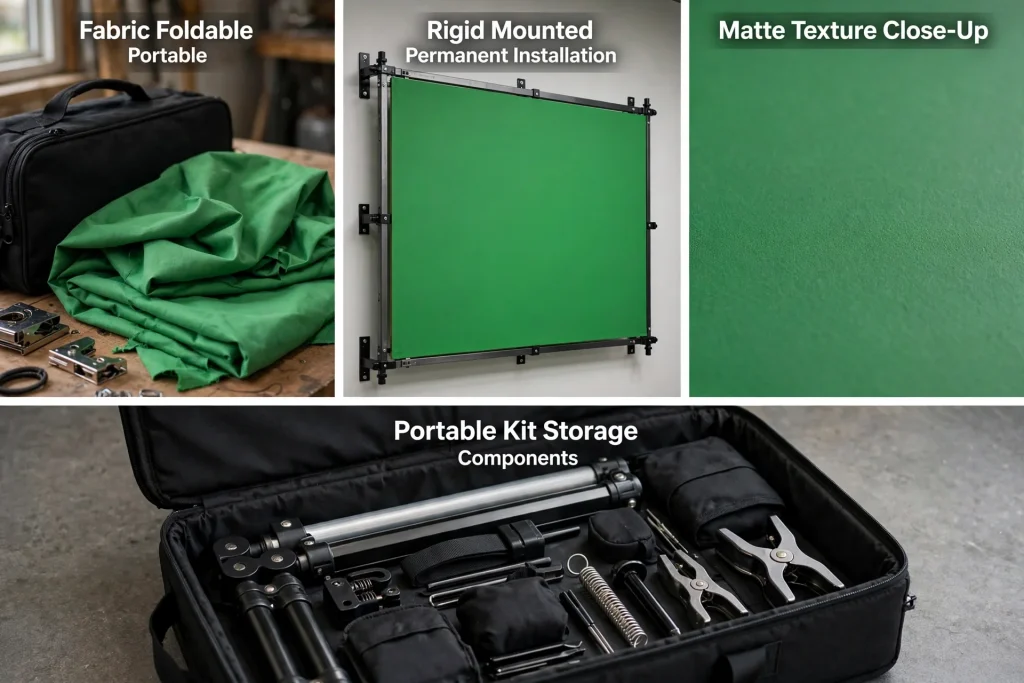
Green screens can be produced using different materials.
Fabric backgrounds are popular because they can be folded, transported and reused. They can be suitable for mobile event setups and smaller studios.
Rigid or professionally mounted backgrounds may provide a more controlled environment for permanent installations.
The material should have a suitable matte appearance and consistent colour. Highly reflective surfaces can create unwanted highlights and make chroma keying more difficult.
For portable kits, the weight, storage requirements, frame system and installation method should also be considered.
Green Screen Size and Studio Space
The size of the green screen should match the intended production.
A small background may be sufficient for head-and-shoulder interviews, while full-body productions require more vertical and horizontal coverage.
The camera distance also matters. A larger space gives the production team greater flexibility to separate the subject from the green screen and control lighting.
Before purchasing equipment, businesses should measure the studio or event area and consider camera position, subject movement, lighting stands and operator space.
A green screen that technically fits a room may still be impractical if there is insufficient space for lighting and camera positioning.
Chroma Key Software and Digital Workflow
Green-screen hardware works together with software to create the final composition.
Popular production workflows may involve video editing software, live production software, broadcasting platforms or dedicated virtual-production systems.
The software identifies the green colour and creates a transparent layer around the subject. The digital background is then placed underneath.
More advanced workflows may include edge refinement, colour spill suppression, motion tracking, masking and real-time compositing.
For businesses producing frequent content, the software workflow should be considered alongside the physical equipment.
Green Screen for Social Media Content
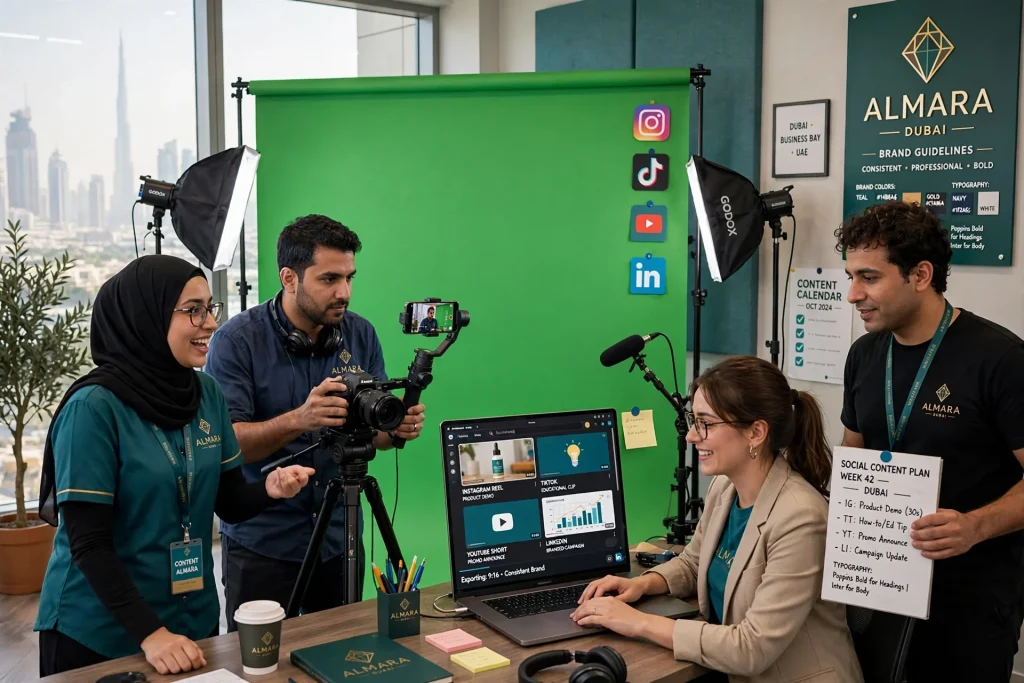
Social media teams can use green screens to create different visual environments without producing a separate physical location for every video.
Short-form content can include product demonstrations, presenter videos, educational clips, promotional announcements and branded campaigns.
A reusable green-screen setup can support content production for Instagram, TikTok, YouTube, LinkedIn and other platforms.
For businesses, consistency is important. Brand colours, logos, typography and background designs should remain visually consistent across different videos.
Green Screen for Education and Training
Training departments, universities and educational organisations can use green screens to produce instructional content.
A trainer can appear alongside diagrams, presentations, demonstrations or virtual environments.
This can be useful for technical training, safety education, product instruction and online courses.
Dubai and Abu Dhabi have extensive education, corporate training and professional-development sectors where reusable video-production systems can support digital learning initiatives.
Green Screen for Retail and Brand Activations
Retailers can use green-screen technology to create interactive experiences inside shopping centres and stores.
A visitor might record a short branded video or photograph that places them in a campaign environment.
This creates an opportunity to connect physical retail with digital content.
Retail activations can also use QR codes, digital signage and social sharing to extend the customer journey beyond the physical location.
Shopping destinations and high-footfall commercial areas in Dubai can provide suitable environments for these temporary brand experiences.
Green Screen Applications in Dubai
Dubai’s events, exhibitions, hospitality, retail and media sectors provide a wide range of applications for green screens and digital kits.
Potential locations and business environments include Dubai World Trade Centre, Expo City Dubai, Downtown Dubai, Business Bay, DIFC, Dubai Marina, Jumeirah, Dubai Media City and Dubai Internet City.
Hotels and conference centres can use digital kits for conferences and corporate events. Exhibition contractors can incorporate green-screen activations into booths. Marketing agencies can use portable kits for campaigns and promotional events.
The equipment should always be selected around the venue’s technical requirements, available floor space, power supply, installation rules and event schedule.
Green Screen Systems for Abu Dhabi and the UAE
The application is not limited to Dubai.
Abu Dhabi’s exhibition and events sector, including venues around ADNEC, provides opportunities for digital content production, corporate events and interactive brand experiences.
Other UAE emirates, including Sharjah and Ras Al Khaimah, also host exhibitions, conferences, educational events and commercial activations where portable digital production systems can be useful.
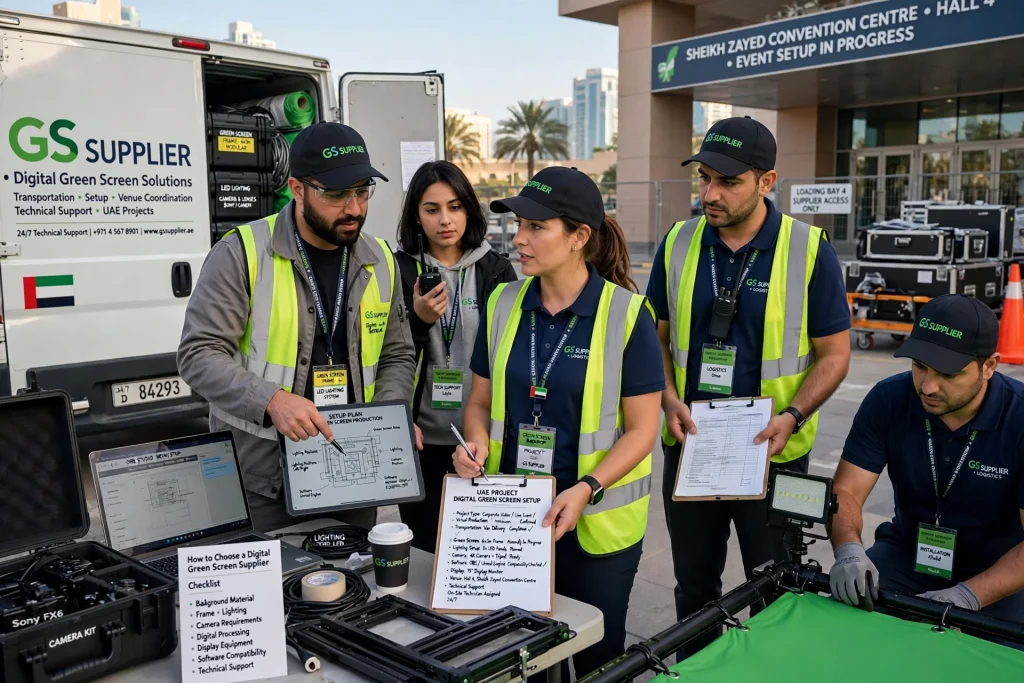
A supplier serving UAE projects should understand transportation, setup, venue coordination and technical support requirements across different locations.
How to Choose a Digital Green Screen Supplier
Choosing the right supplier involves more than comparing the size of the green background.
Businesses should consider the complete production workflow, including the background material, frame, lighting, camera requirements, digital processing, display equipment, software compatibility and technical support.
For companies planning a complete production or event setup, a Digital green screens supplier can help coordinate the equipment around the intended application rather than treating each component as an isolated purchase.
The supplier should understand whether the project is for photography, corporate video, exhibitions, live events, virtual production or social media content.
Installation and Setup Considerations
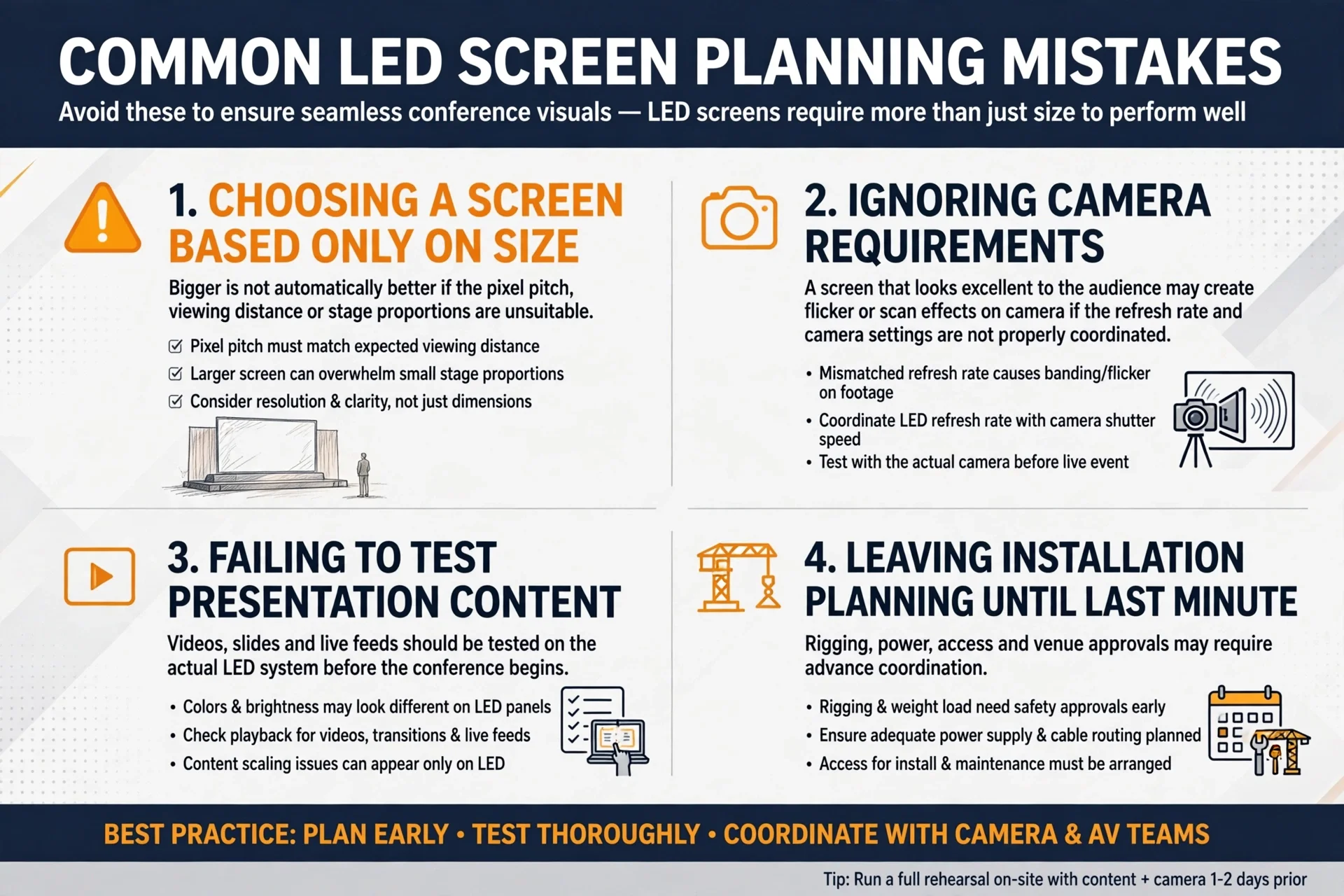
Before installation, the production area should be checked for dimensions, power availability, ambient lighting and access.
The green screen should be positioned to minimize unwanted shadows. Lighting equipment should have sufficient space around it, and cables should be routed safely.
For temporary events, the installation schedule should account for venue access, booth construction, technical testing and content preparation.
A complete rehearsal is particularly important for live productions.
Maintenance and Storage
Green screens and digital kits should be maintained according to the manufacturer’s recommendations.
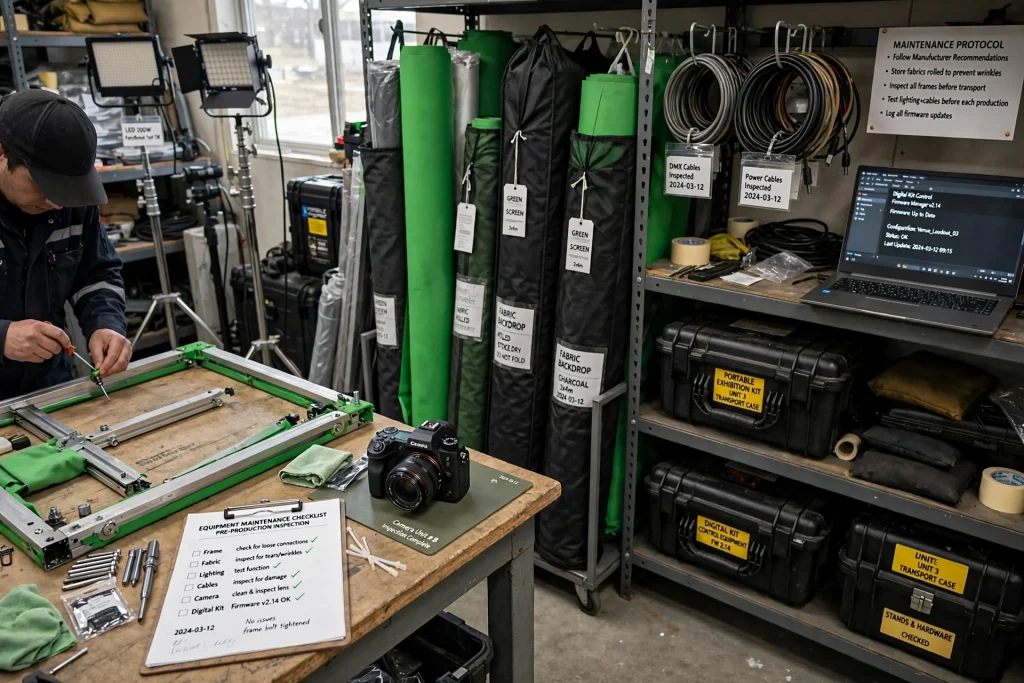
Fabric backgrounds should be stored properly to reduce wrinkles and damage. Frames should be checked for loose connections or physical damage.
Lighting fixtures, cables, stands, cameras and control equipment should be inspected before each major production.
Digital equipment should also receive appropriate software, firmware and configuration management where required.
Good storage practices are especially important for portable exhibition kits that are repeatedly transported between venues.
Common Green Screen Problems
Uneven background lighting is one of the most common problems. It can make chroma keying inconsistent.
Other issues can include shadows, green spill on the subject, wrinkles in fabric, reflective surfaces, insufficient background coverage and incorrect camera exposure.
Poor separation between the subject and green screen can also make edge processing more difficult.
Many of these problems can be reduced through proper studio layout, lighting design, camera setup and pre-production testing.
Planning a Professional Green Screen Setup
A successful setup starts with the intended outcome.
A business creating interview videos may require a very different configuration from an exhibition contractor creating a visitor activation.
The planning process should identify the subject size, number of people, camera type, shooting distance, lighting requirements, background dimensions, content resolution and whether the final result will be edited or displayed live.
For event projects, the venue schedule and installation restrictions should also be included in the planning process.
Frequently Asked Questions
What is a green screen used for?
A green screen allows a subject to be separated from the background using chroma key technology. The original green background can then be replaced with video, images, graphics or virtual environments.
What equipment is needed for green-screen production?
A basic setup can include a green background, suitable lighting and a camera. More advanced systems may include stands, lenses, monitors, computers, chroma-key software, video processors and digital displays.
Is green-screen technology suitable for exhibitions?
Yes. Green screens can create interactive visitor experiences, branded photographs, promotional videos and digital activations at exhibitions and trade shows.
Is green screen better than an LED virtual production wall?
The appropriate technology depends on the production. Green screens can work well for conventional compositing, while LED virtual production can provide real-time digital backgrounds. Camera movement, content requirements, budget and technical complexity should be considered.
Can green screens be used for live events?
Yes. With appropriate cameras, processing equipment, software and displays, green-screen content can be composited in real time for conferences, broadcasts and live activations.
How important is lighting for green-screen production?
Lighting is extremely important. An evenly illuminated green background makes chroma keying easier and can reduce shadows, colour variations and unwanted green spill.
Final Thoughts
Green screens and digital kits provide businesses with flexible tools for producing professional visual content, interactive event experiences and branded digital campaigns. From corporate interviews and social media videos to exhibition activations and live events, the technology can be adapted to many applications.
The strongest results come from treating the green screen as part of a complete production system. Background material, lighting, camera position, chroma-key software, digital content, displays and technical support all influence the finished experience.
For UAE businesses, the combination of a strong events industry, exhibition venues, hospitality sector, retail environment and growing demand for digital content creates numerous opportunities for green-screen and digital-kit applications. Proper planning allows businesses to create reusable production environments that can support marketing, communication, entertainment and customer engagement across Dubai, Abu Dhabi and the wider UAE.